
‘School funding alert: inflated figures’
Using prices recorded through their sales channels, retailers are responding to consumer organisations

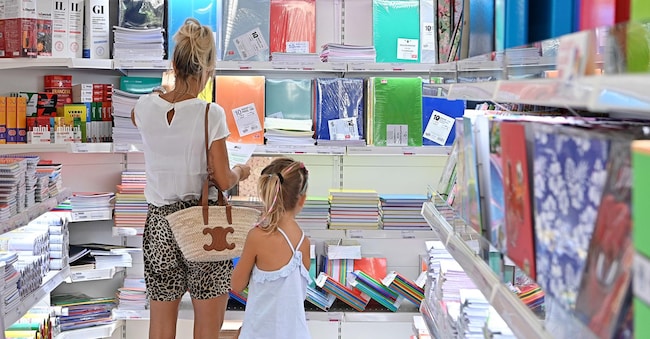
Back-and-forth over school costs: consumer organisations and stationers lock horns. The former have sounded the alarm over price rises, with estimates from Codacons setting a maximum budget of €1,300 for school supplies and textbooks, with price increases ranging from +2% to +4% on stationery and +1.8% on textbooks. Federcartolai Confcommercio was quick to respond. ‘September has now begun and, as punctually as every year, the alarm over the “cost of going back to school” is sounding once again. This year, the estimated figure is 1,300 euros per pupil. The exact same figure as for 2024/2025 and 2025/2026. Three years, the same round figure: either the cost of living froze in 2023, or that figure is simply copied over every August without anyone bothering to check it,’ the association stated, adding: We stationers do our sums every day – really, we don’t just pluck them out of thin air at the end of summer. This is demonstrated by the hundreds of stationers who responded to our survey: a basic, non-branded rucksack costs between 40 and 50 euros in 70 per cent of shops; a 3-zip pencil case costs between 19 and 29 euros; a simple pencil case costs between 5 and 15 euros; a diary costing between 16 and 25 euros; exercise books and covers – in short, the full set – costing between 12 and 20 euros; a scientific calculator costing up to 18 euros; and a full set of stationery costing up to 14 euros. Books, the most expensive and variable item, can cost up to 350 euro in the first year of secondary school. “To reach 1,300 euro, you’d have to shop in boutiques, not stationers’… unless someone is buying designer rucksacks and calling them school supplies,” add representatives from Federcartolai.
The shopkeepers then emphasise the social value of their business and their presence in the local community. ‘Inflated figures such as these,’ the statement continues, ‘are not a mere detail: they cause enormous damage, and they do so to a sector made up of local shops, people who know their customers by name, a service that runs all year round and does not just spring into action in September to make the headlines. And whilst some people bandy about sensational figures, let us remember that the supply of primary school textbooks – paid for by local councils – is guaranteed only by stationers, because large retailers find it unprofitable. A service that is often free of charge, yet has never once been given the recognition it deserves. We have been working for some time with other trade unions in the sector on a concrete campaign: the tax deductibility of school-related expenses, as is already the case for medical or sports-related costs. And thanks to the Student Card, pupils are entitled to a 10 per cent discount on all stationery – a discount that is never mentioned when figures are discussed.” According to Federcartolai’s findings, price rises range from +2% to +4% on stationery and school supplies, and 1.8% on textbooks for the 2026/2027 academic year. “These figures are a far cry from the alarmist claims we’ve been seeing in the news recently. Federcartolai will continue to feature in the national and local press, backed by hard data, because families deserve facts, not recycled headlines.”
A response has also been received from the Italian Publishers’ Association (AIE), which reports that price rises are below the recorded inflation rate. In a statement, the AIE specifies that the average increase in textbook prices in 2026 is 2.3 per cent for lower secondary schools and 1.8 per cent for upper secondary schools, which is lower than inflation (2.8 per cent in July on an annual basis, according to Istat). However, the average total expenditure that each household must bear to purchase school books – determined on the basis of teachers’ choices – has fallen by 1.4 per cent compared with the previous year, in both lower and upper secondary schools.

