
Albertina: its collections look to the future
To mark the 250th anniversary of its foundation, it is reflecting on its history and mission through an exhibition

Of the sixteen children born to Maria Theresa of Austria, only her favourite, Maria Christina, was permitted to marry the man she loved, Albert of Saxony-Teschen, in 1766. This union was to leave a profound mark on Vienna’s future, for thanks to the young woman’s inheritance, the couple were able to devote themselves to their passions – art, and in particular graphic art – initially alongside the Duke’s political and military career until 1792, and thereafter full-time. Both enjoyed painting and drawing, and Maria Cristina in particular reinterpreted works by famous artists with considerable talent; however, the couple’s main interest lay in collecting, to which they devoted both time and money.
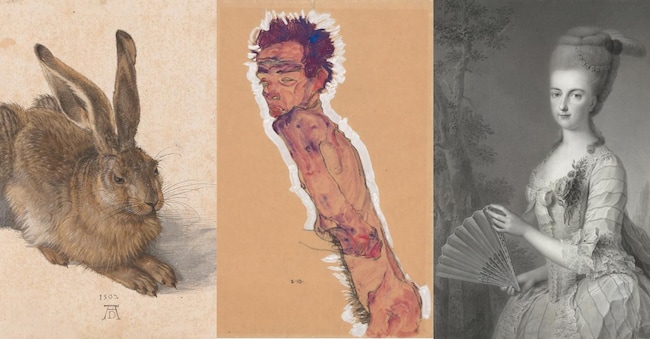
The first batch of works, for which Maria Cristina paid 8,600 florins, consisted of ten thousand prints which the Habsburg envoy in Venice, Count Giocamo Durazzo, purchased on their behalf; these laid the foundations of the collection in 1776, which was subsequently expanded to include drawings, including works by great masters such as Dürer – of whom the couple acquired 140 works – Michelangelo and Raphael, and Flemish masters such as Bosch and the Brueghels.
By the time of Alberto’s death in 1822, the collection had grown to 150,000 prints and 13,000 drawings, which had required an investment equivalent today to around 32 million euros.
That collection of works was bequeathed to posterity under the name of Alberto and, by the terms of the will, was bound not only to remain permanently and in its entirety in Vienna, but also to be housed exclusively in the palace adjacent to the Imperial Palace, which Maria Cristina had received as a gift from her own family and which had been their residence since 1794: a far-sighted testamentary provision which has, to this day, safeguarded the collection from possible fragmentation, division or sale, despite the many upheavals of history and Austria’s transformation from a monarchy to a republic.
250th anniversary of the collection’s founding
To mark the 250th anniversary of the collection’s foundation, the Albertina Museum is staging an exhibition, running until 11 October, which traces the most significant milestones in its creation and history, featuring a rich array of masterpieces emerging from the protective half-light in which the galleries are bathed.

