

Algorithms and neurostimuli, here comes brain music for stress and new memory
Brain waves studied with new digital tools can produce targeted mental states
2' min read
2' min read
Two wristbands detect biometric signals, such as heartbeat. A tailor-made algorithm defines the mental condition of the wearer. Then, thanks to sound neurostimulation, it goes to work directly on the nervous system, to encourage concentration or, in cases of great stress, relaxation. This is the promise of the prototype being studied by a research group coordinated by Luca Mesin, professor of Bioengineering at the Politecnico di Torino, developer of innovative data processing algorithms and supervisor of the 'Mathematical Biology and Physiology' group.
In the future, these studies could lead to various applications depending on the objective, such as meditation, concentration, effective memorisation and the mode of stimulation (which can also be visual, using augmented reality viewers). Participants at 'SaluTo- Torino Medicina e Benessere' on 21 September (in Piazza Madama Cristina) in the Piedmont capital will test the device.
How Sound Stimulation Works
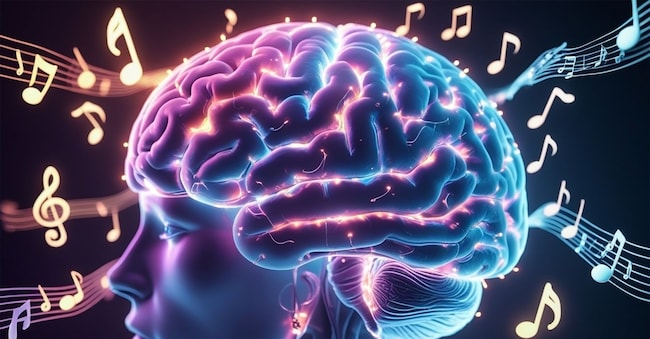
The intervention with sound stimulation, in any case, is really fascinating. "It involves delivering two different sounds to the subject's ears," explains Mesin, "which, decoded and combined together by the brain, evoke a stimulus with the same rhythm as certain brain waves: the sounds induce a response in the subject which, monitored by biometric signals and decoded by our algorithms, allows us to modify them and accompany the user towards the desired cognitive state.
In practice, in a state of relaxation, the brain waves have a certain rhythm, which is slightly different for each of us (and also different in the same person, e.g. in the case of stress). By stimulating the correct band, one can act in a positive way. 'Unlike neurofeedback, which, as in gymnasium training, is aimed at developing the ability to reach certain mental states, our method instead takes the user by the hand and accompanies him, trying to take him beyond his limits,' Mesin explains. Let's be clear: this simple test is different from laboratory tests, where more sophisticated instruments can be used, with many more parameters for a more accurate analysis. And then, the real challenge will be to process all this data.
The Brain Data Challenge
.'The human brain has 80 billion neurons, interacting with each other and activating in a very complex way,' Mesin continues, 'a quantity that corresponds to the number of people on Earth multiplied by ten. What an EEG records is only a very small part of the information provided by those neurons: it is a bit like trying to monitor the speech of those people using a few dozen microphones that record their superimposed voices'. To arrive at a precise definition of the signals, therefore, can be very difficult, but work is being done to obtain more and more precise estimates. For the time being, the system is being tested with the participation of students from the Polytechnic, but a collaboration with a local association to involve patients with chronic stress is about to start.

