
Recycling of rigid plastic: Aliplast (Hera) opens a 49-million plant
The new plant opened in Modena: it will be able to process 30,000 tonnes of municipal and industrial waste per year

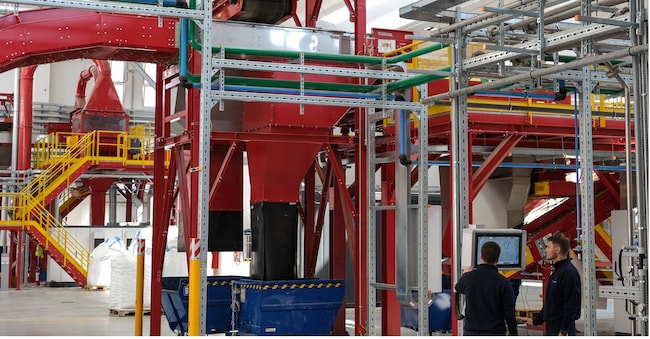
In Modena, plastic from old bumpers can be turned back into a component for new cars. And the plastic used in industrial packaging can be transformed into raw material for cosmetics. This is the industrial promise of R3gid, the new plant for recycling rigid plastics inaugurated by the Hera Group through Aliplast, its subsidiary specialising in the collection, recycling and regeneration of polymers. An investment of 48.8 million euros – 7.7 million of which is funded by the National Recovery and Resilience Plan (PNRR) – aims to establish a fully self-sufficient supply chain in Italia, which until now has been forced to rely on foreign sources.
It is no coincidence that the ribbon-cutting ceremony on 20 October, attended by the Minister for the Environment, Gilberto Pichetto Fratin, was also attended by representatives of two major plastic users: Stellantis and L’Oréal. The automotive group is considering a possible agreement with Aliplast, explained Paolo Accastello, Stellantis’s manufacturing area manager for Italy and Poland, on the sidelines of the event. “Recycled materials are already being used in cars: from the bumper components of some Citroën models to the seat fabrics in the Fiat 500,” he explained. But being able to recover and regenerate industrial plastics domestically, obtaining certified materials to be reintroduced into the factory, opens up further prospects: greater control over the supply chain, lower logistics and procurement costs, and the ability to meet European obligations. The End-of-Life Vehicles Regulation stipulates minimum recycled plastic content targets of 15 per cent for new models from 2032 and 25 per cent from 2036, with at least one-fifth of the recycled content coming from end-of-life vehicles. This change makes the availability of polymers of consistent quality a strategic priority. It also explains the interest shown by L’Oréal Italia, already a client of Aliplast: the presence of Simone Targetti Ferri, head of sustainability, signals the potential to expand collaboration in the cosmetics sector, a major user of plastic packaging.
R3gid, which stands for recover recycle regenerate plastic, has been operational for several months and, once fully operational, will employ 80 staff. It will be able to process up to 30,000 tonnes of rigid plastics per year, sourced from municipal waste and industrial scrap: pallets, crates, tanks, bumpers, containers and electronic components. The materials are separated by composition and colour, shredded, washed and optically sorted before being extruded into granules ready for new products. The result, thanks in part to technology from the Maire Group, is a polymer with a certified purity of over 99 per cent and performance comparable to that of virgin plastic. “Europe has a structural gap in recycling: capacity is stagnant or declining, whilst new regulations will drive up demand,” observed Hera’s CEO, Orazio Iacono. Today, the continent has a recycling capacity of 13.5 million tonnes of plastic, but only 3.5 million tonnes of this relates to rigid plastics, of which around 440,000 tonnes are in Italia. By 2040, a further 5.7 million tonnes will be needed. “R3gid is the answer for those who take the lead,” emphasised Iacono, also highlighting the savings on import costs.
The competitive advantage also stems from integration with Hera’s Modena site: electricity is supplied by the nearby waste-to-energy plant, whilst water from the sewage treatment works is used in the process and then returned to the treatment plant. The estimated environmental savings amount to around 30,000 tonnes of CO₂ equivalent per year compared with the production of virgin plastic. “Producing locally sourced secondary raw materials means strengthening the country’s competitiveness,” said Pichetto Fratin. Modena is also a key part of Aliplast’s expansion. Together with the expansion of the Borgolavezzaro site, in the Novara area, and the ongoing acquisition of a 70 per cent stake in the Polish company Kronos Polymer Polska, this will enable the group to exceed 210,000 tonnes per annum of secondary raw materials, with a total production capacity of 255,000 tonnes. The investment forms part of the 2 billion that Hera is allocating to the circular economy in its 2025–2029 plan. For businesses, the aim is simple: to transform waste into an industrial resource without having to source it from abroad.

