Cultural Heritage

More than half a billion euro from companies to the Art Bonus

More than 12,000 individual disbursements for the preservation of assets since 2014. Botti (Ales): historical and artistic heritage is a powerful branding tool

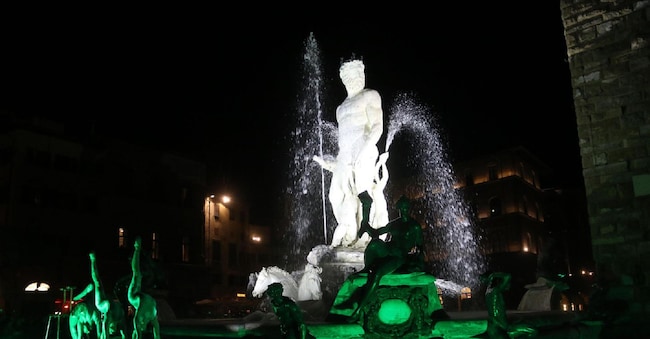
by Nicola Barone

Due anni di lavori e 1,5 milioni di euro, arrivati dalla maison Salvatore Ferragamo tramite art bonus, per restituire alla città di Firenze la Fontana del Nettuno di piazza della Signoria, chiamata dai fiorentini il 'Biancone'. Il complesso lavoro di restauro ha portato anche alla riattivazione dell'impianto idrico che alimenterà i giochi d'acqua ricalcando gli scenari voluti da Bartolomeo Ammannati che lo progettò. Il risultato dei lavori è stato presentato oggi, in occasione del capodanno fiorentino, e nell'anno in cui si celebrano i 500 anni dalla nascita di Cosimo I, committente dell'opera, e Caterina de' Medici. ANSA/US COMUNE DI FIRENZE ++ NO SALES, EDITORIAL USE ONLY ++

3' min read

3' min read

Well over one billion euro. In the snapshot taken for the ten years of its history, the Art Bonus, the tax measure that allows companies and private citizens to contribute to the support of culture in return for a tax credit equal to 65% of the liberal donations made, is smiling. This is the case for the restoration of works of art, monuments owned by the State or public entities.

And, again, support for cultural venues such as museums, archaeological sites, archives, public libraries or performing arts organisations recognised by legislation.

Loading...

From companies, in particular, a total of more than half a billion euro in donations came in. An amount distributed through more than twelve thousand individual donations. Although the average donation per individual is around 41 thousand euros, the majority of contributions fall within a range of between one thousand and 100 thousand euros: this indicates a mix of large and small donations that contribute to the overall result, testifying to the willingness of many companies of different sizes and sectors to invest in the sector.

Growing trend

.

The trend of annual disbursements by companies continues to grow: a positive trend that consistently exceeds the average of EUR 50 million per year.

"As the company Ales, which manages and promotes the Art Bonus on behalf of the Ministry of Culture, we are satisfied with this first ten-year assessment, but we consider it strategic and a priority to continue to create opportunities for knowledge and dissemination of the rule throughout the country," explains Carolina Botti, director of Ales and Art Bonus contact person for the MiC. "Our goal is to do more and more information and training, conveying the good practices that can be shared and involving not only potential patrons/beneficiaries, but also all the subjects that together with Ales and the ministry can facilitate public-private synergies".

A strategic investment

.

Support for cultural heritage is not just an act of patronage, but represents a strategic investment that generates tangible and measurable benefits for companies. Benefits on three distinct and interconnected levels: economic, reputational and competitive, in a virtuous circle that rewards both the company and the community. The first and most immediate advantage for companies naturally lies in the tax benefits, since a considerable part of the investment returns to the company in the form of relief.

However, 'supporting cultural heritage is a powerful branding tool for companies,' reasons Botti. "The restoration of a work of art or the revitalisation of a theatre can consolidate a company's image as a responsible and locally aware actor. This also translates into an improvement in brand perception by customers, employees and stakeholders'. Finally, contributing to cultural projects opens the door to a wide range of networking and strategic development opportunities.

Physical persons

.

As for individuals, the contribution amounted to EUR 50 million through more than 29,000 donations (which averaged EUR 1,600).

In 31% of cases with donations ranging from 10 to 100 euros, in 52% of cases from 100 to 1,000 euros and in 15% of cases from 1,000 to 10,000 euros. With 2% going over EUR 10,000, which also includes a few cases, excellent and always welcome, of big personalities who can also afford very large donations on a personal level.

This shows, according to Botti, 'how people who donate to culture ultimately do so with amounts that are quite accessible to everyone. Art Bonus is proving, in fact, that one does not have to be rich to be a patron. Even in the case of individuals, the trend of annual donations is growing over the decade: in the last three years they have risen from 4.6 million per year to 6.5 million euro'. The data give an insight into the scope of a tax incentive with a clear cultural strategy. "From this point of view, we can say that the objective has been achieved because, as the statistics show, over 60% of donors are natural persons, and as we have seen, they are not just major patrons".

Copyright reserved ©
Loading...

Brand connect

Loading...

Newsletter

Notizie e approfondimenti sugli avvenimenti politici, economici e finanziari.

Iscriviti