
All the beauty and variety of Nouvelle-Aquitaine
It is the largest region in the country, with many different landscapes and places. They range from the Bordeaux wine region to the Atlantic Coast, from Cognac to the Pyrenees, from Limoges to the Dordogne and its castles
5' min read
Key points
5' min read
Oenotourism and gastronomy, but also culture and heritage, nature and mythical beaches thanks to 750 km of fine sandy coastline with harbours from Bayonne to La Rochelle, the Pilat dune that guards the Arcachon basin from a height of 110 metres and the Charente islands. Nouvelle-Aquitaine, the largest region in France with 84,038 square kilometres, has so many holiday ideas to offer within its territory that it has had to subdivide them into eight major brands in order to offer them at their best. In addition to Bordeaux, with its well-known Cité du Vin that is the fourth most popular destination in France, there are in fact seven other destinations to discover: Biarritz-Pays Basque, Cognac, Atlantic Coast, Limoges, Pyrénées, Dordogne Valley and Poitiers-Futuroscope-Marais Poitevin. For a 4- or 5-day itinerary, it is advisable to start from Bordeaux, which is well connected to Italy by flights from Milan, Florence, Venice, Rome, Naples or by train via Paris, from which it is a couple of hours away. In the name of gentle mobility, you can stop at Château de Malle and then continue towards the Dordogne and its castles.
Bordeaux between urban contrasts and regenerating landscapes
Bordeaux is for many synonymous with good wine. And indeed, the city fascinates with its vineyards, but also with its architecture, gastronomy, and a relaxed lifestyle marked by the art of living. A city that amazes with its exceptional historical and architectural heritage and surprises with its urban contrasts and regenerating landscapes. Throughout the year, the city invites its tourists to become the protagonists of multiple experiences: a picnic on the Grande Randonnée trail, sharing moments of conviviality in one of the gourmet restaurants, taking a souvenir photo at the Miroir d'Eau, the magical and centrally located water-mirror fountain, meeting a winegrower - you are in the heart of France's first organic vineyard - climbing to the top of the Pey Berland Tower, or exploring the city by bicycle. Wine has punctuated the city's life for centuries, with the great merchants of the 18th century. Every June, it hosts Bordeaux Fête le Vin, a popular festive and wine culture event, offering visitors four days of tastings and encounters with the women and men of the wine world. From 19 to 22 June, visitors are invited to visit the pavilions set up on the banks of the Garonne for convivial tasting stops and to meet the winegrowers and merchants representing the 80 appellations of Bordeaux and Nouvelle-Aquitaine. Cultural and musical events, a selection of local restaurants, a night-time drone show and splendid sailing ships open to the public complete the 2025 'vintage' edition of the Festival. To stay at a couple of exclusive addresses, we recommend a stop at Villa Foch, a 5-star boutique hotel, or the Mondrian Bordeaux Les Carmes, created by architect Philippe Starck in the historic Chartrons district. For unique culinary experiences, there is Le Chapon Fin, which celebrates its 200th anniversary this year.
The citadel of wine, a site accessible to all
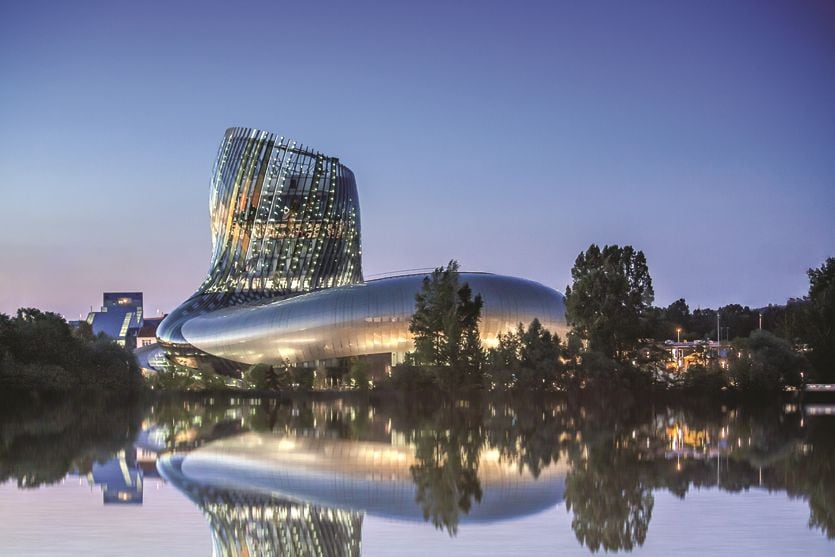
With over 415,000 visitors in 2024, the Cité du Vin is the cultural visit not to be missed in Bordeaux. A unique cultural site, accessible to all, presenting the many facets of wine and its cultural and universal dimension. It is a small citadel entirely dedicated to wine, a journey through the world of vines and wines, from antiquity to the present day, across five continents. Through six universes subdivided into 18 modules, the permanent exhibition illustrates how wine, a universal heritage, has inspired peoples and shaped their lives and their territory for millennia. Spread over 3000 m², there are interactive, individual and collective, educational, immersive, dreamlike and multi-sensory experiences, with a permanent exhibition (available in 8 languages, including Italian), a spectacular Belvedere offering a total view of the city and a glass of wine to celebrate, as well as tasting workshops celebrating vineyards from all over the world. This year there are two appointments not to be missed: the new sensory route Via Sensoria (open until 2 November) for a unique and sensory tasting experience on the theme of the seasons, and the photographic exhibition (open until 28 September) with free access 'In prima linea - Viticoltori di fronte al cambiamento climatico' (On the front line - Winegrowers facing climate change), dedicated to the work of photographer Michel Joly, who is strongly committed to environmental protection and concrete actions for its protection.
At Château de Malle when wine tradition merges with art
Château de Malle is a mansion built in the 17th century by Jacques de Malle, which was later bequeathed to his son, Pierre de Malle, advisor to King Louis XIV. Here, the nobility of great wines blends with that of art and architecture. The château stands at the centre of 6.5 hectares of Florentine-inspired gardens, adorned with statues symbolising work in the vineyard and wine, great characters from mythology and protagonists of the commedia dell'arte. But Château de Malle is also a Grand Cru Classé since 1855. Château de Malle's vineyard is nestled in a 50-hectare green setting and enjoys optimal exposure, straddling two prestigious appellations: Graves and Sauternes. An imposing organic-certified vineyard produces grand crus of exceptional quality, offering a diverse range of wines, including reds, whites, bubbles and Sauternes. Finally, the mansion represents above all a family history: each generation has participated in its evolution. Since its creation, four centuries of family history continue to shape its soul. And the arrival of Luc and Clémence Planty in April 2024 is part of this continuity. Together they are giving new impetus to the enhancement of a great historical and wine heritage. For the first time, the castle, gardens and vineyard are being opened to the public, offering a unique experience for families, lovers of culture and great wines.
Périgord, a magical corner of France in the Dordogne Valley
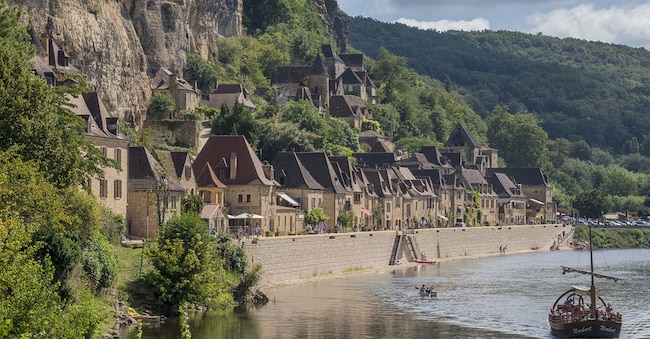
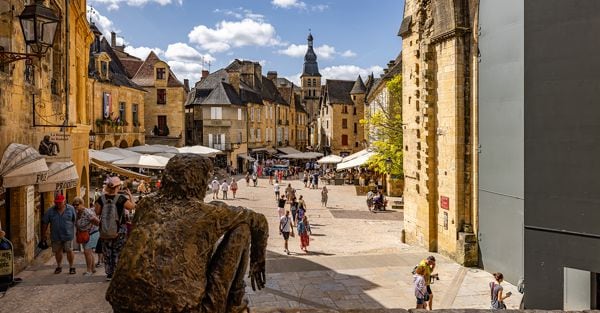
Halfway between Bordeaux and Toulouse, in the department of Dordogne, lies Périgord, a magical corner of France. Here, quality of life, gastronomy and heritage are not just words: Périgord Noir has managed to preserve its authenticity and conviviality in a region rich in savoir-faire. Surrounded by two valleys classified as World Heritage by Unesco, the territory reveals treasures and secrets. The Vézère valley, for example, is classified as a World Heritage Site for its prehistoric sites (143) including the most famous cave: Lascaux, world-famous for its polychrome cave paintings. The Dordogne Valley and its 1001 castles are a perfect location for filming films and historical series and is classified as a biosphere reserve for the quality of its water, fauna and flora. Among the places to visit is Sarlat, with its market, famous for the films that were shot here and for a rich heritage that places it at the top of European cities. But the Périgord is also appreciated for its gastronomy, truffles, foie gras, walnuts, strawberries, and for its craft traditions - the Nontron knife, found on the tables of France's greatest chefs, was born here - and for the stories linked to wine and the generations of winegrowers involved in the Bergerac region. The Dordogne also offers innovative eco-friendly accommodation for a slow regeneration and wellness experience, in luxury bungalows with spa, combining luxury and nature. Among the addresses for a stay, there is the Hotel de Pavie (5-star in the Relais & Châteaux circuit) or, in the midst of the vineyards, Châteaux Hotel Grand Barrail (also 5-star) in Saint-Emilion, or the 4-star Le Vieux Logis in Trémolat.

