
All the doubts of Trump and Xi on the eve of the face-off
White House confirms talks in Korea to discuss trade, but also rare earths and Ukraine. Beijing cautious: 'Many bilaterals, we are working with the US'
by Luca Veronese - New York
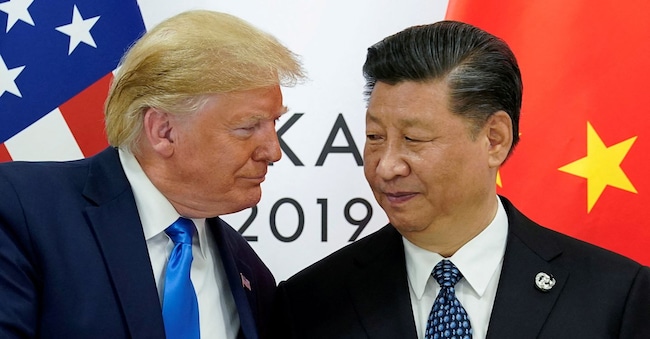
Xi Jinping will be in South Korea from 30 October to 1 November, at the invitation of South Korean President Lee Jae-myung, to take part in the Apec summit in Gyeongju. The confirmation by the Chinese authorities does not clearly relate to the talks - repeatedly announced and just as many times denied - between Xi and Donald Trump, but it is already an opening.
From the White House they seem to have no doubts, the face-to-face will take place and as the US president declared, with his usual emphasis, "it will lead to a fantastic agreement, fair for all, a great agreement", on tariffs and international trade, on rare earths, on chips and technology sharing, on soya, on fentanyl. As well as - at least in Trump's aspirations - on Vladimir Purin's sanctions on Russia's oil and on how to stop the conflict in Ukraine.
On the Chinese side, there is more caution. Beijing's Foreign Ministry spokesman, Guo Jiakun, limited himself to explaining that Xi Jinping has bilaterals on his agenda with various interlocutors. And when asked explicitly about the meeting between the leaders of the two major global powers, he gave a matter-of-fact answer: 'Beijing and Washington,' he said, 'are in close contact regarding a meeting between the two presidents.
The willingness of the United States is clear, China's opening has been there, but anything can still happen between now and next Thursday. Trump's tendency to get uptight when he has to take rejection is well known. And Xi's China has now learned as much to respond blow by blow to American threats as it has to not let itself be flattered by the tycoon's blandishments.
Much has changed since Trump's first term in the White House. "In the past, China was unprepared for Trump's pressure tactics, now Xi is prepared and knows how to respond. He knows Trump wants a good relationship with him and has realised that Trump respects strength, not concessions," says Kurt Campbell , former deputy secretary of state under Joe Biden and now president of the consulting firm Asia Group.


