All forms of beauty in Gaudí's Barcelona
100 years after the architect's death, the Sagrada Familia has become the tallest church in the world, thanks to the recently installed cross

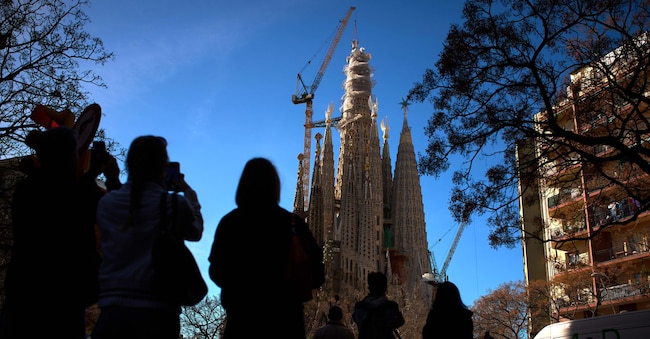
One hundred years have passed since Antoni Gaudí's death and Barcelona celebrates the genius of modernism with Unesco's designation of World Capital of Architecture for 2026. And with an event that is perhaps even more symbolic, the record set by the Sagrada Familia which, with the installation in February of a cross on one of the towers, the one dedicated to Jesus, reached 172.5 metres, surpassing the spire of the Ulm cathedral (161.53 metres) and thus becoming the tallest church in the world. The completion of the work - which began in 1882 - is still some years away, but the height record will be hard to beat.
A hundred years after the death of God's architect
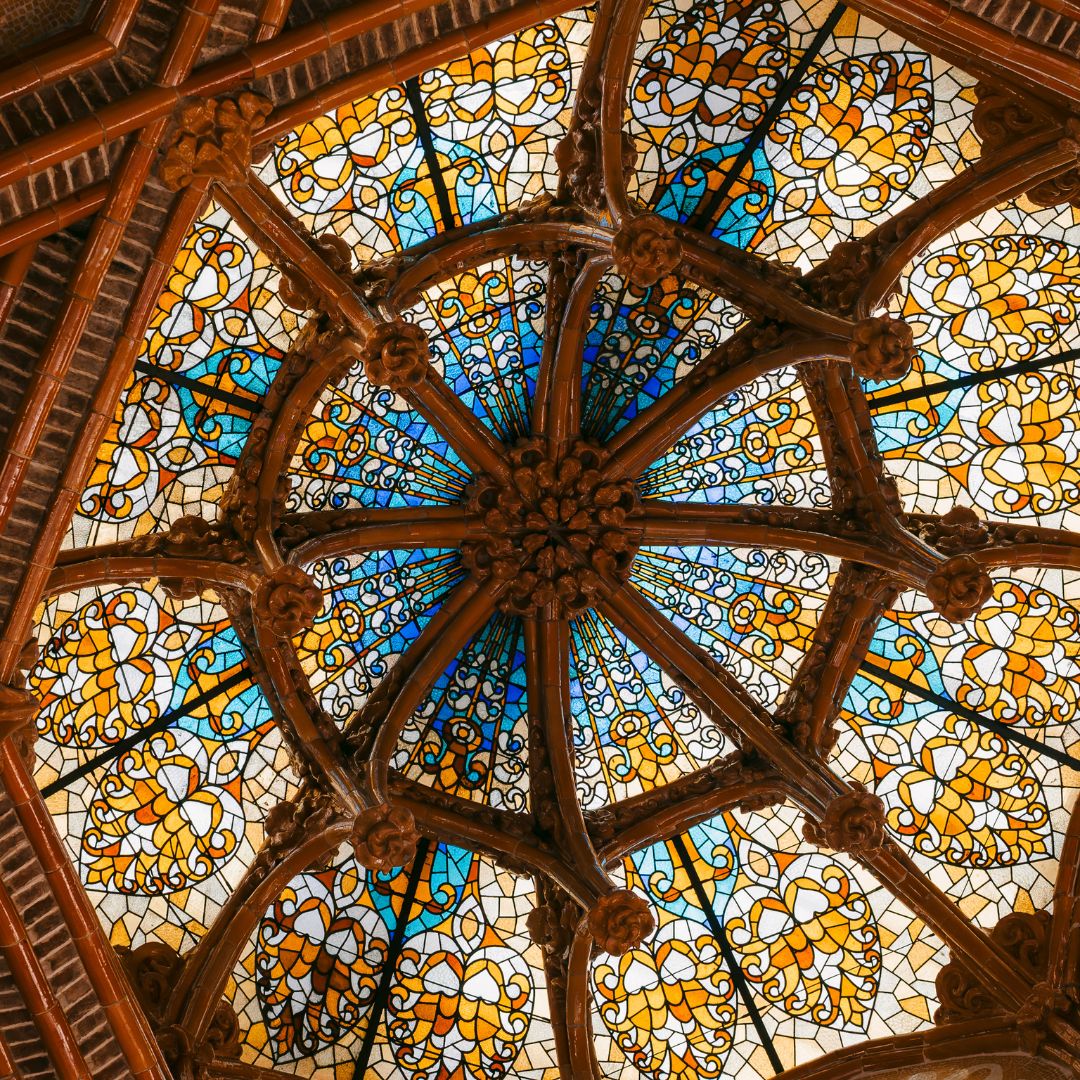
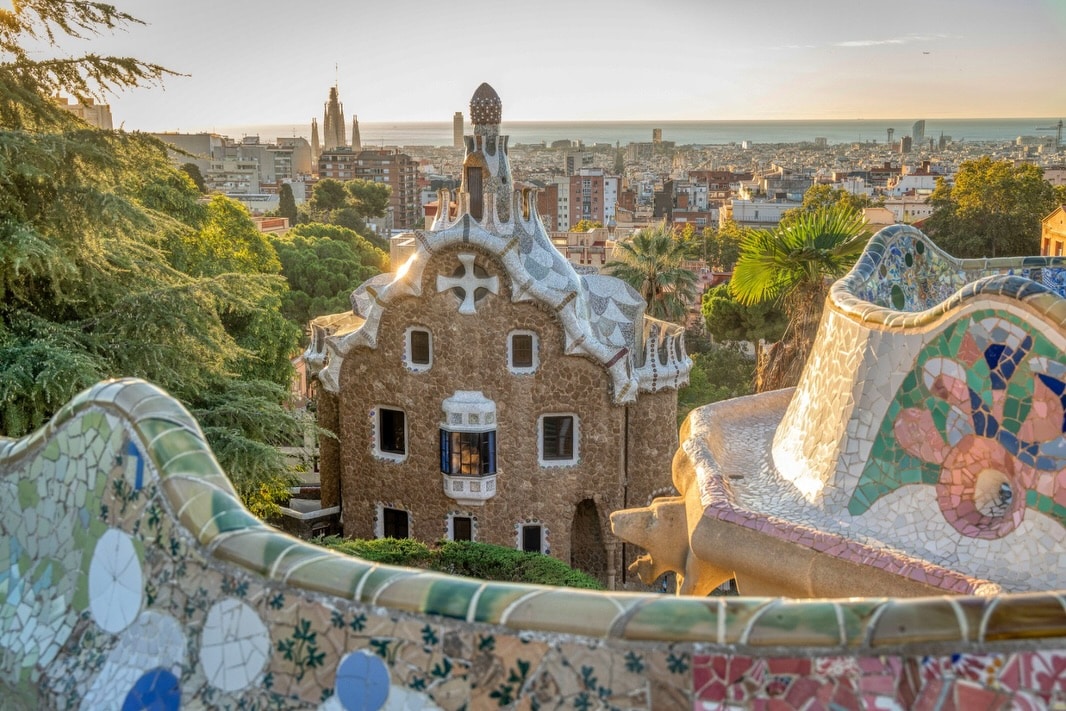
A visit to the cathedral aside, to follow the still-authentic traces left by the 'architect of God', as he was called, a visit to Barcelona (one can comfortably fly to the Catalan city several times a week from Milan Malpensa, Milan Linate and Naples airports at low fares with easyJet airline) can start from the Barrio of Les Corts, embraced by the Iglesia de Santa Maria del Remei with its slender bell tower and illuminated by an already spring-like light. Here you can still feel the soul of a Catalan autèntic neighbourhood: the narrow, tapered houses have retained their modernist architecture amidst the panaderia, the kiosks sell the newspaper La Vanguardia, in the Cafeteria of the Centre Civic Can Deu with its stained glass windows you can taste the sweet ensaimada and the bocadillo de jamon serrano, the ham sandwich smeared with tomato. From there, it is a short walk to the Jardines del Palacio de Pedralbes, because around the former royal residence, which now houses the Museum of Ceramics and Decorative Arts, rise Himalayan cedars, magnolias and linden trees that seem to dance around the vine-covered pergola designed by Gaudí, who also designed the Fountain of Hercules within the bamboo grove: his artistic 'stigmata' can be recognised in the wrought-iron dragon's head from which water gushes forth. That same fire-breathing monster is also on display at the entrance to the Güell Pavilions, to which the young architect imprinted his stylistic exuberance and chromatic vivacity through mythological details. While the NH Collection Barcelona Constanza is ideal for staying while enjoying a bird's-eye view of this ever-changing area, not far from the Barça Football Club Museum and the new Illa Diagonal, a treasure trove of gastronomic delicacies, the Colonia Güell, accessible by the Ferrocarril de la Generalitat, is essential for understanding the modernist ferment: in its crypt, Gaudí put into practice for the first time in a composite work the principles that would inspire the grand design of the Sagrada Familia, his masterpiece, namely the chain arch, the fluidity of space, the harmony of the naves with the slope of the hill.
In the district of Gràcia
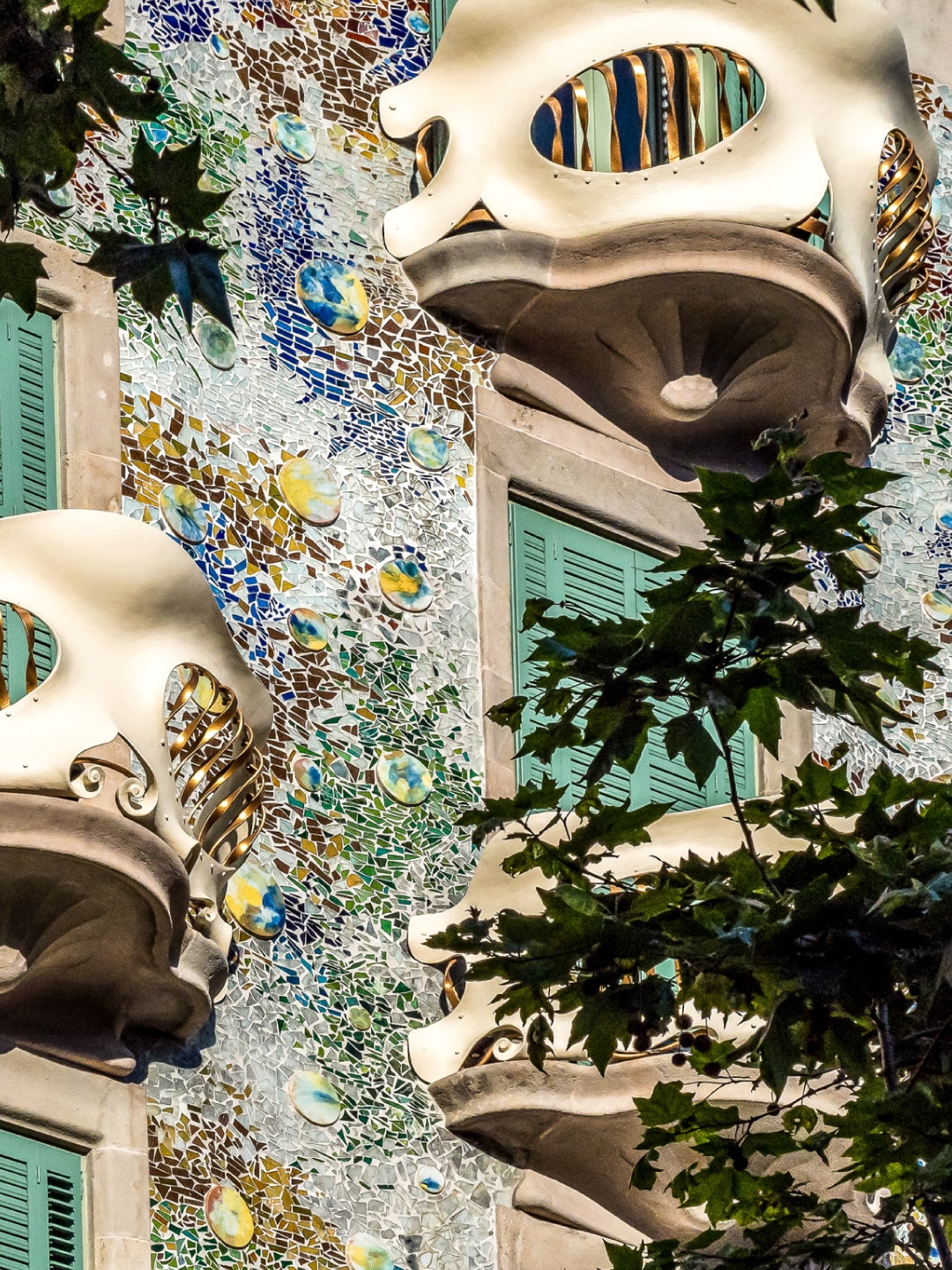
Casa Vicens, in the neighbourhood of Gràcia, was the first private house the architect built in Barcelona and the last to be opened to the public: orientalising intentions are evident in the pagodas, although the predominant impression is of being in a garden dwelling where everything - from the façade with the azulejos of marigolds, to the ceilings to the walls on which sculpted or painted bunches of grapes, ivy and plane leaves, and roses appear - induces botanical enchantment. This expressive freshness thins out at Casa Calvet, trapped in the geometry of the Eixample (the chequered neighbourhood), where, however, two gastronomic experiences can be had: imperial-era Chinese cuisine at China Crown or exotic coffee at D. Origen, admiring in both cases the ceilings traversed by iron beams. From there on foot, orienting oneself thanks to its 18 biblical towers that will be completed, like the two façades, within the year, one can easily reach the Sagrada Familia, welcoming with amazement the magical and dazzling effect of the sunlight filtering through the stained glass windows, which is repeated upon entering the sacristy. Run over by a tram on 7 June a century ago while crossing the Gran Via de les Corts Catalanes, Gaudí was taken to the Hospital de la Santa Creu i Sant Pau where he died, perhaps recognising the modernist lushness of the pavilions proge i Montaner: their almost-completed recovery, the orange trees, the lucettas by his fellow architect Lluís Domènechrtole, the dragons, crocodiles and bats among the azulejos make this hospital 'levitate' into a kind of winged art garden. And, in the end, Casa Batlló also looks like a fluid, almost marine creature, where now Refik Anadol, a pioneer in post-digital architecture, using artificial intelligence twists this hyperbolic Gaudí creature, who would perhaps not have minded the change of skin that the chameleon-like Poblenou is also experiencing: the barrio of factories, mainly textile, clinging to the Mar Bella beach is evolving between Carrer de Pallars and Can Saladrigas, which sees creative ateliers and technological hubs springing up among the old brick kilns. Conversely, the conversion of the adjoining Glories area is more scenic: if Jean Nouvel's Tower looks like a thumb caressing the clouds, the MBM Arquitectes-designed Design Museum opposite mirrors the sky and at the same time, with its jutting rectangular canopy, backed by the shiny canopy of the Mercat dels Encants looks like a mouth to mouth against Barcelona's past, including the romantic, Fellini-esque Plaza Monumental nearby. The gastronomic scene is also very satisfying: at the modernist Galvany market you can choose from seventy cuisine options under the large dome built in 1927, while the Molino de Per restaurant in correr Corsega is more avant-garde. Finally, Tablafina inside the NH Collection Gran Hotel Calderon, a theatre until the 1970s, chooses instead to be faithful to the tradition of Catalan and Iberian cuisine,