
All the beauty of Istria, from Pula to the Brijuni Archipelago and Cape Promotore
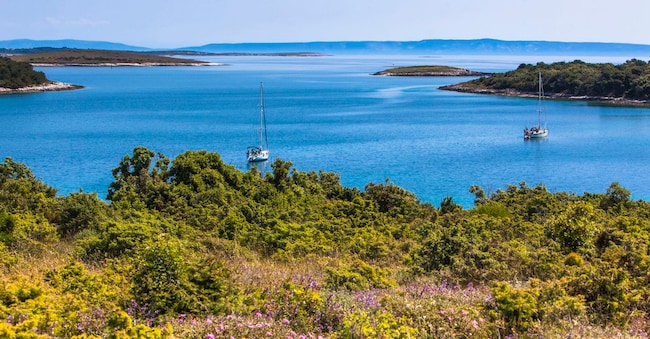
The area features a succession of stunning seascapes, with a rugged coastline of bays, cliffs and rocky beaches

Key points
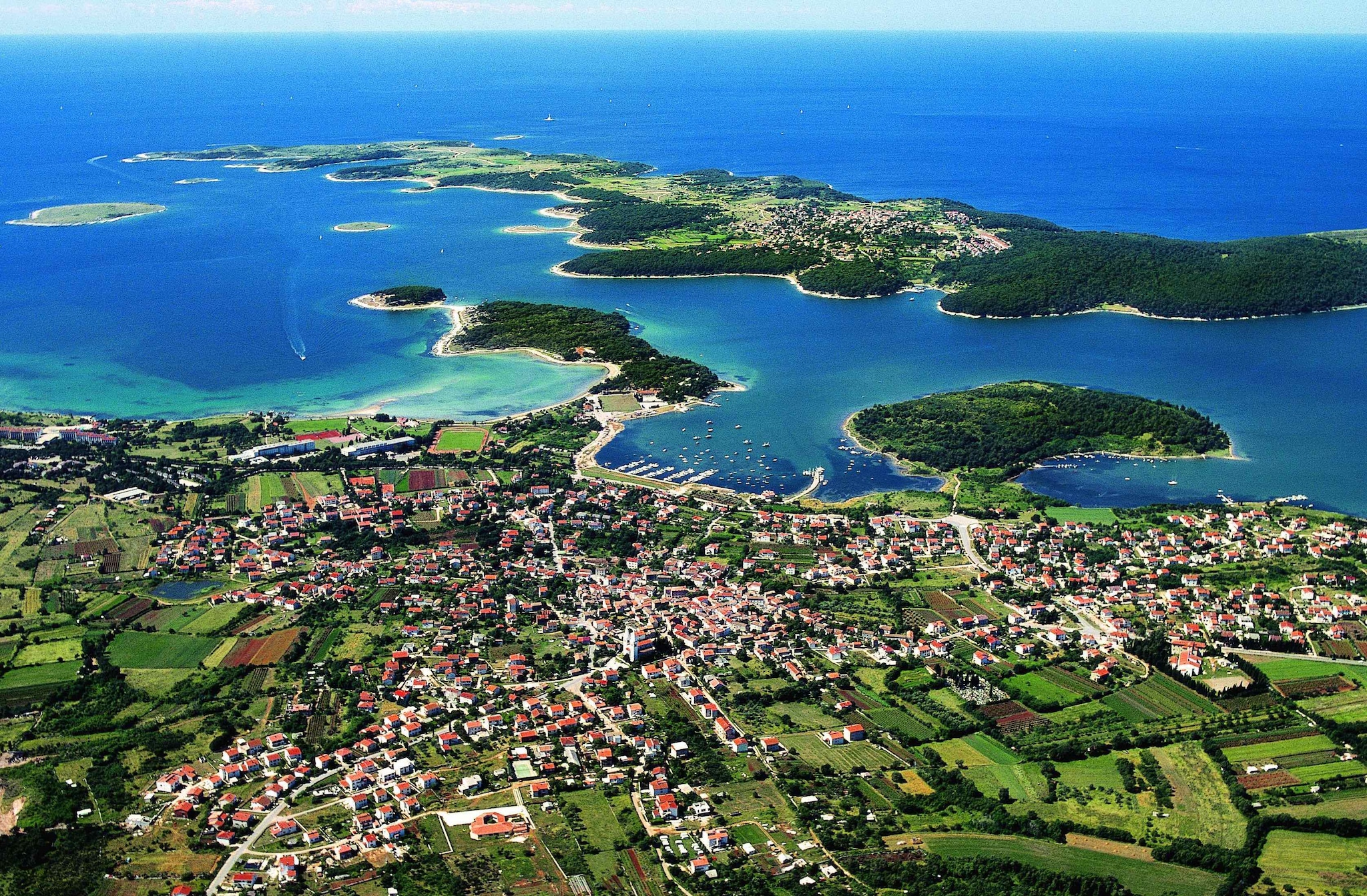
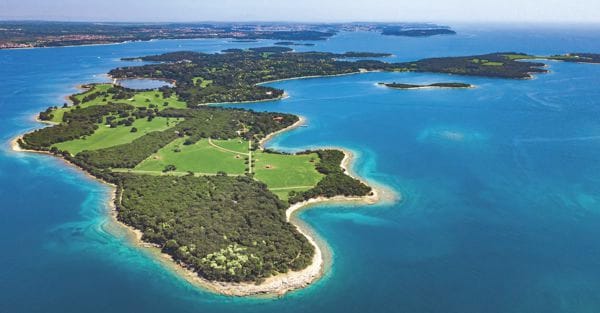
In southern Croatian Istria, the Adriatic Sea and the land come together to form a landscape that invites exploration from every angle. From the Brijuni archipelago – a sophisticated tourist destination set amidst a captivating seascape – to the rugged coastline of Cape Promontore, where bays, cliffs and rocky beaches create a wild and unspoilt setting, right through to the city of Pula, which combines a rich historical heritage with a vibrant contemporary music scene. During the summer months, the ancient Arena, one of the best-preserved Roman amphitheatres, hosts live performances by renowned international artists on its stage. This stunning corner of Croatia, just over an hour and a half’s drive from the Italian border, is a mosaic of places to discover through a range of outdoor experiences.
Experience the Adriatic Sea through snorkelling and kayaking
The sea is undoubtedly one of the main attractions of southern Istria: the crystal-clear waters of the northern Adriatic invite you to swim, dive, go boating or explore the coast by kayak. Schools of fish, seahorses, crabs and nudibranchs are just some of the creatures you might encounter whilst exploring the underwater world, where, alongside the diverse and colourful ecosystem, you can even spot archaeological remains. Thanks to the maps and signposts in the area – a project promoted by the Istrian Tourist Board and the local tourist associations – anyone equipped with a mask, flippers and a snorkel can explore the most interesting seabeds independently and responsibly (before entering the sea, it is essential to assess your own abilities, check the sea conditions, and consider the distances and the difficulty level of the route). In the vicinity of Pula, snorkelling enthusiasts can explore two particularly picturesque areas: Havajsko and Prirodno. The former, known as the ‘Hawaiian beach’, is a bay of pebbles and rocks against which imposing waves break. Overlooking the western coast of Pula, on the Verudela peninsula, Havajsko offers two snorkelling routes that allow you to explore the seabed and observe gardens of false corals in every shade of orange, pink and red. On the east coast, Prirodno – also a rocky beach – is famous for the charm of its three semi-open caves, two of which are flooded by the sea. The wonders of the Istrian sea are not confined to the coast: a short distance from Pula, the islands of Brijuni National Park offer an even more breathtaking underwater world. It takes just a few minutes by boat from the town of Fažana – so do plan a stop in this charming town near Pula – to reach the enchanting group of islands in southern Istria. The extraordinary beauty of the landscape is complemented by a historical heritage dating back to Roman times, when villas and residences were built on the islands; between the late 19th and 20th centuries, the Brijuni Islands established themselves as an exclusive holiday destination, retaining an elegance that makes them unique to this day. This historical legacy is also present underwater: the two areas of the Brijuni Islands designated for snorkelling allow visitors to explore seabeds that harbour traces of the past. At the Saluga lido, you can see the concrete foundations of the old wooden pier and the pipes of the original aqueduct. In Verige Bay, on the other hand, an underwater trail – accessible only with an authorised guide – leads to the discovery of a submerged archaeological heritage, including the remains of a Roman-era pier. The Capo Promontore nature reserve – known as Kamenjak in Croatian – situated at the southern tip of the Istrian peninsula, is also an ideal spot for snorkelling, swimming, other surface water activities and even windsurfing. The easiest way to admire a thirty-kilometre-long coastline dotted with bays, coves and beaches is by kayaking or stand-up paddleboarding. Both can be hired at Školjić Bay, from where you can reach the islands of the Medulin archipelago, one of the best-known tourist destinations on the Istrian peninsula.
Dinosaurs, walks and bike rides
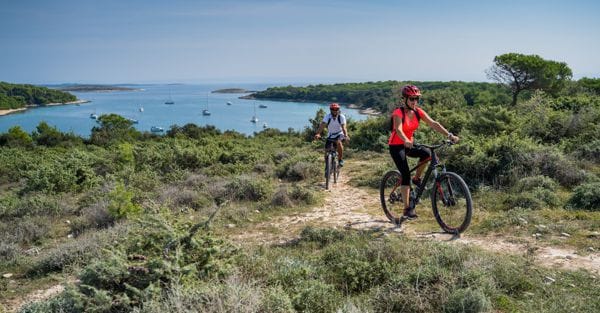
The Brijuni National Park archipelago can also be explored on foot or by bicycle. To get a sense of the natural beauty and historical significance that characterise these islands, you can walk along the Zelenikovac path, which leads from Javorika Bay to Cape Planca. A walk along the shaded coastline, through an area of considerable natural and cultural interest, which preserves geopalaeontological remains dating back to the Lower Cretaceous period. Meanwhile, the Mediterranean greenery of the Capo Promontore nature reserve, home to over twenty species of wild orchids, can also be reached by bike thanks to Istria’s network of cycle routes; on the peninsula, cycling enthusiasts will find scenic routes of moderate difficulty that wind through meadows, woods and along the coast.
Don’t miss the Full Moon Bike Ride, organised during the summer months for cycling under the full moon. On foot, you can explore the Dinosaur Trail, a 1.5-kilometre educational and recreational route suitable for the whole family, along which you’ll come across life-size dinosaur sculptures and information panels recounting the history of the creatures that inhabited this area some ninety-eight million years ago; at the end of the trail, on the Grakalovac headland, you’ll reach one of the few sites where fossilised footprints can be seen. Equally recommended is the Gradina sensory-educational trail, which is also accessible to blind and visually impaired people, starting from the forest path at the entrance to Premantura. The walk takes about an hour, accompanied by the scents of the Mediterranean scrub, with the sea always visible on the horizon. Along the route, stunning natural views are complemented by historical attractions such as the Castrum fortress, leading to the picturesque village of Premantura – a destination well worth discovering.
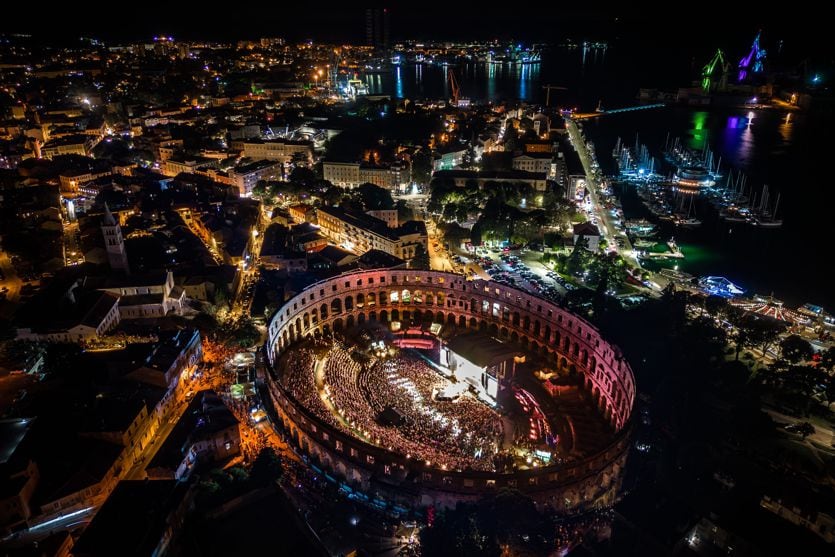
Pula’s Roman heritage and the summer season at the Arena
Overlooking the Adriatic Sea, the city of Pula tells a story spanning a thousand years whilst keeping pace with the modern world. The most significant traces of its past are preserved in the Arena, its iconic landmark built in the 1st century AD. In Roman times, its stands could accommodate up to twenty-three thousand spectators; today, this Roman amphitheatre is a cultural venue hosting events, festivals and concerts. With a programme that brings the whole summer to life, the Pula Arena welcomes international artists to its stage for live performances. Among the headliners for upcoming events will be some of the biggest names on the global music scene, including Moby, Sting, Nick Cave and Lorde. Pula’s Roman heritage is also revealed through other striking city monuments, from the Arch of the Sergii, which stands at the entrance to the historic centre, to the Temple of Augustus, which dominates the ancient Roman forum, the main square. Strolling through its streets means journeying through centuries of history, where traces of the Roman era intertwine with Venetian and Austro-Hungarian influences. Among the range of experiences Istria has to offer is its gastronomic heritage. Olive oil is undoubtedly one of the finest products of the local cuisine, as demonstrated by the House of Istrian Olive Oil, a museum situated in the centre of Pula, where a visit offers an insight into the history of olive growing in Istria. Traditional dishes combine the flavours of the sea with those of the land, giving rise to a cuisine that showcases local produce, such as the prized Boškarin beef. To savour authentic Istrian cuisine, head to a ‘konoba’, the equivalent of an Italian trattoria. From the adrenaline rush of outdoor activities to that of summer concerts at the Pula Arena, and from the charm of the natural landscapes to its historical heritage, southern Istria is a region that harmoniously combines its natural heritage with a history stretching back thousands of years.


