
All the leading ladies of the Sferisterio

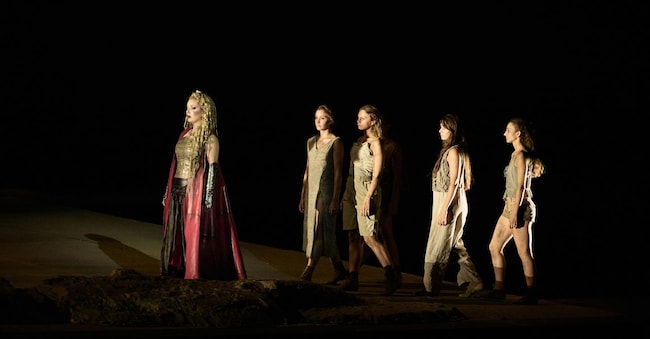
Her, her, and her again: as always, there are three productions running throughout the current summer season at the popular Sferisterio, but never before, as in this 62nd edition of the MOF (Macerata Opera Festival), have the leading ladies stood out so prominently in the final results. Voices very different in terms of background, character and vocal style. Yet united by a diva-like presence, which, amplified by the vast spaces of the world’s most original stage, has crowned them queens.Let’s start with the names, and we must begin with the first: Anastasia Bartoli, a dramatic soprano with an exuberant stage presence, the true linchpin of the new production of *Nabucco*. Her Abigaille towered above all the others in the programme, in terms of power, tone, colour and, above all, the dizzying number of notes, delivered with dazzling ease. A few minor criticisms can, of course, be made, if one wishes to be particularly meticulous; for example, regarding the cabaletta in the second act, which was certainly captivating, but where the pyrotechnic ‘da capo’ veered off in very personal directions, with added notes – though possible – that strayed considerably from Verdi’s original texture. And where the composition took other directions, favouring the darker areas, the lower register: the shadows, rather than the triumphant light. What a personality, however, this now-established daughter of Cecilia Gasdia has; what authority on stage; what courage.
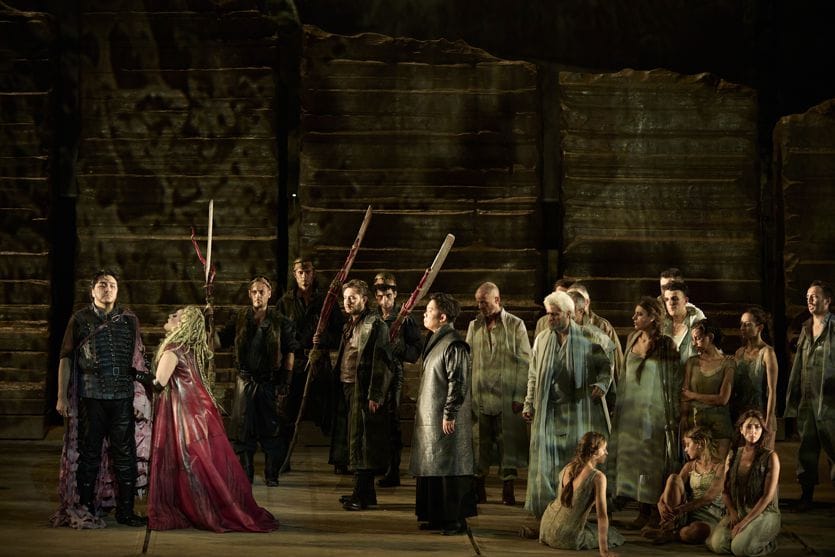
And now we come to number two, Martina Gresia. Until now, few people knew her: a victory at the Aslico (which remains a sure bet), her debut at the Arena di Verona as the youngest debutante, and then numerous ‘cover’ roles. You sit on the bench, ready to step in for the lead singer should she fall ill, and in the end you sing in the final performance, when there’s no one left to hear you and the production has lost its lustre, having become routine. For Martina Gresia, a Roman soprano born in 1997, the stars in the open sky above the Sferisterio bring her luck: the lead Leonora in *Il Trovatore*, Marta Torbidoni – a highly talented singer and, what’s more, a local hero, being a native of Montemarciano in the province of Ancona – sings only on opening night, to good acclaim. Then she steps aside. The understudy takes centre stage; it’s her turn to prove herself. Her voice is confident, her tone warm, her phrasing soars. At her side on one side is a retro-style tenor, Haiyang Guo, who was also called in at short notice to replace the originally scheduled Piero Pretti (and he has a remarkable voice, but like so many Asian singers, he has studied from recordings of the past, so he still sings the second finale, ‘Son io dal ciel disceso’, an irrational folly that no *Trovatore* dares to attempt today) and on the other, an experienced baritone, Vito Priante, who brings great class to the role of Count di Luna, though he is slightly uncomfortable with the vocal range. She, as is characteristic of authentic voices, renders the lyricism of Verdi’s most romantic role with a confidence that gradually grows, unfolding into a seductive tone and a natural, supple phrasing, innocent in its bel canto. She captivates the audience of over two thousand at the Sferisterio. From stand-in, she triumphs as the lead.
And we come to the final member of this trio of leading ladies with Rosina from Rossini’s *The Barber of Seville*, where Raffaella Lupinacci – drawing on her excellent training at the ROF in Pesaro – restores the mezzo-soprano’s winning character. Her opening is confident and bold, with the biting brilliance of the ‘viper’, but she then softens in the face of love’s genuine wounds. Here she is even more compelling, particularly in the already romantic moments of melancholy, as she breaks away from the clichés of comedy at all costs. Not only is she adept at bringing to life this character so originally sculpted in the score, but she is also flexible and responsive – truly very talented – in following the direction of Daniele Menghini, who here (the production premiered in 2022 and is very popular with audiences) envisions a free-spirited and contemporary Rosina, who soon finds herself detesting the Count’s court, especially when he no longer disguises himself as Lindoro. She sheds her white wedding dress and dashes off across the stalls, making her way to the exit. All this after kissing the ever-present Harlequin on stage – a spurious presence, like many others in this bizarre production – whilst the Count consoles himself with Berta. A surprise, very different from the usual elderly housekeeper, and with the beautiful voice and effortless presence of Giulia Mazzola.
With the leading ladies taking centre stage, the Sferisterio reaffirms the vitality of this much-loved theatre venue, attracting a mixed audience of tourists and locals at performances that are consistently sold out. The final performance of *Il Trovatore* was a moving occasion, attended by the fifty-three mayors of the province of Macerata, in remembrance of the tenth anniversary of the 2016 earthquake. The national anthem, tricolour sashes and a tangible sense of regional solidarity. The evening did, however, get off to a late start due to a technical fault with an orchestra music stand: mishaps do happen, but they could have been avoided with better oversight. The instrumental quality of FORM, the Marche Philharmonic Orchestra, did not always seem up to scratch, perhaps weary from the gruelling run of consecutive performances. Perhaps it needs a more consistent artistic direction, rather than the rotation between Dmitri Jurowski – who was boisterous in *Il Trovatore* – Fabrizio Maria Carminati, a seasoned veteran in *Nabucco*, and Jacopo Brusa, the youngest, generous but still inexperienced in the essential gestures required – the only ones effective in large venues.
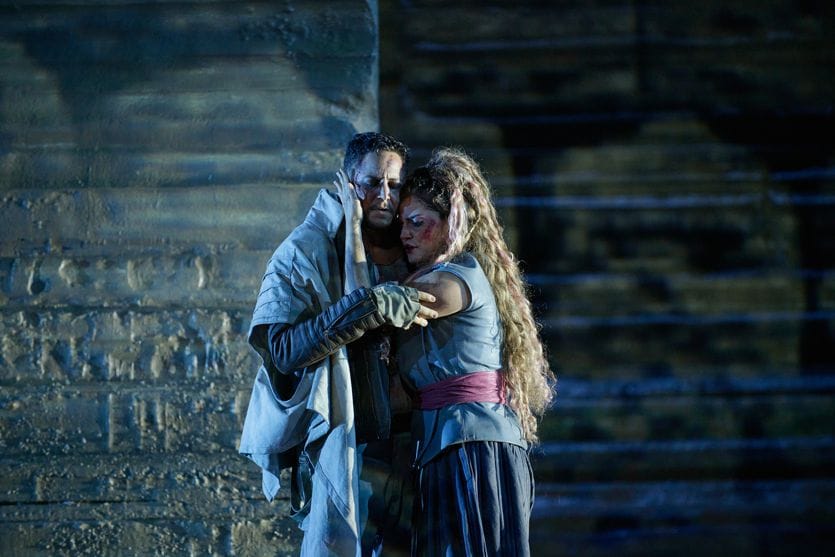
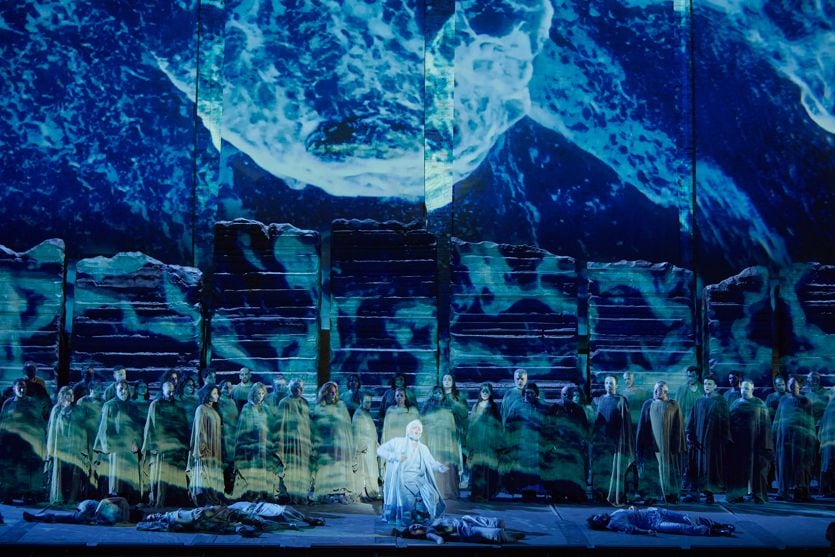
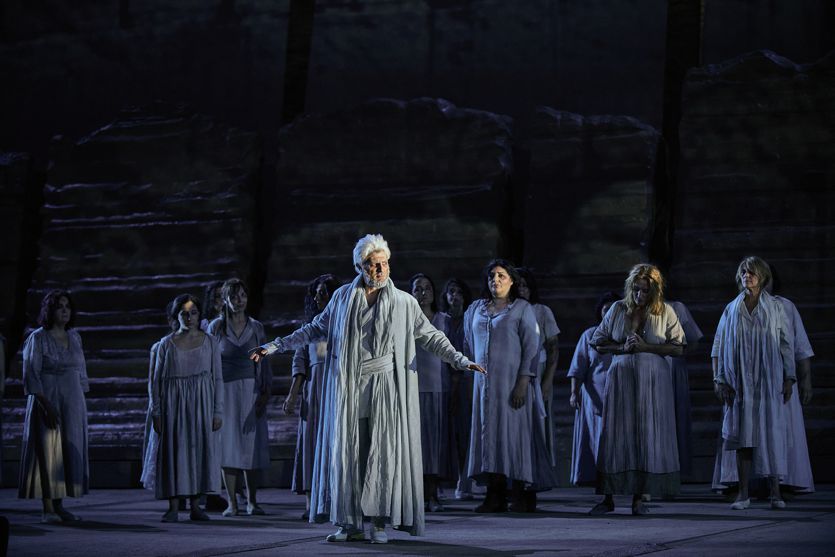
In Paul-Émile Fourny’s new production of *Nabucco*, there was a great deal of confusion, among the Assyrians and Jews, with no narrative to speak of amidst the lifeless movement of set pieces and utterly amateurish video work, where the projections ended up not only on the wall of the Sferisterio but also on the singers’ faces. It was dreadful to see the Chorus – decent but not always in time (as they once were) – with images of ocean waves flickering across them.

