
Alliances and teamwork improve business results
Fondazione Symbola analysed the factors of competitiveness, including aspects not captured by traditional economic indicators

4' min read
4' min read
Cohesion, or rather the ability to network and build wide-ranging alliances, helps companies to compete better. This is the thesis of the latest report by the Symbola Foundation, Intesa Sanpaolo, Unioncamere and the Guglielmo Tagliacarne Study Centre of the Chambers of Commerce, entitled Cohesion is competition, new geographies of value production. A geography that has Veneto as an important reference point. In fact, the report contains 13 stories that are considered emblematic and two recount as many realities of excellence: one was born and raised in the Padovan area, the other in the Venetian area.
The study analyses and recounts the most significant factors of our country's competitiveness, with a focus on aspects not captured by traditional economic indicators. The evidence is that collaboration and the ability to work as a team in all directions are winning: they improve ties and roots in communities and territories, increase employees' sense of belonging and satisfaction, and customer engagement and dialogue. In 2024, cohesive companies represented 44% of the Italian manufacturing universe (+12% compared to 2018 and +1% on 2023). Their habit of establishing links with workers and partnerships with stakeholders, i.e. other companies, trade associations, banks, non-profit organisations, local institutions and customers, is confirmed. Less intense, on the other hand, is the synergy with the school and academic world, which seems to be in retreat. Seven out of ten cohesive businesses have invested in environmental sustainability in the last three years and more than eight out of ten have done so in digital 4.0 technologies, with more than 60% in research and development. Among the experiences cited are those of Sbf-Visa Group of Casale di Scodosia, in the province of Padua, and Dal Ben of San Stino di Livenza, in the province of Venice. The former is among the leading European companies in the design and construction of merry-go-rounds. The second manufactures complex high-tech machinery to customer specifications. Sbf-Visa Group is an example of how alliances with the customer are realised to co-design the final product. Dal Ben, on the other hand, is cited for its focus on employees and staff loyalty, which has attracted many young talents, interested in developing an entire career with the group.
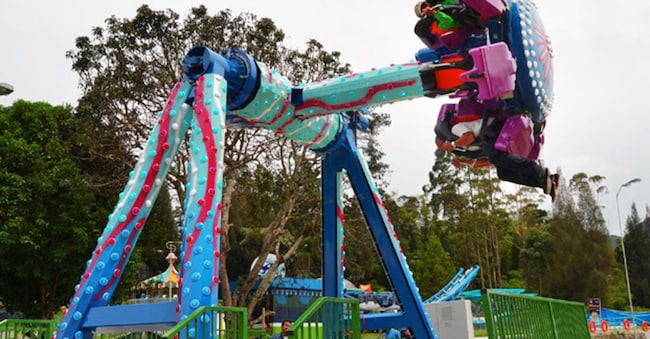
In Sbf-Visa, the report says, a US customer - owner of several hotels and clubs in New York - recently knocked. He requested an all-white horse-drawn carousel, in line with the decoration of the premises entrusted to a famous local street artist. The carousel was to be created in collaboration with the client and artist. The request to work as a team did not surprise the board of the company in Via del Placco, which over the years has made co-designing one of its strong points, also because exporting to the world requires, among other things, dealing with often very different regulations. If in the EU the safety standards are common, in the United States or Australia the rules can change significantly. Generally, the owner or operator of the amusement park provides guidance on essential variables - such as the speed of movement of the merry-go-round or the length of the track or the number of carriages on the trains - that cannot be standardised. In other cases, the company proposes a range of layouts: from apple caterpillar, toy trains, large roller coasters (Sbf specialises in making them in particularly rainy locations, ed), chain rides to log rides on water. However, it often happens that customers make specific requests in terms of aesthetics and design. The only non-negotiables remain safety, reliability and public enjoyment. Further added value is provided by the after-sales service offered, which guarantees technical support, spare parts and rapid intervention on a global scale.
Complex high-tech machinery, including lately the production of telescopes destined to be installed in the Canary Islands, is the business of Dal Ben, founded in Ceggia and grown in the industrial area of San Stino di Livenza, led by managing director Gabriele Dal Ben and his wife and partner Debora Cancian. The recipe of the company, which continues to grow and invest in research and development, lies in the relationship with its workers. In fact, turnover is very low and, at a time when manufacturing companies are struggling to find staff, here in contrast, many candidates are spontaneously applying for jobs. The CEO has repeatedly emphasised that the company's performance and reputation are related to the satisfaction of employees, who are valued in their functions and helped to harmonise private and work life. The company has adopted an above-average remuneration policy; it disburses around EUR 2,500 in welfare bonuses per employee each year, to which are added various benefits and bonuses, such as the parenting bonus of EUR 3,000 for each birth. Employed fathers and mothers will soon also be supported by the company crèche, in realisation. Already now, employees benefit from the free canteen, company team building or cultural events. There is also intense employee listening, involvement and empowerment. The choices have affected the economic results: turnover has risen from 22 to 33 million euro in the last two years. The value of the cohesion policies aimed at workers has merited the Welfare Index SME award several times. Last year, Dal Ben was recognised by Intesa Sanpaolo in the fifth edition of 'Imprese Vincenti', for its ability to promote an inclusive business culture, generating value for the economy.
© REPRODUCTION

