
Allsides 3D Digital Twin Factory gets underway, in partnership with Nvidia for Physical AI on an industrial scale
The South Tyrolean group has launched an industrial-scale automated production system that transforms physical objects into SimReady Digital Twins

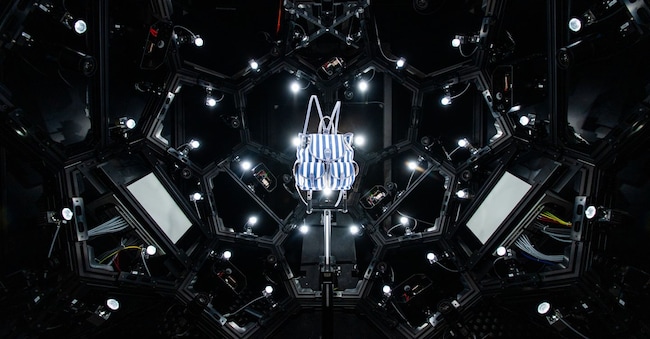
(Il Sole 24 Ore Radiocor) - Allsides, a South Tyrolean company that builds 3D data infrastructure for Physical AI and World Models, has launched the 3D Digital Twin Factory, an industrial-scale automated production system that transforms physical objects into SimReady Digital Twins, designed for the simulation training of robots and Physical AI systems. Thanks to Nvidia’s accelerated computing, Allsides’ automated pipeline is capable of transforming real-world objects into 3D Digital Twins – physically accurate digital replicas – which enable robots to train in simulation environments such as Nvidia Isaac Sim.
Each digital twin reproduces the object’s geometry with sub-millimetre precision, measuring PBR (physically based rendering – a 3D rendering and shading method that simulates the real-world behaviour of light as it strikes an object’s surface) materials and physical properties such as mass, collision properties and coefficients of friction with precision, so that, in a simulated environment, a robot can learn and train using objects from the real world.
"Every major breakthrough in artificial intelligence has been made possible by higher-quality data, and Physical AI is no exception. Robots learn through simulation, so the simulation must be true to the real world. The 3D Digital Twin Factory provides SimReady Digital Twins of real-world objects on an industrial scale", Franz Tschimben, CEO and co-founder of Allsides, told Radiocor. The company started out in Bressanone as Covision Media and now has offices in New York and San Francisco, as well as partnerships with groups such as Mark Zuckerberg’s Meta, Adidas, Inditex, Gore-Tex and Zara. A simulation environment seeks to faithfully reproduce the behaviour of the real world.
So, “if a digital object is placed inside it that has a shape slightly different from the original, or if its surface behaves differently from the real one, the skill learnt may not translate to real-world application. Engineers call this the Sim2Real gap – the divide between simulation and reality”, explains Tschimben. To bridge this gap, we need physically accurate 3D data that is diverse and available in large volumes. Until now, developers have had to make a choice: synthetic datasets offer scale but lack physical realism, whilst those acquired in the studio guarantee quality but lack variety and volume. “The Allsides 3D Digital Twin Factory was created to eliminate this trade-off,” explains the CEO.
An object – be it a trainer, a power tool, a piece of fruit, an industrial component or a parcel – is placed in the Allsides 3D Scanner. In just a few minutes, the capture system is able to create a visually and physically accurate 3D Digital Twin. The company has also automated the entire process of capture, reconstruction, quality control and delivery: Digital Twins are thus produced continuously, rather than one at a time by specialist technicians. The pipeline is based on Nvidia accelerated computing.


