
"Federica Manzon's 'Alma' wins the Campiello Prize
Second Franchini (Il fuoco che ti porti dentro), third Trevi (La casa del Mago), fourth Mari (Locus Desperatus), fifth Santoni (Dilaga ovunque).

6' min read
6' min read
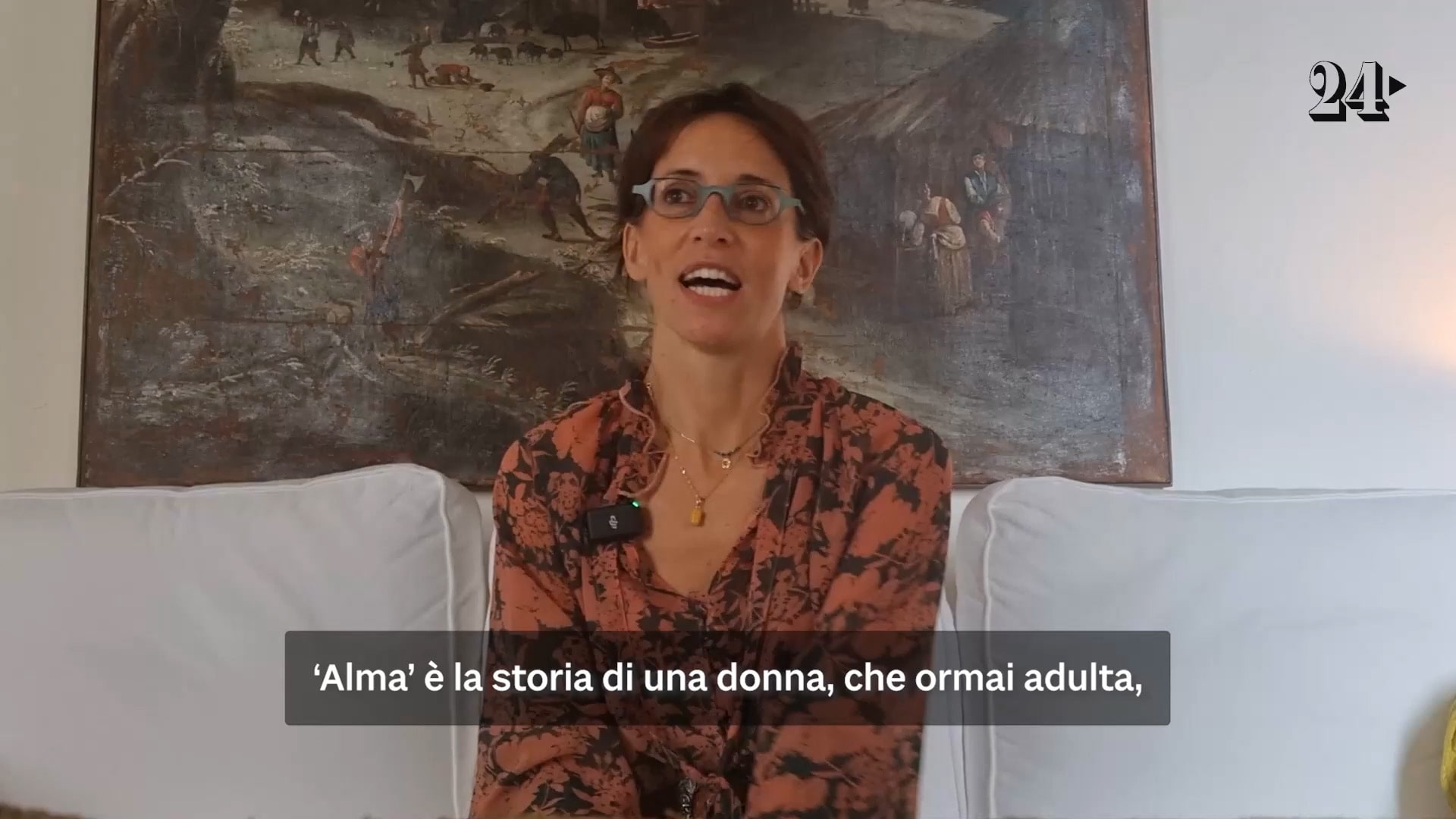
It is Federica Manzon, with Alma (Feltrinelli), the winner of the sixty-second edition of the Campiello Prize. She won 101 votes out of 287 cast by the popular jury. "Since it is a book that speaks of the border, I dedicate this prize to all the people who are crossing the border, in particular the eastern border of Italy, and who do so dreaming of a better present - before even a future - at a time when in Trieste the Schengen treaty was suspended earlier than in other parts of Europe, and is still suspended. I would like my small victory to be an omen to go in another direction,' Manzon said.
Alma is the story of the eponymous protagonist, a woman who returns to Trieste, her native city from which she had many reasons for leaving, to take the inheritance left to her by her father, a vagabond and unpredictable father who worked in the shadow of Marshal Tito. To hand it over to her is the last person she would ever want to see: the ex-boyfriend who had suddenly entered her life - cutting her off from the Yugoslavia that always took her father away from her, and where he used to take her occasionally - becoming a brother, a friend, a lover and an antagonist.
Alma, forced to face her heritage, does so by asking herself where she belongs, what her true identity is, what things define her. She returns to the streets, to the houses where she had lived, to Trieste where the Austro-Hungarian tradition and Basaglia's innovative ideas coexisted, to a border that holds different cultures together, not always peacefully, just as its different natures do not coexist peacefully in the protagonist. What Alma realises is that 'it is not important to merge into some entity, it is important to maintain curiosity,' the author explained during the award ceremony.
"Roots," Manzon said, "are not always departures, sometimes they are used as a blood call to distinguish those who belong to that root, to that territory, to that language, and those who do not belong and are outside that place, that territory. They become an instrument of conflict. I believe that the past, the roots, must be something that moves, like rhizomes, on the surface, that crosses borders. The roots of trees do not care about borders, they cross and go beyond'.


