
Almaviva accelerates on artificial intelligence and moves towards 2 billion in revenues
The group closes 2025 with a turnover of 1.8 billion, growing margins and 51% of revenues abroad. CEO Marco Tripi claims the profile of a family-owned and global company

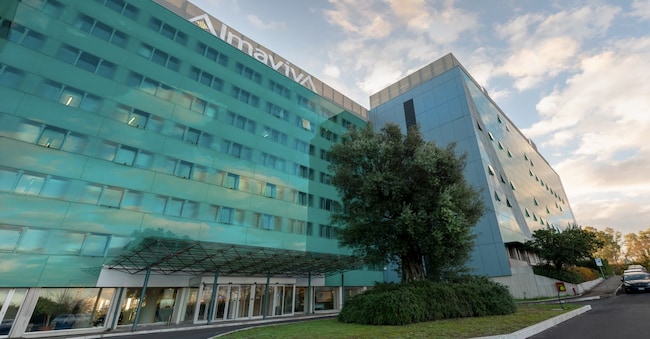
Almaviva accelerates and raises the bar. The Italia It group closed 2025 with revenues at EUR 1.8 billion, up 24.5% on a pro-forma basis, an adjusted Ebitda of EUR 345 million, up 25.7%, and a margin at 19.6%, among the highest in its reference markets. Adjusted leverage decreased to 3.05 times and available cash was EUR 294.7 million.
But more striking than the numbers is the trajectory: the group founded in 1983 and now become 'a global ict company', in the words of its CEO Marco Tripi, has doubled its turnover in four years, combining organic and external growth. The +24.5% is affected by acquisitions. But the pace is there, and Almaviva now appears to be launched towards the two billion turnover milestone.
The point is not only quantitative. The group led by Marco Tripi is claiming a leap in profile: from national champion of digital services to a global platform capable of developing proprietary technologies in Italia and taking them to international markets. "Today we are present in 30 countries with 65 companies and we have exceeded the threshold of 50% of revenues abroad, reaching 51% on a pro-forma basis," Tripi explains to Il Sole 24 Ore.
It is here that Almaviva's ceo puts the pivot of industrial reading, considering the international scale not just a commercial lever, but a necessary condition for holding up the new technological race. "It is a nonsense, no one can develop technology at a high level and then try to sell it only in Italia, which is worth 1% of world trade. The framework is that of a group trying to differentiate itself in a sector in full reorganisation, between the acceleration of artificial intelligence and geopolitical turbulence. Tripi insists on two factors: globality and entrepreneurial control. "Entrepreneurs at the helm of realities that started out as family businesses and remained with this imprinting guarantee greater stability and adaptability than large listed groups and funds focused on short-term values".
Consistent with this vision, the family retains about 96% of the capital. "This element guarantees rapid decision-making and long-term vision. All this is also reflected in the drive for acquisitions: in the last two years Almaviva has invested around one billion in M&A and continues to look at new dossiers, with a focus on Italia and Latin America and, outside these markets, on the mobility and transport vertical.


