
Intesa and Bper also in the European stablecoin Qivalis
The Italian component is strengthened: UniCredit and Banca Sella are also in the consortium

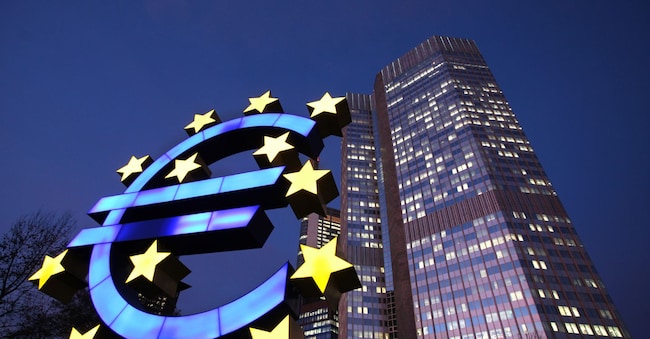
Qivalis steps up a gear and takes the European challenge to stablecoins into a new phase. The European banking consortium, set up to launch a regulated digital currency in euros, welcomes 25 new banks, bringing its total number of financial institutions in 15 European countries to 37. The new entries also include Intesa Sanpaolo and Bper Banca, which join UniCredit and Banca Sella, already present in the project, thus strengthening the Italian component of the consortium. The aim is to build a stablecoin anchored 'one-to-one' to the euro, compliant with the European MiCa cryptoasset regulation and subject to supervision by the Dutch central bank. "I think this is an incredibly significant step," Jan-Oliver Sell, ceo of Qivalis, explains to Il Sole 24 Ore. "We started with one bank, three years ago. And now we are up to 37. We are only at the beginning, because the consortium is open."
Discussions are underway with a couple of other banking groups and their entry cannot be ruled out in the near future, while others may follow suit. But what is important is that the dimensional leap is relevant not only on an industrial level, but also on a political one. Qivalis aims to create a European infrastructure for on-chain euro payments and settlements, i.e. executed directly on the blockchain, in a market today dominated almost entirely by the dollar. "For European institutions to depend exclusively on the US dollar as a settlement leg is something that is impossible to sustain. Right now not having a European settlement layer is too high a risk."
For the manager - who is in Milan today to take part in an event as part of the Italian Investment Conference organised by UniCredit, one of the nine European banks that founded Qivalis - the central issue is sovereignty in payments: if Europe develops tokenized financial instruments, but continues to settle them in dollars, it risks moving a piece of the future infrastructure of money out of its perimeter. A matter of time, in short. And that calls for European politics. But the acceleration of the consortium - which has now been joined by, in addition to Intesa and Bper, AbnAmro, Banco Sabadell, Bankinter, Rabobank, Nordea, Swedbank, Erste Group, Groupe BPCE, Helaba and National Bank of Greece, among others - also stems from a regulatory theme, namely the banks' greater familiarity with crypto-asset regulations, as well as the increase in awareness of digital asset strategies. In this respect, 'banks are increasingly interested in understanding how blockchain technology to generate efficiency is faster, cheaper, better in almost every respect'.
In this scenario, Qivalis' consortium model offers more guarantees. Not least because 'a stablecoin lives or dies on liquidity'. And 'if there is no liquidity in the token, people cannot use it. But if there is, people use it and that brings more liquidity'.
Now the focus is on the next operational steps, with a road map that is mapped out: Qivalis is applying to the Bank of the Netherlands for authorisation as an e-money institution. Once obtained, the launch of stablecoin will take place in the second half of 2026. But what will the Qivalis stablecoin be used for? The first use cases, Sell explains, will come from the crypto world, European exchanges and then banks. Qivalis aims to make the euro available directly on the blockchain, first for crypto trading and some decentralised finance services, but mainly for international payments, trade finance and settlement of tokenized financial instruments, all on the wholesale front. The potential benefits are obvious: think of corporate treasuries, which will be able to benefit from 24-hour liquidity movements with instant settlement. Or European exporters, who will be able to use euro-denominated stablecoins directly, without having to resort to traditional currency matching networks, reducing costs and latency thanks to direct on-chain settlement.


