
Alto Adige Doc, more value to wines (and vineyards) with production areas on the label
The Uga to debut from the 2024 harvest, also with a new pictogram. The specification envisages 25% lower yields only for selected grape varieties best suited to individual soils

3' min read
3' min read
There will also be a clearly recognisable pictogram on the bottles of the wineries that will indicate the 'sub-zones of production' (or more precisely the Uga, Additional Geographical Units) recognised by the new DOC Alto Adige regulations, operational from the 2024 harvest after years of (complicated) gestation. It sounds like a detail, but it seems it was not so easy to convince the ministerial commission ofthe importance of introducing this graphic element, which makes the new bottles easily distinguishable from others of the same DOC. A detail, perhaps, but one that makes one realise just how crucial labels are in the wine sector, just think of the age-old debate on the possibility of introducing mandatory 'health' warnings, on the model of what has been done with cigarettes.
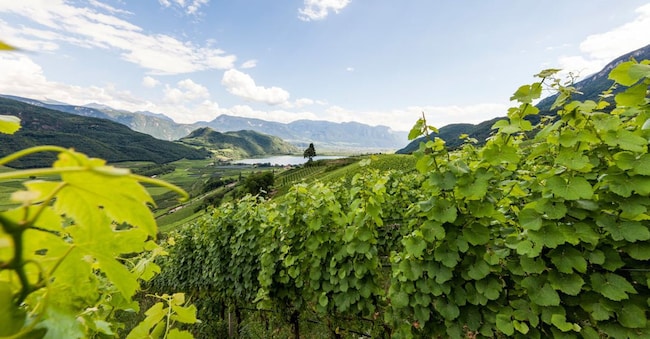
In a completely different sense, aimed at precisely communicating the expression of the highest wine quality of a territory, should be read the decision to be able to indicate specific sub-zones of production within the DOC. The Alto Adige DOCs differ from those of other consortia because they 'cross' the individual 'micro-zones' (there are no less than 86 in an area that covers only 1% of the Italian vineyard surface) with the 20 or so grape varieties traditionally grown in the area.
Thus each Uga - e.g. Gries, Mazon, Eppan Berg or Brenntal, to name but a few of the best known - can be used for five types of vine (with a yield 25% lower than the rest of the DOC), although in some there will only be one or two permitted types. However, the other grape varieties may continue to be cultivated, but they will not be able to boast Uga on the label. "To define homogeneous areas, data on microclimate, sunshine, shading, altitude and soil peculiarities were evaluated. Committees consisting of agronomists, oenologists, winegrowers, producers and experts in the history of wine-growing were formed and given the task of deciding which grape varieties were best suited to the various plots,' said the president of the Consorzio Vini Alto Adige (and the Kurtatsch Winery), Andreas Kofler.
"Thanks to the Teresian Cadastre from the mid-18th century, we have traced the names historically attributed to the growing areas. But terroir must not only be a marketing concept, it must also be recognisable in the glass,' adds Martin Foradori, Vice President of the Consortium and owner of the Tenuta J. Hofstätter. A winery that already in 1987 produced the Pinot Noir Sant'Urbano bearing the name of the individual vineyard from which the wine was made. And that from the 2024 harvest will also carry the Uga in some of its most prestigious wines.
It is difficult to say how much impact this change will have on the value of the bottles, in the context of a denomination that generates a turnover of 350 million, with an average value added per bottle that is higher than in the rest of Italy.
"The wines should undergo a substantial improvement in quality and, consequently, also an increase in price. That is the theory, practice will then tell us how the market will react," says Martin Foradori, who with his winery produces 850,000 bottles a year, generating a turnover of around 10 million. "If the wine from a Uga has better quality characteristics than a vineyard that is not part of a Uga, then the consumer will also be prepared to spend more. But a great wine does not come about overnight just because working groups have delineated geographical areas and classified vineyards'. Even for the possible effect on the value of land, which in Alto Adige is already among the most expensive in Italy, we will have to wait: 'Compared to similar French classifications we are centuries behind,' recalls Foradori.


