The operation

An alliance between Italia and France on industry

Following the 36th Franco-Italian Summit in Antibes, the “fashion round table” will take place on 15 July at the Ministry of Enterprise and Made in Italia

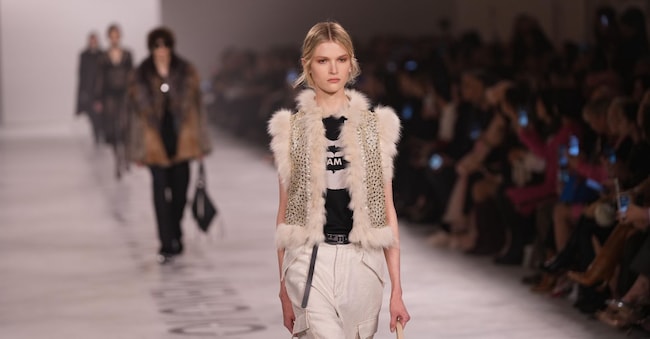
Una modella indossa una creazione della collezione donna Fendi Autunno/Inverno 2026-2027 APS

3' min read

Translated by AI
Versione italiana

3' min read

Translated by AI
Versione italiana

The 36th Franco-Italian Summit in Antibes was a significant event for cooperation between Italia and France, which was immediately reflected in the joint action taken by our governments as part of the reform process in Europe.

It is against this backdrop that the “fashion round table” will take place next Wednesday at the Ministry of Enterprise and Made in Italy, where we will jointly present the roadmap for establishing an Italia-France Fashion Pact, as also highlighted by the memorandum of understanding signed by the National Chamber of Fashion and the French “Fédération de la Haute Couture et de la Mode”, specifically at the Antibes summit. This pact could then serve as a model for other sectors where a shared industrial ecosystem already exists.

Loading...

Together with the trade associations representing the fashion industry, we intend to work towards consolidating the industrial supply chain, including in terms of social sustainability and legal compliance, as well as collaborating on specific areas that characterise the sector, such as fashion weeks, high-end and luxury brands, the promotion of young designers, sustainable development, local production, training, the fight against counterfeiting and the protection of intellectual property. To this end, we have also combated the phenomenon of so-called ‘ultra-fast fashion’ by supporting the introduction, within the European Union, of a fixed customs tariff of 3 euros on parcels worth less than 150 euros originating from non-EU countries, which came into force on 1 July. In France, a law aimed at reducing the environmental impact of the textile industry – drawn up jointly with the European Commission – was enacted on 8 July. This measure will be supplemented, from 1 November, by a European tax of 2 euros, which will replace any similar national measures still in force.

In this regard, the supply chain pact we intend to establish in the fashion sector – which embodies the excellence and quality of our industrial system, combined with universally recognised creativity – serves to strengthen European manufacturing, promote the value of labour, support investment and ensure more balanced relationships throughout the value chain.

Let’s start with fashion, because it is not merely an economic sector but an expression of Italy’s and France’s national industrial identity, as demonstrated by major, world-renowned brands that rely on an extraordinary supply chain comprising small and medium-sized enterprises, which must be protected and promoted.

This shared vision is also being realised in other key industrial areas, with the aim of combining competitiveness with environmental sustainability and the protection of jobs. To this end, we believe it is important to foster the growth of European champions capable of operating on a global scale and to establish further industrial and technological partnerships, in the conviction that only through a robust and shared production and research ecosystem can the two countries – and Europe more generally – best safeguard and revitalise our development model. This is particularly true in the face of new technologies in which Europe must develop its strategic autonomy. Europe must, in particular, equip itself with the necessary tools to strengthen its strategic autonomy in the technologies that will shape its future.

Italia and France, as founding members of the European project, have a responsibility to jointly promote this ambition; they must work together to stimulate and guide the European Union in ‘mature’ industrial sectors, such as the automotive sector and energy-intensive industries, but also in new sectors based on the use of critical raw materials, semiconductors, next-generation nuclear power and green technologies, without neglecting sectors such as space and artificial intelligence applied to production processes.

A commitment set out by our two leaders in the Antibes Joint Declaration.

Aware of the challenges currently facing these sectors, we have called for the negotiations on the Industrial Acceleration Act to be expedited, in order to stimulate demand for steel, cement and aluminium across our continent, whilst complying with the constraints of the ‘green transition’, and to foster a gradual and crucial strategic autonomy. All this whilst promoting European content within the limits set by the green and technological transition.

At the same time, we must safeguard our economic security, both at national and EU level, by effectively protecting our critical assets, businesses and infrastructure, and by reducing the potential risks arising from excessive dependence on entities or products from outside the EU.

Italia and France will work ever more closely together to build a more competitive, more sovereign and safer Europe.

Adolfo Urso is Minister for Enterprise and Made in Italy; Sébastien Martin is French Minister Delegate for Industry

Copyright reserved ©
Loading...

Brand connect

Loading...

Newsletter

Notizie e approfondimenti sugli avvenimenti politici, economici e finanziari.

Iscriviti