
An endless Sunday
In Paolo Maggioni's novel, a partisan relay girl, a Spanish anarchist and the Voce del Fascio are the protagonists of a historic day

3' min read
3' min read
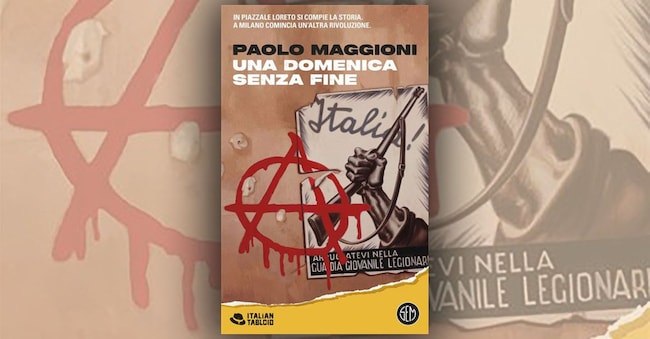
It is the small stories that have made history, Paolo Maggioni reminds us. In Una domenica senza fine, with the familiarity of the experienced journalist and the lively curiosity of the reporter, he succeeds in giving a sense of the slow but incredibly intense unfolding of an unforgettable day.
An indistinct multitude comes out of the houses, sings from the balconies, celebrates and wants to witness the fall of the regime while another multitude flees, hides and repents, burning with conscious rage. These are the steps of all Italians, the expectations, the broken dreams, the enthusiasm and the fears. Revolutionaries, partisans, ordinary citizens, families of Jewish origin, supporters of the regime, defeated and humiliated fascist gendarmes. But not only that, next to the Italians on that day were the Americans, the allies, the foreign revolutionaries. Each with their own baggage of struggle, ideals and a still uncertain destiny.
Among them is Agustino Barajas a.k.a. El Carnera, a character inspired by the revolutionary and skilful Spanish forger Laureano Cerrada Santos, who after fighting against Franco, attempts, with a group of Italian partisans, an unthinkable Lupin III-like action, the revenge he has been waiting for, the effects of which will reach his native Spain. An elegant and charming character who wears a tie in battle and refuses weapons.
Marta Ripoldi
Carnera's fate is intertwined with that of Marta Ripoldi, for whom the journey to Piazzale Loreto is in reverse. Wife of Massimo, Carnera's fellow soldier in Spain, she has taken the place of her husband who died in Russia as a tramviera and partisan relay girl. She carries on a silent but crucial battle and on that day there is one last step to take. She believes in her mission, she is proud and free, committed to freedom. The woman's destiny is intertwined with that of Daniele Colpani, the Voice of the Fascist, Radio Marte's speaker; his day of certain doom becomes an unhoped-for escape and a swift end under the wheels of the tram driven by Marta.
Paolo Maggioni vividly portrays the different souls of a historic day and of Italy itself, divided, split and exhausted. There are also Serafino, the Pretino and the Vicar. There are those who pray, those who think of nothing else but the Madonnina covered up, of the moment when they will see her shining again as a symbol of hope and dignity, and those who continue in the dignity of their task, despite the changes of power. Fictional characters tracing the identities of real figures who resisted and believed, some in God, some in the regime, some in the revolution.

