The interview

'An excellent agreement that from opportunity becomes necessity'

Interview with Graziano Messana, President of the São Paulo Chamber of Commerce

by Roberto Da Rin

3' min read

Translated by AI
Versione italiana

3' min read

Translated by AI
Versione italiana

A long gestation. The agreement between the EU and Mercosur is the result of a 30-year negotiation, albeit with periods of incommunicability, despite the fact that the two trade areas are complementary and not very competitive with each other. Yet rather combative and often internally quarrelsome. Those of Italy, France, Germany and Spain have not always been converging interests; nor have those between Brazil and Argentina, the two leading Mercosur countries. Now the goal is near and, according to Graziano Messana, president of the São Paulo Chamber of Commerce and president of Eurochamber in Brazil and Italy, it is an agreement that 'from opportunity has become necessity'. And where 'reciprocity is evident'
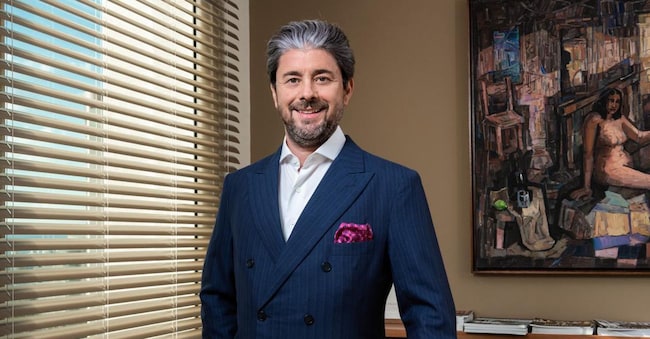
Dr Messana, we have reached the finish line of the EU-Mercosur agreement after a very long and bumpy ride.

Loading...

It has not been an easy path, the perception is that the EU has gone ahead with what it had in hand, with determination. US unilateralism pushed the EU to make important agreements with Latin America. It is a very good agreement that went from opportunity to necessity.

Is there a danger of sabotaging the agreement?

The agreement is a project of commercial architecture. The great strength of this agreement is that it creates 'predictability'. In a world of such vulnerability and constant risk of geopolitical upheaval, predictability is a rare and important asset. Any productive investment needs it.

The next step will be to the parliaments of the individual states, then to the Europarliament. The next step will be to the parliaments of the individual states, then to the Europarliament

The treaty could enter into force provisionally even if France votes against it in its parliament. The Commission is working on this (EU-Only mode). Let me remind you that the agreement between Mercosur and the EU brings trade flows, yes, but above all investment in technology in Brazil and multiplies opportunities for European companies.

There has been much resistance to the agreement, why?

We are talking about Italy, France and Brazil. For the two European countries, exports of wine and cheese, for example, will be strengthened. While Brazil is an exporter of grains, biofuel, soya. The reciprocity of benefits is evident. There has been mainly ideological resistance. There is no overlap.

Some argue that there is a danger of implosion in France. What do you think?

Among the transalpine people there are two souls: that of the French multinationals, that of the large and medium-sized entrepreneurs and, in opposition, that of the tractors in the streets of Paris. The first bloc, the majority, is in favour of the agreement. Only the farmers are against it. And not all of them. Two-thirds' of the French are in favour of the agreement between the EU and Mercosur.

So, what will happen?

I make a prediction. There will be a quid pro quo given to the farmers, paid by the EU to France. The agreement is ...bargaining chip. If nothing is done, France could stay out of it.

Can Italy be an example for France?

Italy has brought home various concessions: guarantee clauses, the anticipation of subsidies already approved, which will therefore arrive sooner, non-repayable appropriations. My opinion is that Ursula von der Leyen and Macron will have to talk and find agreements. France has so far erred in both tactics and strategy.

You, Dr Messana, live in São Paulo, Brazil. Can we look at it from a different perspective? I mean, seen from the south.

The farmer needs chemistry. Before there were fertilisers with tariffs at 7% that will drop to zero. Think of the two biggest Mercosur countries, Brazil and Argentina. They will be fine with it.

Brazil and Argentina are often quarrelsome, between themselves. And not only over football issues.

True. But if they do not integrate by looking towards 'premium' markets, someone else will occupy that space. Buenos Aires and Brasilia have every interest in strengthening Mercosur. The key point is the supply chain value, the value chain, and positioning in this chain: Argentina and Brazil, giants in the production of agricultural commodities, can imagine doing much more, a quantum leap.

How?

With the technology imported from Europe without tariffs, they will be able to become countries able to offer production with greater added value, and thus enter more profitable and internationally prestigious segments. The agreement is also a great opportunity 'seen from the south' . Moreover, it is worth quoting the 19th century French liberal economist, Frédéric Bastiat: 'Where goods do not pass, armies pass'. In times of war, it is good to remember this.

Copyright reserved ©
Loading...

Brand connect

Loading...

Newsletter

Notizie e approfondimenti sugli avvenimenti politici, economici e finanziari.

Iscriviti