
An exploration into human existence
A gentle and effective guide to traverse the labyrinths and horizons of our being in the world

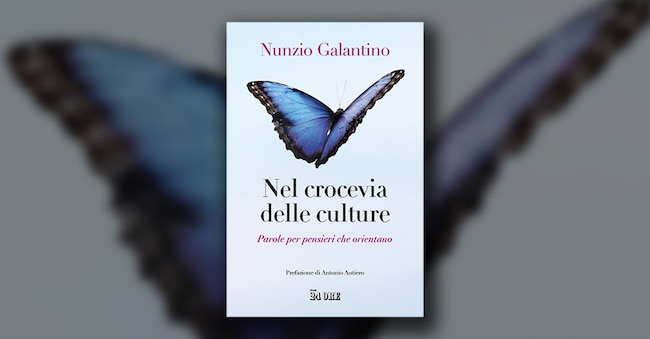
What the readers of this text find in their hands is an invitation to enter the mystery of what we are and the web of desires of what we could and would like to be. In this, the pages that open here form a web of thoughts that accompany the exploration of human existence. The book itself can be handled as a gentle and effective guide to traverse the labyrinths and horizons of our being in the world. It explores and illuminates underlying themes such as hope, the search for meaning, transformation and commitment, inviting us to consider the complexity of life with openness and awareness.
They are like nine rooms in an airy flat these nine chapters that Nunzio Galantino's book offers us to read. The individual pieces of the mosaic composed here (104 to be precise) were already known to us in some way through the author's weekly appointment from the columns of Il Sole 24 Ore. Now we find them here compacted, stitched together and ordered according to outlines that allow the sporadic nature of individual texts to disappear and knit together lines of an organic thought, giving us relevant traits of an embodied anthropology.
The journey begins with the metaphor of 'Light becoming a voice', generating hope and making itself heard as an act of rebellion against the darkness that afflicts our individual lives and the collective vicissitude of history, threatened by wickedness, abuse, destruction and wars. The sortie is not that of the apocalyptic designs that come to us spontaneously and often prophets of doom, but rather that of the desire for light that unravels through wounds and loopholes of the soul.
Galantino's man is not a featureless simulacrum, almost a puppet tossed about by the waves of history, but a confident helmsman who sails outstretched oceans, not without landings. The routes the book charts are not simple and easy; they are not always linear and straight. The awareness of a complex and sometimes complicated plank belongs to that radical form of honesty with which the author places himself beside his fellow travellers, encourages them to feel capable of walking, supports them in taking a breath even after adversity and defeat. But above all, he urges them to become conscious wayfarers, because nothing is more detrimental than to rob one's wings of the confidence and energy to fly. The weave of the journey must therefore be woven with the will to make sense of things and to put the necessary effort into them.
Embodied anthropology, it was said: and this for several reasons. The first concerns the sense of time as a determining factor, on the wave of which we find the past and live the present with our gaze cast towards the future. At several points in the book we are confronted with profound considerations that restore the meaning of memory, not as a trap that wears us down in the meanders of nostalgia, but as a resource of wisdom, a lesson for what we are living here and now. The future is not dreamy vagueness, banal and illusory deception, just to escape from the responsibilities of the present. The axis of time hinges the anthropological vision offered by these luminous outlines that give life to the line of the book. However, the time factor is not thought of in a hypertrophic manner, so accelerated that we end up in gridlock and chaos. Taking slow steps is the warning. But this does not nullify the journey, rather it allows us to look around and explore the thousand folds of the landscapes we pass through.

