
An idea to produce energy from car parks
From car parks to energy: the solution that does not consume land (and can also work in Italia)

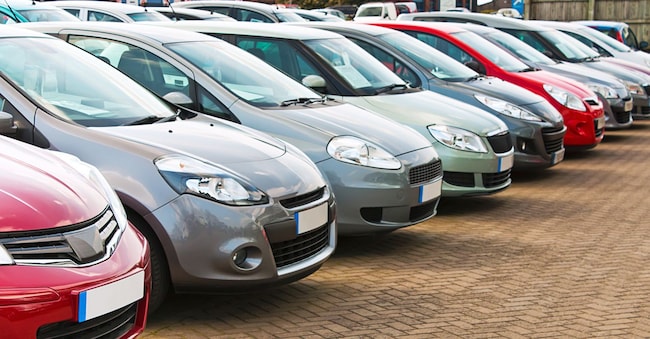
Turn car parks into solar power plants. This is not a slogan, but a policy that has already been adopted in France and that could represent one of the simplest and most effective solutions to accelerate the energy transition in Italia as well.
French law requires that large open car parks - above 1,500 square metres - be at least 50 per cent covered by photovoltaic canopies. The idea is as simple as it is powerful: use already paved and sealed surfaces, often huge and unused from an energy point of view, to produce renewable electricity close to places of consumption.
The potential impact is far from marginal. In France, it is estimated that the measure could generate between 8 and 11 gigawatts of new photovoltaic capacity, equivalent to about one third of the current installed park. In Italia, a similar measure could lead to an additional 5 to 7 gigawatts and up to 9 terawatt hours of annual production. This is one of the few policies capable of significantly increasing renewable production without consuming new land and without conflicts with agriculture and landscape.
The advantages are manifold. From the energy point of view, distributed production is increased, reducing grid losses and bringing generation closer to consumption. From an economic point of view, energy costs for companies and public administrations are reduced, especially in cases of self-consumption. From an urban point of view, shelters help reduce the heat island effect and improve comfort for users by protecting cars from the sun. Furthermore, these structures can easily integrate charging points for electric vehicles, reinforcing the transition to sustainable mobility.
One possible objection is the economic burden on the owners of car parks on which the obligation to adapt formally falls. However, the French experience shows that the investment need not necessarily translate into a direct cost for them. The most popular model is one in which energy operators - utilities, ESCOs or infrastructure funds - finance and install the systems, managing them over time. The owner of the car park grants the space and receives a fee or energy at a reduced price in return. In many cases, therefore, the initial investment is zero for the owner of the area.


