An object in a room is like a tea bag in a cup: take Bouroullec’s word for it
The French designer and artist reveals how a single detail is enough to create a special atmosphere in the home. The key is to remain curious and retain a childlike sense of wonder.

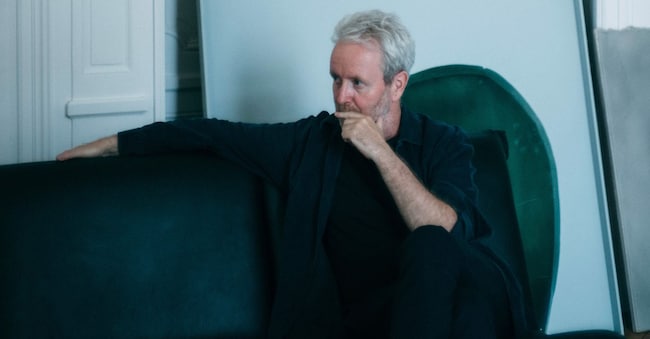
It is difficult to remain a blank slate, especially when you have a career spanning more than thirty years behind you, collaborations with companies such as Cappellini, Mutina, Vitra, Cassina and Flos, and your work is featured in the permanent collections of the world’s leading design museums. ‘When faced with a project,’ says Ronan Bouroullec, ‘it’s important to adopt a naïve perspective, a desire to discover that stems from the assumption that you have a great deal to learn’ – a mindset which, he admits, becomes increasingly difficult to maintain as time goes by.
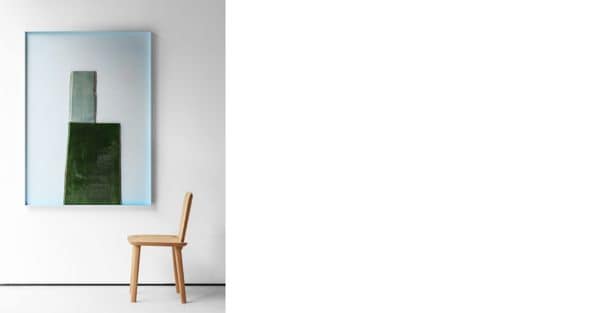
This approach, adopted by the French designer and artist, explains his constant movement between different fields, from drawing to design, from fashion to artisanal crafts. ‘I don’t feel like a specialist, nor do I want to be one; I’d much rather be a generalist who works with specialists,’ he explains. It is this same curiosity that led him to collaborate with Issey Miyake in the world of fashion, but also with companies and artisans of extraordinary expertise who work with glass and ceramics. “On the other hand, when I was very young and began working with Vitra, Rolf Fehlbaum invited me to reflect on the theme of work. I was taken aback; I thought it was a casting mistake, having never worked in an office in my life. But he was right.” For years, his collaboration in the sector has been hugely successful.
Perhaps it’s down to the casting, but our conversation turns to cinema as a metaphor for this gathering at Casa Mutina, where we’re celebrating fifteen years of collaboration between the designer and the Modena-based company, which since 2005 has been transforming ceramics by combining traditional craftsmanship with contemporary styles. ‘A designer’s work is quite similar to that of an actor: you make different films with different directors. I work well when I’m in a dialogue with people who share the same passion, the same desire to do things well, whatever the sector,” he says. Among them is undoubtedly Mutina’s CEO, Massimo Orsini, whom he prefers to describe as a director, to stay with the metaphor. Theirs is a friendship built on exchanges (including tennis matches), dialogue and projects. It is thanks to him, above all others, that Bouroullec has come to realise just how central the exhibition aspect is to his practice.
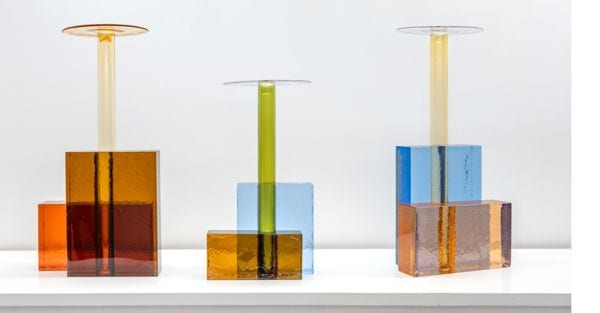
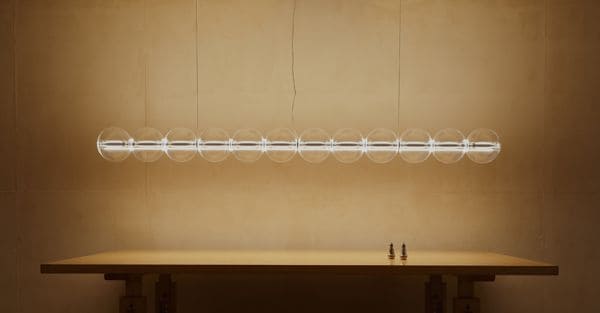
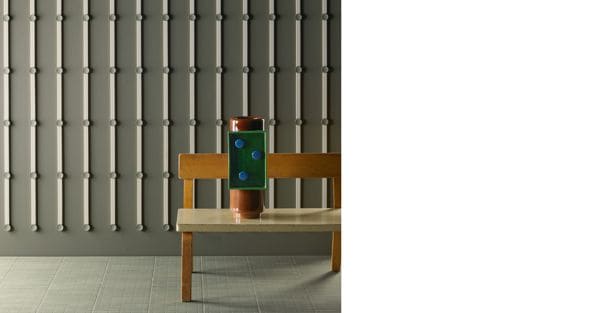
For the designer, in fact, exhibitions are a tool for analysis: ‘I design objects, but I rarely get the chance to see them all together. It’s a rather unusual way of looking at things. An object in a room is like a tea bag in a cup of water: it creates a certain atmosphere, a certain flavour, a certain texture. Bringing many of them together in an exhibition space then becomes a way of demonstrating that such assemblages can generate harmony, calm and even beauty. Exhibiting is also an opportunity to share my work with people who do not necessarily have the means to buy what I make’. The aim at that point is the dissemination of culture. It was in this spirit that, in 2021, the exhibition The Sound of My Left Hand was launched – the designer’s first solo exhibition in Italia, which brought together, without defining any boundaries, his artistic practice and the poetics of design objects, a prelude to the landmark exhibition Résonance, with which the Centre Pompidou paid tribute in 2024 to one of France’s most beloved and prolific designers.
‘These were two important occasions to emphasise once again that, for me, there is no hierarchy amongst the various means of expression. I believe, like Ettore Sottsass, that designing an ashtray is just as complicated as designing an airport. I really enjoy working on industrial projects, but at the same time I’m passionate about working with craftspeople, drawing or even devising urban planning projects. The same goes for materials: as with colours, I have no absolute preferences, nor do I have a theory of colour.” What really interests him, in fact, is what he describes as the ‘vibration’ of objects, their imperfection and unpredictability – that almost magical quality that materials such as glass and ceramics possess, being uncontrollable and not perfect down to a tenth of a millimetre. ‘I like the fact that it’s temperature, chemistry and natural elements that decide the outcome. Like when the wind alters the surface of the water or the foliage of the trees near the sea.’ In an increasingly synthetic world, people seem to have lost their appreciation of materials and colours. This is why his work focuses on more organic and natural forms.