
Ana Mendieta’s multifaceted nature on display at the Tate
The London exhibition, which features paintings, drawings, sculptures, installations, performances, films and photographs, is open until 17 January

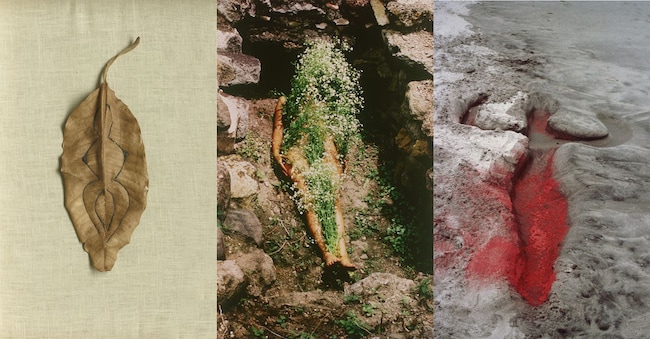
Anyone who does not know who Ana Mendieta is and visits the exhibition rooms dedicated to her at the Tate Modern in London might easily think they are looking at works by a contemporary artist, perfectly in tune with today’s sensibilities on themes such as ecology, regeneration, impermanence and the relationship between human beings and nature and the environment.
This major retrospective, featuring over 150 works, demonstrates just how relevant and modern this pioneering artist – who worked in the 1970s and 1980s – remains. Born in Havana in 1948, Mendieta was sent to the United States at the age of 12, along with thousands of other Cuban children exiled without their parents or relatives as part of the so-called ‘Operation Peter Pan’, a joint initiative by the Catholic Church and the CIA to ‘save’ them from communism. This devastating experience had scarred her for life, depriving her forever of a sense of belonging.
“Having been torn away from my homeland during my teenage years, the feeling of having been cast out of my mother’s womb overwhelmed me,” she wrote.
Cuba
Her homeland was Cuba; nature was her womb. Her art was steeped in nature, inspired by nature and created using elements of nature. From her early days at the University of Iowa and then after moving to New York, Mendieta used feathers and flowers, mud and wood, fire and ash to create her works.
She was an organic yet eclectic artist: the Tate is exhibiting the full multidisciplinary range of her work, which includes paintings and drawings, sculptures and installations, performances and films, writings and photographs.

