Climate

Water reserves, ANBI: ‘The North is on the brink of a crisis. The South, meanwhile, has a surplus’

ANBI Director-General Massimo Gargano: “Whilst last year it was the south that was facing an emergency, with the north having greater resources at its disposal, today the situation has been reversed.” Concerns are mounting over the condition of the River Po

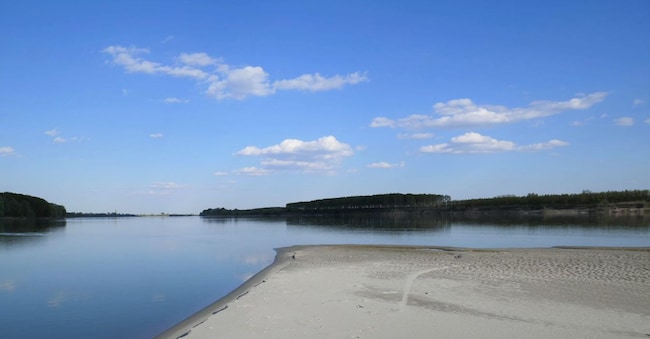
by Pietro Menzani

4' min read

Translated by AI
Versione italiana

4' min read

Translated by AI
Versione italiana

The water situation in Italia appears to be highly uneven, but the picture seems to have reversed compared with the past. Whilst the north is on the brink of a crisis, the south, by contrast, has abundant reserves. This is revealed in the report on climate scenarios by ANBI (the National Association of Consortia for the Management and Protection of the Territory and Irrigation Waters), presented on 22 June in Rome. ‘The climate,’ emphasises Massimo Gargano, the association’s director-general, ‘is leaving us with an increasingly fragile and unpredictable water situation in Italia. Whilst last year it was the south that was facing an emergency, with the north having greater resources, today the situation has been reversed.’

Water resources

As stated in the ANBI report, southern Italy experienced a water crisis lasting over two years until December 2025, but a series of Mediterranean cyclones in the first four months of 2026 restored reserves to historically high levels, whilst causing economic and infrastructural damage: compared with 2025, reserves have risen by 65% in Sicily, 60% in Puglia, 59% in Basilicata and 42% in Sardinia. Reserves are also in excellent condition in Calabria, Campania and Abruzzo. For example, the Conza reservoir in Campania is 98 per cent full, with 35 per cent more water than last year.

Loading...

In the north-east, by contrast, there is a severe shortage of rainfall: in Trentino-Alto Adige, according to data from the European hub Hypermeteo-Radarmeteo, rainfall in the first five months of 2026 was 39 per cent below the average for the last 30 years. In Piedmont, during the 2025–2026 hydrological year (up to May), rainfall was 23% below average. Lombardy is also recording worrying figures: between December and May, 360 mm of rain fell, 29% below average. The same applies to Emilia-Romagna, where the current hydrological year has seen only three months with above-average rainfall – December 2025, January and February 2026 – and five months with below-average rainfall.

According to the report, the north-south divide in the country poses a structural challenge for the management of national water resources in 2026.

Control room

In view of the critical conditions observed in central and northern Italia, on 22 June, ANBI Piedmont asked the Regional Government to set up a coordination centre involving all the relevant bodies responsible for water management. The aim is to closely monitor developments during the irrigation season and to facilitate the coordination of the necessary measures.

The association explains that ‘in several catchment areas, there are signs of growing difficulties in managing water resources. Reports from member consortia point to a gradual reduction in water availability and greater complexity in planning and distributing the water flows needed to meet the irrigation requirements of farms’.

Extreme events

Italia, as stated in the ANBI report, appears to be increasingly exposed to extreme weather events. From the start of the year to 20 June 2026, 1,029 locations in Italy experienced severe weather events such as large hailstones (584), heavy rain (365) and tornadoes (80), marking a 40 per cent increase over the course of a year.

The period between November 2025 and June 2026 was characterised by a marked climatic anomaly: there was, in fact, a frequent alternation between excessive rainfall, severe weather events, periods of water scarcity and extreme heatwaves. Numerous episodes of severe weather (heavy rain, flooding) caused hydrogeological emergencies in various regions, including Liguria, Emilia-Romagna, Lazio, Abruzzo, Calabria, Molise, Basilicata, Sicily and Sardinia. The country was also hit by heavy hailstorms, strong gusts of wind, heavy snowfall and late frosts, with significant impacts on agriculture and infrastructure.

Furthermore, these past few months have generally been warmer than the seasonal average, with unusual peaks interspersed with brief but intense cold spells; in May and June, record-breaking heatwaves struck mainly central and northern Italia. In addition to the abnormal temperatures, there has been a recurring drought: despite a winter with widespread rainfall, water shortages were already being reported in some Alpine and Apennine areas as early as April.

Monitoring

Massimo Crespi, a climatologist and chairman of Hypermeteo and Radarmeteo, explains that, as far as the Mediterranean basin is concerned, we are facing a ‘genuine shift in weather patterns, with the Azores High being pushed westwards and the African High consistently prevailing; this is caused by the warming of the pole and brings with it, in addition to sand, more intense heatwaves’. By 2040, temperatures in southern Italia and along the Tyrrhenian coast are in fact expected to rise by at least 2 degrees.

In Italia, however, according to Crespi, the lack of a coordinated monitoring infrastructure exacerbates the impact of climate change. The available data is, in fact, published by the Regional Environmental Protection Agencies (ARPA). In other words, we are ‘lacking a unified climate perspective in a country that spans the continental climate of the Dolomites, the mountainous steppes of the Apennines and the Mediterranean scrub. It must be recognised that the climate is no longer a matter for climatologists alone; it concerns the entire country in all its aspects’. 

Copyright reserved ©
Loading...

Brand connect

Loading...

Newsletter

Notizie e approfondimenti sugli avvenimenti politici, economici e finanziari.

Iscriviti