City vision score

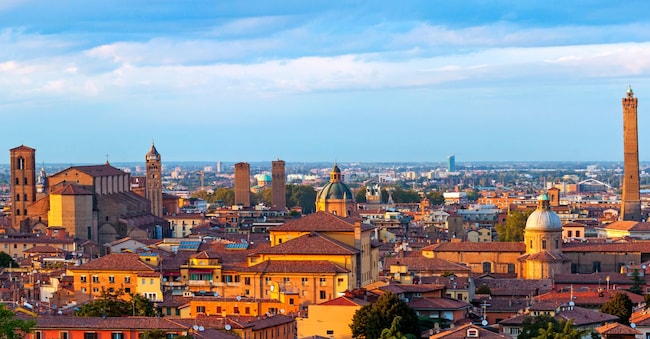
Bologna is the smartest city in Italy in 2025. Milan loses the podium position

The survey confirms the thrust of the North-East and the vitality of the Centre, with an increasingly diversified presence among the top one hundred municipalities. Territorial gaps persist, but new poles of innovation are also emerging in the smaller centres

5' min read

Translated by AI
Versione italiana

5' min read

Translated by AI
Versione italiana

Bologna is the smartest city in Italy 2025, and for the first year it breaks the record of Milan, which ends up in 39th place. This is the key result of the City Vision Score 2025, the index, edited by Blum and Prokalos, which measures the degree of 'intelligence' of all 7,896 Italian municipalities on a scale from 10 to 100. The score data were released during the General Assembly of Smart Cities on 20 and 21 October, which for the sixth year brought together in Padua over 1,000 public administrators and representatives of the world of business, innovation, professions and research, to exchange experiences and practices of intelligent transformation of the territories.

The City Vision Score methodology is based on 30 indicators distributed in 6 dimensions - smart governance, smart economy, smart environment, smart living, smart mobility and smart people - with data normalised from institutional sources. The report proposes readings by macro geographical areas (North, Centre, South and Islands), by size classes, a focus dedicated to capital cities and an in-depth study on the Smart Living dimension, dedicated to assessing the degree of wellbeing of urban contexts.

Loading...

The North-East leads the way. The general classification shows that the centre of gravity of the smartest Italy has shifted to the North-East, with only municipalities in this part of the country appearing in the first fifteen positions. In first place, as mentioned, is Bologna, followed by Villa Lagarina (TN), Imola (BO), Spormaggiore (TN), Carpi (MO), Badia (BZ), Andalo (TN), Bagno di Romagna (FC), Stenico (TN), Castel San Pietro Terme (BO), Castel Guelfo di Bologna (BO), Mordano (BO), Lavis (TN), Tione di Trento (TN) and Bressanone (BZ).

Bologna's overtaking of Milan (which nevertheless ranks third among capital cities) tells of an increasingly outcome-oriented competition: the Emilian city excels because it combines smart economy and sustainable mobility, with demand governance, modal integration and reliable services. The Score rewards consistency between planning and results perceived by citizens.

North-South Gap. The City Vision score 2025 again this year shows a marked North-South gap: this is not just a distance in scores, but the cumulative effect of infrastructure endowments, continuity of investments and administrative capacity. Within this picture, however, niches of excellence emerge in peripheral territories and small municipalities, where networks between administrations, proximity services and local supply chains transform innovation into measurable results. This is the case in Sardinia, which in the ranking of the best southern villages occupies all the first four positions with Masullas (OR), Siligo (SS), Fordongianus (OR) and Villaurbana (OR).

The novelty of the year is the growth of Central Italy: the municipalities of the macro area present in the top 200 positions have doubled from 10 to 23, thanks to the supremacy of Tuscany and the Marches which, with Bagno a Ripoli (FI) in 16th place and Visso (MC) in 90th place, are confirmed as the most virtuous regions of the macro area. The dragging effect of the large poles is also redrawn: the average radius of influence drops from 50 to 40 kilometres and inter-municipal projects, data interoperability and network services are strengthened. The greater diversification of the top part of the ranking - with 9 regions and 24 provinces in the top 100 positions - indicates how smartness models are adapting to local contexts; adherence to territorial vocations and integration between technologies and proximity services count.

"The picture that emerges from this edition," says Domenico Lanzilotta, director of City Vision, "tells of a transformation that is becoming increasingly widespread. Cities are not only competing on the quantity of technology adopted, but on the ability to translate innovation into quality of life, inclusion and sustainability. This is an important signal: urban intelligence is not an achievement, but a collective process that requires method, continuity and collaboration between institutions, businesses and citizens. In this scenario, even small municipalities are demonstrating that it is possible to activate virtuous paths, exploiting networks, alliances and shared projects.

"The growth of the Centre, the narrowing of distances between similar territories and the greater diversification at the top of the ranking," adds Michele Pianetta, founding partner of Prokalos, "tell us that smartness is evolving towards a more mature and concrete dimension. It is no longer enough to declare strategies: administrative capacity, data governance and community participation count.

The capital cities

The top ten is led by Bologna, followed by Trento and Milan; then Ferrara and Florence, followed by Treviso, Parma, Pordenone, Padua and Monza to round off the top ten. A total of six regions are represented, twice as many as the previous year (Emilia-Romagna, Trentino-Alto Adige, Lombardy, Tuscany, Veneto and Friuli-Venezia Giulia), testifying to a predominantly north-eastern leadership, with significant contributions from Lombardy and Tuscany. The South and the Islands lag behind, confirming the gap in the general classification: no capital city is among the top fifty; the best, L'Aquila, Teramo and Cagliari, are between 53rd and 68th.

The top 3 villages: municipalities with less than 2 thousand inhabitants

Among the villages, the Alpine and Apennine territories stand out: at the top in the North is the province of Trento with Spormaggiore, Andalo and Stenico; in the Centre are Tuscany and the Marches, while in the South and Islands Sardinia comes out on top with Masullas ahead of Siligo, Fordongianus and Villaurbana, with Abruzzo's Serramonacesca rounding out the top five.

The top 3 small municipalities, between 2 thousand and 50 thousand inhabitants

In the small municipalities, the North expresses widespread leadership with Villa Lagarina and Badia preceding Bagno di Romagna and a handful from Lombardy led by Caponago; in the Centre, Tuscany occupies the first six positions with Bagno a Ripoli and Chianciano Terme in the limelight; in the South, Apulia places three municipalities in the top five, while first place goes to Abruzzo with Montorio al Vomano and Sardinia enters the top ten with Abbasanta and Oristano.

Top 3 small and medium-sized cities, between 50 thousand and 100 thousand inhabitants

In the average municipalities, the North sees Rovigo ahead of Rho, Pordenone, Sanremo and Gallarate; in the Centre, Ardea, Civitavecchia, Velletri, Siena and Tivoli prevail; in the South and Islands, Mazara del Vallo, Cava de' Tirreni, Acireale, Teramo and Portici lead.

Top 3 medium-large cities, between 100,000 and 500,000 inhabitants

Among the large cities with more than 100,000 inhabitants, Bologna is first and precedes Trento, Milan, Ferrara and Parma; in the Centre, Florence and Prato are in command, with Rome rising and Perugia in the top five; in the Islands and in the South, the ranking confirms Cagliari at the top and includes Sassari, Pescara, Bari and Salerno.

Smart Living

The Smart Living dimension - which evaluates the density, cost and quality of living, health and access to essential services - shows a competitive advantage of small towns: environments on a human scale, a more accessible cost of living, the proximity of services and social cohesion push up the score. In Umbria, Scheggino, Valtopina and Cerreto di Spoleto stand out; in the Northwest, Brescia shines among the large towns; in the Northeast, the capitals pay the cost of living despite having advanced services; in the Islands, Sardinia holds the top spot, with the province of Oristano in the spotlight, while Sicily recovers among the larger towns with Ragusa, Caltanissetta and Trapani.

Copyright reserved ©
Loading...

Brand connect

Loading...

Newsletter

Notizie e approfondimenti sugli avvenimenti politici, economici e finanziari.

Iscriviti