
And at Christmas the donkey's 'Kyrie Eleison' was sung
Angelo Floramo, Nonino Prize 2024, recounts Friuli, with stories of land, men and beasts, among traditions, landscapes and flavours

4' min read
4' min read
There are still plenty of lusignis, fireflies, in Friuli, just go up to Carnia or indulge in a summer night in the moraine hills of Udine. And they are the light that ignites the imagination, the dream, the ancient voices, the desire to take refuge in memory and find peace. Angelo Floramo, Nonino Risit d'Aur Award in 2024 and prolific writer, also pursues them with his book Vita nei campi. Storie di terra, uomini e bestie, heir to the radio programme of the same name that is so successful in Friuli. He recounts them this way, with the wonder of a child and the awareness of a man who is now an adult and who recognises how unrepeatable time is: 'Running barefoot through the magic of fireflies was an experience that retained all the flavour of enchantment. As if the fairy tales told on the edge of the bed, before sleeping, came to life all at once and began to float around, in a vertigo of sensations'. Floramo recounts with gusto and a sly smile, spinning tales and stories because, as a child, 'his sleeps, deep and quiet, were filled with dreams, excited by life in the open air'.
That life is fragrant pages, suspended between fields and woods, lost in pictures of shrewd self-sufficiency and proud misery. It is tradition and peasant civilisation. No complacency, just the participatory tale of a world that still lives in small villages and in a language, the Friulian one, moulded by fierce invaders and borders, fortunately, rich and porous: 'it is a privilege, for me, to be able to tell that story that still survives, not only in memory, but in certain viscous traditions, that cling to the time of festivals and feast days, in customs that become landscape, flavour, colour. Sometimes, nostalgia'. The tale is a true lunarium, everything flows, the trades of the fields and women, history and today, to the rhythm of the moons, those that peasants and woodcutters used to follow to go beyond the toil of living. If you are planning a holiday in Friuli, there is no better guide than this book.
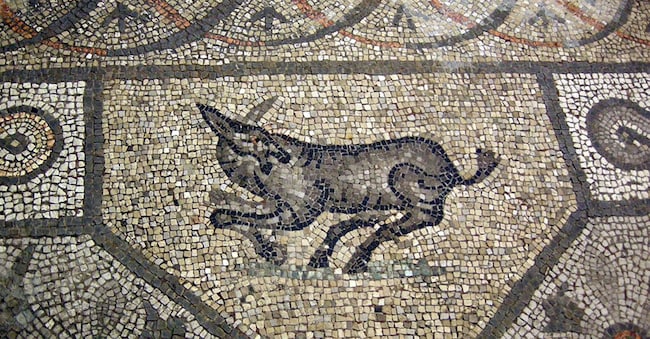
Floramo's eyes as a child see the cowshed and the dairy, the malga and the churches. Sacred and profane, heaven and earth, high and low, Nature and Human mingle to give uniqueness to Friuli. Like that linked to donkeys: on Christmas night, at least until the early 13th century, it was customary for presbyters to intone the Kyrie Eleison Asini with a voice that in Gregorian chant imitated the harshness of braying, and a donkey stands out among the mosaics of the North Hall of the Basilica of Aquileia. No less unique, for example, is the cult of St John the Baptist, often depicted with a halo of gourd flowers, almost a golden wake for the saint who watches over the seasons and who has traits similar to the god Belenos, a powerful and charismatic Panhellenic deity worshipped in the Aquileian countryside until at least the 3rd century AD. And on 24 June, when the saint is celebrated, it is traditional to gather dozens of herbs, including fern, garlic, rue, sage, caraway, chamomile and rosemary, artemisia and verbena, for the mac of San Zuan, the bunch of St John, a powerful talisman against all forms of evil, gathered in the heart of the darkness that has just faded into the dawn of the new day.
The lines climb up to the peaks of Carnia, they creep among the fragrant sausages in the cellars: the boundaries between sacred and profane time are invisible, they reveal mysterious places where everything comes to life, memories, faces, traditions. There is so much poetry and suggestion in this strongly matriarchal land where language tells of living. Pustot, for example, indicates everything that is not anthropised, free from human control: it is 'an ancient word of Slavic stock, a reminder of the marvellous contaminations of this peasant civilisation of ours, which grew up on the edge of worlds, straddling cultures, traditions, the accents that ancestors disseminated everywhere: in place names, in the names of trees, streams or hills'.
There are lush vineyards with indigenous vines, which end up in the four corners of the world, and woods to look after, such as the one in Valcanale controlled by the diocese of Bamberg (Bavaria). The archbishopric imposed rules for the forest, its exploitation and protection with statutes dating back to 1584, everyone had to live, lumberjacks, carpenters, coopers: 'We first, who are the Bishops Regent of Bamberg, want to enact these laws to protect our forests.


