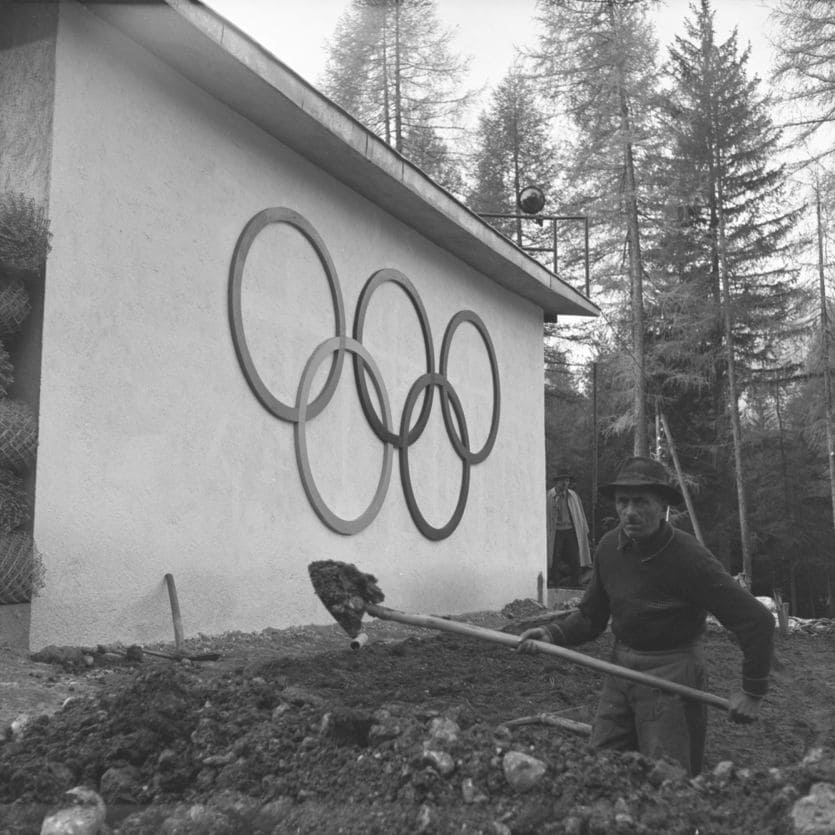
And Cortina became the capital of the world
Lake Misurina frozen over, tourists, athletes, stenographers. At the Gallerie d'Italia in Milan, an exhibition recounts the time that was and behind the scenes

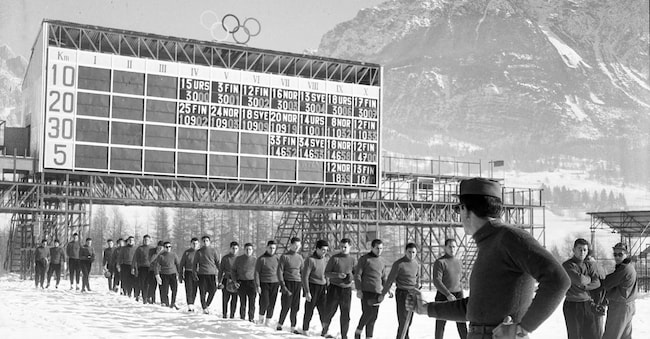
A man on the ground in a wool jacket checks that the finish line is in line with the photofinish box in front of him. All around is a milky white, silent fir trees and a glimpse of the building overlooking Lake Misurina. This is the finish line of the speed skating competitions that were to take place at the 1956 Cortina Olympics and this is a shot of the endless backstage of that event that catapulted Italia onto the international stage after the tragedies of war. In just one shot, a thousand reflections: without climate change, one could compete on a natural frozen lake, hundredths of a second - the joy and damnation of medals - were not yet measurable, no logos around, just a few employees in civilian clothes ready to prepare the Dolomites for the event. It is an image of seventy years ago, of an Italia à la Bianciardi or à la Pavese, of a naïve and full of enchantment, and is part of the exhibition 'La strada per Cortina. VII Olympic Winter Games 1956", currently underway at the Gallerie d'Italia in Milan: "Cortina was a watershed - writes curator Aldo Grasso -: for the first time Italia presented itself as a country capable of planning an international event, just a few years after the end of a lost war, to regain lost credibility".
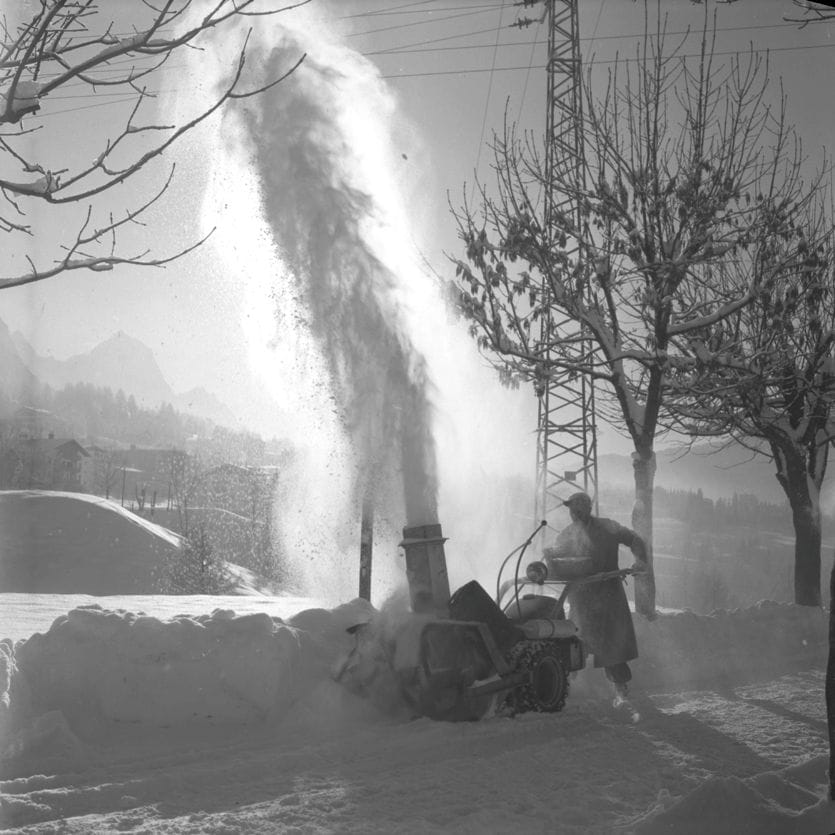
Past the magnificent Colossal Horse by Antonio Canova that opens the other exhibition underway at the Gallerie, 'Eternity and Vision. Rome and Milan capitals of Neoclassicism", the Sala delle Colonne becomes a ski resort in the heart of Milan, where one arrives with a full-wall photo: the road, a white carpet, leading to Cortina is a car racing towards the whitewashed resort. And all around dozens of black and white photographs that tell the story of the Olympics, in its thousand faces: they come from the Publifoto Archive, 7 million images ranging from the early 1930s to the 1990s, acquired by Intesa Sanpaolo in 2015. Publifoto's most experienced professionals worked in Cortina, producing over 100 reports and 1,400 images. Which now speak to us, yes, they speak to us, almost as if they were a film, but much truer and more genuine than the documentary White Virgin, produced by the Istituto Luce on the 7th Winter Olympics.
Just over 800 athletes arrived in Cortina from 32 countries with tourists in tow and there is a bellboy stacking suitcase after suitcase from the USSR in a hotel lobby. At the Savoia there is also the press centre, the teletype room and the filing cabinet where every journalist received official communiqués. Other worlds, other times. Everything slower, everything more human. Young women were on duty at the interpretation office, because Cortina, as Antonella Stelitano and Adriana Balzarini recount in the rich Le donne di Cortina 1956 (Minerva), was a very feminine edition, compared to how little women were in everyday life: journalists, judges, delegation chiefs, prize-giving officers. And also Giuliana Minuzzo Chenal, the first woman at the Games to read the athletes' oath because Zeno Colò, accused of lending his name to a brand of boots, had been disqualified on charges of professionalism.
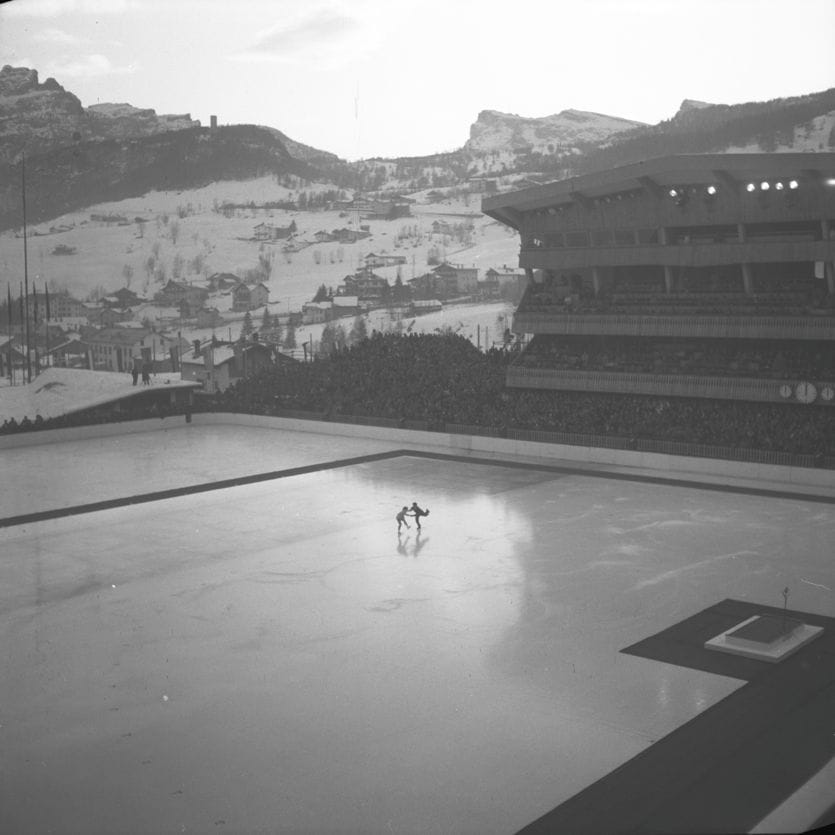
Speaking of brands, there were many in Cortina: liquor, gas, fizzy drinks, TV. It's advertising, beauty. But no logos on the competition fields, sumptuous and magnificent: the Olympic Ice Stadium, designed by architect Mario Ghedina, and the Trampoline Italia, with its critical point at 72 metres, which just to see it from below is dizzying. Like the ski jumpers who hurl themselves into the void and pierce photographs.
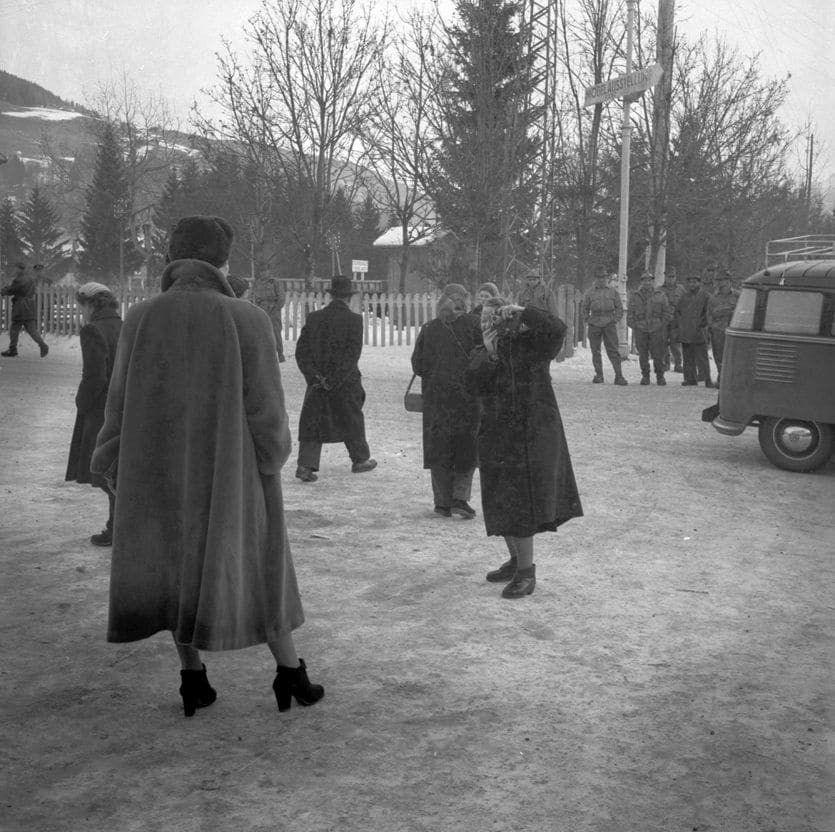
There are a few ladies posing in eight heels and fur coat in front of the five circles, or two cooks embraced by Toni Sailer, the Austrian downhill skier and winner of all three Alpine skiing events, or a porcelain Sophia Loren among the tourists, or some good-hearted person dressed as a polar bear with an umbrella, looking for a souvenir shot against a white background. Ouch, how we miss so much snow... The Publifoto photographers have multiple Fiat 600s to be everywhere, even perched on scaffolding without many safety regulations for pictures from above, which even TV operators are looking for.