
What if gloves, scarves, trousers could play?
Marble cut in quarries, a wool jacket, but also the rows of a vineyard: sound design experiments with alternative materials. Because music is everywhere.
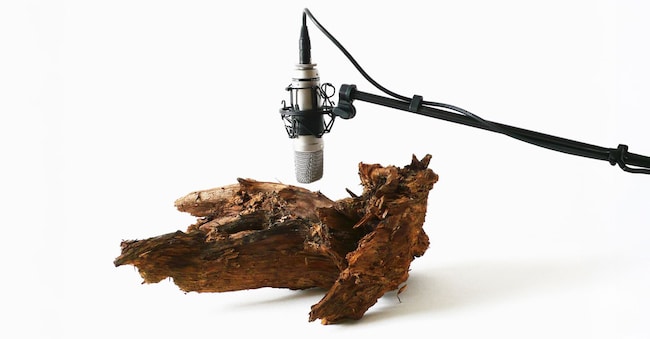
A playlist with the sound of cut marble, or a sound architecture made with the rustle of felt blankets, or even a wine to be listened to as well as tasted. For some years now, also thanks to the new possibilities of digital composition, sound design has been searching for materials that are not canonically sound, to be used sonically. Objects, processes and places that become works, playlists, art installations, acoustic sculptures. Sound is thus a way to read the properties of materials (density, porosity, elasticity) and thus also to narrate them. It is a kind of communicative synesthesia: listening in order to touch.
This is the path chosen by Marmomac, the Verona Marble and Natural Stone Fair, which commissioned sound designer Tommaso Simonetta with the Marble Sounds playlist. The result is on the streaming platforms and does what it promises: three immersive audio tracks, songs of marble arranged with sound sources recorded in the quarries, workshops, and studios of the craftsmen working the material. Diamond wire cutting or brushing, chiselling or polishing become ethereal, almost post-rock melodies, "a return to the origin of matter", its creator describes them. It is a disconcerting form of sonic magic, like those the Swiss artist Zimoun has been working on for years. His installations fill museums with automated sound synchronisations of common objects, glasses, balls, strings: everything can be music for those who know how to listen. Zimoun's tri-sound sculptures (which can also be seen and heard on Instagram) are visually hypnotising and acoustically replicate the Asmr (Autonomous sensory meridian response) experience and its calming sounds harmonised to be sonic anxiolytics. Zimoun reproduces this effect using the most common fragments of industrial production, almost a form of circular economy: making the sweetest sounds from the noisiest productions. It is a direction that has been present in contemporary art for some time, to the point that MOCA, the Museum of Contemporary Art in Tucson, Arizona, has gathered the best artists working on the acoustics of the non-sound in the group show Frequencies. The thread is the use of building and architectural materials to say and convey something. Among them is Jacqueline Kiyomi Gork, who investigates how the environments in which we live influence our acoustic experience, encouraging a false idea of sonic neutrality that the artist tries to deconstruct by amplifying the rustling or clinking of objects such as felt blankets, wool jackets or metal shelving.
An interesting experience, on the marketing front rather than the art front, is Media Dressing, founded by deejay Paolo Petrillo, who has bet on sound identity as something that goes beyond the so-called muzak, the neutral and generic sound carpet to go with sales. Sound can thus become an identity suit with work based on aesthetics, but also on data and neuroscience. It is a sound branding activity that embraces campaigns, events, spaces, to make a company recognisable to the ear before the brain. This type of collaboration is becoming increasingly frequent: a case study is that of sound designer Salvador Breed and his work to create a soundscape around the creations of fashion designer Iris van Herpen. A partnership of over fifteen years to design an acoustic identity adapted to shapes, materials and colours.
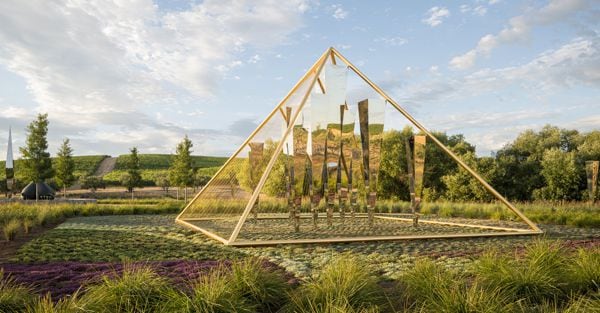
Another frontier is that of textiles that behave like sound instruments. Researchers at the Intelligent Instruments Lab are experimenting with prototypes of fabrics for gloves, scarves, and trousers that release music on contact, thanks to steel or silver fibres that give them electronic properties (they have called them e-textiles). Here again, the reference is to Asmr sounds. She explores both design and fashion Maria Chiara Monacelli, who with her start-up Sensorial merges principles of neuroaesthetics and design synesthesia using cement as a medium. She has called it Concrial, sensorial cement: a specific material with which she has created a sound table, Osmos, embellished with an olive tree fallen in the Umbrian countryside and traversed by a trickle of water. Sound-diffusing and photoluminescent, the table with the olive tree becomes a sound box capable of propagating sound, diffusing live music: if you touch it, you feel the vibration run through your body. Finally, another area undergoing experimentation is oenology. The Californian winery Donum, specialising in organic and regenerative agriculture, hired one of the most highly regarded pianists, Yang Bao, to create a musical landscape that mirrored that of its Pinot Noir and Chardonnay vineyards. The result is Hyperspace, which is both a piano album and a complex of nine sculptures whose reflections change with the seasons, the time of day, the microclimate, shaping an immersive experience that changes as the wine changes.

