
Leila Guerriero is the winner of the European Strega Prize
'The Call' is the true story of a guerrilla woman kidnapped, tortured and raped by state terrorism during Argentina's last dictatorship and then ostracised by her comrades

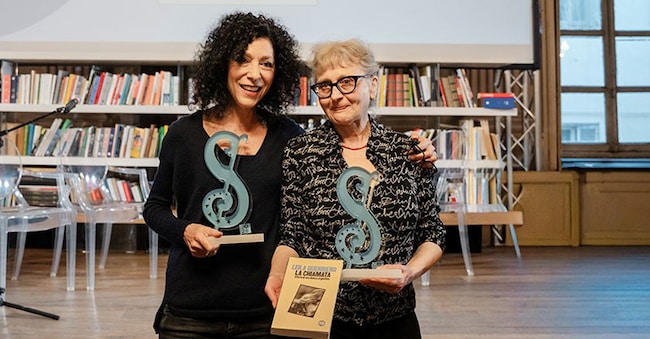
Leila Guerriero won the European Strega Prize with her book La chiamata (translation by Maria Nicola, Sur): 'this is a book about things that should not have happened and did happen in the last Argentinean dictatorship, it is the story of a woman kidnapped, tortured and raped, the story of the dark hand of state terrorism. A woman who then also had to suffer the ostracism of her comrades. But it is above all a book that tells us about a person who does not accept to be defined as a victim forever,' said Guerriero during the award ceremony at the Circolo dei lettori in Turin.
'This book,' he added, 'encapsulates the value of listening without simplifying and writing without reducing. Literature has allowed my family to come together. History is full of dark corners and sometimes we do not want to look it in the face. But if we cannot bear its tragedy, then we are the cowards of history'.
Thrilled by the win, the Argentine journalist and writer recounted how her grandfather, Michele Guerriero had left Basilicata in the early 20th century. He had opened an oil mill in Argentina without ever having the chance to return to Italia or see his family again. Contact had therefore been lost until a relative of his from the Italian branch found one of his books in a bookstore entitled Suicides at the End of the World, and seeing where she had been born - precisely where his grandfather had emigrated - tried to contact her.
The book tells the story of Silvia Labayr, a militant of Montoneros, a Peronist armed group. In 1976, 20 years old and pregnant, during Videla's dictatorship she was kidnapped, tortured, enslaved and forced to give birth to her first child in a room of the clandestine detention centre where she was imprisoned. She was released in June '78 and, on the plane to Madrid, she thought hell was over. But this was not the case. Waiting for her was the suspicion of her exiled compatriots: how was it possible that she had survived and still had the child with her? There were all kinds of rumours about her: young, beautiful, blonde, alive - among thousands of desaparecidos -, she was accused of betrayal and collaboration with her torturers. Gradually managing to rebuild her life alongside her remaining friends, in 2018, thanks to a message she received from a man from her past, Labayru returned to Argentina, where she later reported the sexual abuse she suffered in captivity.
Leila Guerriero discovered her case and spent over two years interviewing Silvia and all those involved to tell the story of her abduction and the call to her father who, by chance, saved her life one day in March 1977. 'In this job you have to look from close up and write from afar,' Guerriero said, 'I believe that there must always be a distance with the interviewee, because you cannot approach them in the right way if you are friends. This is something I try to remind myself of at all times: my primary commitment is to the book and the reader, otherwise you risk ruining the story. I believe that the optimal interviewing distance is learned over the years. At the beginning of my career I was more inclined to be manipulated, but over the years I have learnt that you have to do like Ulysses before the sirens' song: tie me to the mast of the ship'.


