
And now for Volvo, full electric can wait
The Chinese group company Geely reshapes plans and launches a hybrid update of thermal models such as the XC-90

2' min read
2' min read
"There is no long-term future for cars with endothermic engines. We are firmly committed to becoming an electric-only car manufacturer and the transition should happen by 2030. All of the company's all-electric models will only be available online. Statements made by Volvo in March 2021, when the Swedish brand - perhaps driven by a desire to be the first carmaker to announce this - was ready to take the rods and pistons out of each of its cars by the end of the decade and sell its plug-in models exclusively online.In a little over three years, a lot has changed: the electric car boom predicted by consultancies has not happened and cars are still bought at dealerships, often on traditional financing or leasing and not on all-inclusive subscription plans.
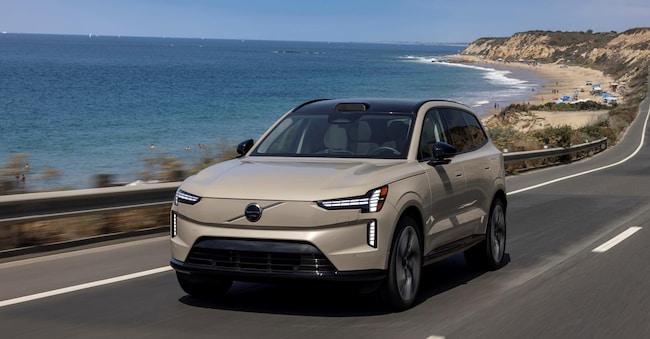
This has translated into a change of strategy for Volvo, with the recent announcement that it has abandoned its goal of selling only electric cars by 2030. No backtracking on the abandonment of the diesel engine, with the last diesel Xc90 rolling off the production lines last May and the definitive loss of thousands of customers, but an extension of plug-in hybrid versions into the next decade. Because despite the good numbers achieved by all-electric models, thanks to the success of the compact Ex30, in the first 10 months of the year Bevs accounted for little more than 20% of global sales. And so there is room for the renewal of the internal combustion range, starting with the revamped XC90 expected in dealerships in early 2025 and updated in terms of styling, interiors and exclusively mild or plug-in engines. Next year will also see an update of the XC60, which will gain a new, more technological dashboard. The year 2025 will mark the debut of the EX30 Cross Country, an all-terrain version of the compact electric car; it was due to arrive this year but was postponed to leave production slots for the standard EX30 and not take away 'media attention' from the debut of the EX90. The maxi electric suv will have the task of winning over North American customers, to date decidedly unattractive to Volvo's lithium-ion products.
The third novelty planned for 2025 is the Volvo ES90, a 100 per cent electric sedan built on the same platform as the Polestar 5 and ready to replace the disappearing S90.
If Volvo is managing to cope efficiently with the electrified transition, as confirmed by its record global sales in 2023, the same cannot be said for Polestar. Because despite being able to rely on Geely (owner of both brands) technologies, Volvo's former sports division is little more than a start-up on the volume front. The ultimate test will come in 2025, with a full range consisting of Polestar 2,3 and 4, but above all where it will be able to rely on a network of Volvo dealerships and workshops in Italy.

