
Recognition of the 'pallet system' is official
Law 182 of 2 December 2025 transformed an interchange method based on voluntary good practices into a regulated model

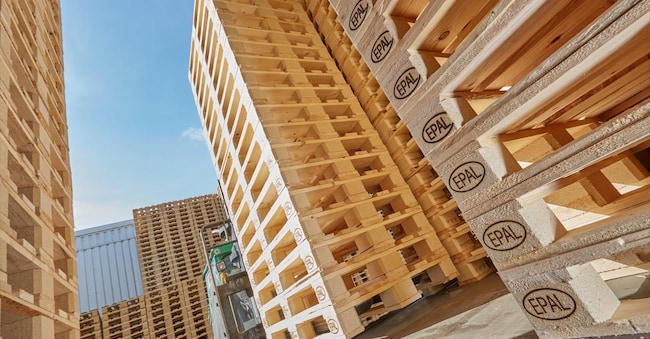
(Il Sole 24 Ore Radiocor) - The Italian and European logistics landscape marks a historic turning point. Thanks to the recent Law no. 182 of 2 December 2025, Conlegno's Epal Technical Committee has officially taken on the status of 'pallet system', transforming what for decades was an interchange system based on voluntary good practices into a model governed by precise legislative discipline. The new regulation, which came into force on 18 December last, is the result of close collaboration between the Ministry for Enterprise and Made in Italy, the Ministry for Public Administration and the main supply chain organisations - including Assologistica, Confindustria, Federalimentare, Federdistribuzione, FederlegnoArredo, Unionfood, Consorzio Rilegno and Consorzio Servizi Legno Sughero - and introduces for the first time in Italy a clear and effective regulatory framework on the interchange of Epal pallets, a key element in goods logistics.
A necessary and shared intervention
Until now, the lack of clear rules allowed some distribution actors to withhold pallets unilaterally, even if they were deemed defective, causing significant economic damage and fuelling a parallel market that was opaque and harmful to the environment. For the first time, the non-derogable obligation to return pallets in a number, type and quality equivalent to those delivered is enshrined. The new rules guarantee the legitimate owners the right to the return of the compliant pallet or, alternatively, its economic countervalue, through an interchange system based on representative vouchers.
A regulatory milestone for competitiveness
The new law (Art. 2) introduces fundamental provisions for the simplification and digitisation of economic processes. For instance, the establishment of the 'pallet voucher' for the management of deferred interchange. This voucher, which gives its holder the right to return pallets in accordance with Article 1996 of the Civil Code, may initially be either digital or paper, but in twenty-four months' time it will only be valid in digital format. The Epal Technical Committee has demonstrated that it meets all the requirements of the standard: from the ownership of registered and identifiable trademarks, to the presence of rigorous technical specifications, to a permanent inspection system entrusted to independent third parties such as Bureau Veritas, which carries out over 2,600 inspections a year in Italy alone (for further information https://epal.conlegno.eu/interscambio).
The Epal pallet: environmental passport to Europe
Epal is the international product label for Europe's most widespread reusable pallet interchange system. In a global context increasingly focused on sustainability, the Epal pallet confirms itself as the main tool of circular economy in the packaging sector. With a circulating fleet in Italy of about 90 million units and more than 400 million movements per year, Epal is the first packaging system already compliant with the new EU Regulation no. 40/2025 (Ppwr). Reuse is no longer just an ethical choice, but a strategic necessity. Thanks to the Perepal system (recognised by Conai and Rilegno), companies that reintroduce pallets into the circuit can benefit from a 90% discount on the environmental contribution, generating savings that in the last year alone exceeded 4 million euros for Italian users.
Towards 2026: transparency and monitoring
The future of the system lies in transparency. From 15 January 2026 and three times a year, Conlegno will regularly publish the average market value of the Epal pallet, based on a new scientific methodology developed in collaboration with the Università Cattolica del Sacro Cuore of Milan. This methodology may, if necessary, change over time to describe as adequately as possible the real market conditions. Furthermore, in order to ensure that the interchange law is respected, Conlegno has entrusted Professor Fabrizio Dallari of Liuc University with the task of developing an 'Observatory on the Interchange Law' to monitor, on behalf of Conlegno, the correct functioning of the system, reporting any violations to the competent authorities.


