Industry

Angelini Industries invests in the US and seeks international partner for growth

The group closed its 2024 financial year with a 3% increase in revenue to EUR 2.2 billion and a 17% increase in profitability. Condojanni CEO Sergio Marullo says he is optimistic about a deal of scale, while remaining in a position of control

by Cristina Casadei

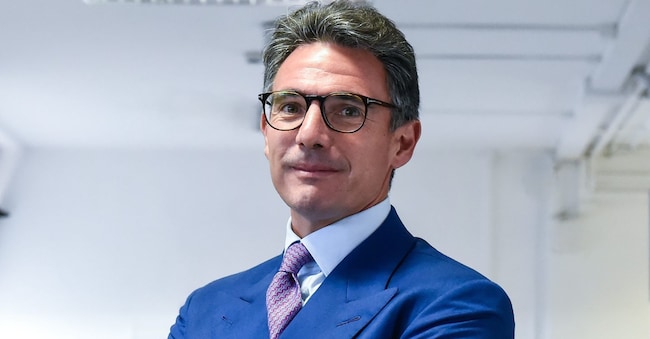
Sergio Marullo di Condojanni, CEO di Angelini Industries

7' min read

7' min read

"We will see how the business evolves, we have plans for development and growth." The ceo of Angelini Industries, Sergio Marullo di Condojanni, has just closed a 2024 balance sheet with an increase in revenues of 3%, to 2.2 billion euros, and in profitability of 17%, and just in the past few hours has signed an important transaction in the United States, co-investing $115 million in partnership with Grin Therapeutics on a molecule for the treatment of a rare form of epilepsy. And it continues to think about the leap in size, looking abroad and preparing the ground for it by switching to international accounting standards. Without any uncertainty, provided that it is 'an operation in control and that makes industrial sense'.

Why did you switch to International financial reporting standards?

The choice was made from the perspective of doing deals that involve international partners and that require a greater readability of the group's performance at an international level. A year ago I was very optimistic about a big deal in pharma that did not materialise (Recordati, ed).
Loading...

No second thoughts on the dimensional leap?

Between now and 2027 I remain optimistic that Angelini Industries will be in a different league. We will find scale in pharma, we believe it is the right thing to do, but we will seek it with the aim of having control. In industrial technology on the other hand, growth will happen organically, there is still a lot of potential to be expressed. Both businesses between now and 2027, however, will be much bigger.

What is your budget?

.

The budget depends on how the investment is realised. We are willing to go to our limit, as long as it makes industrial sense for us.

How did 2024 end

?

In 2024 Angelini Industries recorded a 3% growth in revenues at constant perimeter compared to the previous year, which was a year of extraordinary growth. While revenues grew in single figures, margins grew in double figures, with the gross operating margin registering a 17% increase. This is the result of the great work done over the last four to five years to improve profitability through the drive towards efficiency. We are pursuing this with the governance reform, process improvement, effectiveness of operations and attention to the supplier chain. So it is not an increase in Mol from cost cutting, but structural profitability that comes in a journey where there is still much to be done.
How do the financial statements change with the new accounting standards?

Under the new principles Angelini Industries recorded revenues of 1.6 billion euro and Ebitda was 238 million euro. On a like-for-like basis, with the old accounting principles, 2024 revenues would have exceeded 2.2 billion euros. The big difference in the calculation of revenues between EUR 2.2 billion under old accounting principles and EUR 1.6 billion under new international accounting principles lies in the figures for Fater, the 50/50 joint venture of Angelini industries and P&G in the FMCG sector with brands such as Pampers, Lines and Ace, which can no longer be consolidated in proportion to the share held, but at equity. The revenues of Fater, which are EUR 900 million and therefore EUR 450 million for our share, are no longer counted because it is not a controlling interest and is therefore accounted for separately. If Fater's revenues are subtracted, we arrive at EUR 2.1 billion. Then we have to add the fact that discounts and promotions, which weigh in at around EUR 150 million, have to be subtracted from the turnover under the new accounting principles, and so adding these to the tally brings us to just over EUR 2.2 billion, i.e. a growth of 3% in one year.

How is revenue divided?

.

Angelini Industries' revenues by sector are split between 77% in the health area, 14% in industrial technology and 9% in FMCG. By geographical area they are divided between 37% in Italy, 49% in Europe and 14% in the rest of the world.

How much does the US weigh?

.

We have an investment programme in the US, which is an irreplaceable country for us both in terms of the innovation it produces and the market it represents. This programme does not change because of the still vague announcements on tariffs, the effects of which we will only understand in a long time. I remain optimistic and continue to see the US as a place where there is a unique capacity to generate innovation in the world and in which we cannot but continue to invest.

You have just closed a major operation in the US. What are your expectations?

With our subsidiary Angelini Pharma, a pharmaceutical company part of the Angelini Industries group, we have signed a collaboration agreement for the development and marketing in territories outside the United States, Canada and Mexico of Grin Therapeutics' experimental drug radiprodil, which is currently being studied for several rare genetic epilepsies and neurodevelopmental disorders. It is an operation in which we are investing EUR 115 million at this stage and of which we are very proud, if the authorisation process goes well it is a drug that has great potential to offer treatment possibilities to children who currently have none. Blackstone life science also invested in the operation before us, we co-invested at a later stage. In detail, for now the first part of our co-investment consists of EUR 65 million plus EUR 50 million for the development of the clinical part, so we are talking about a total of EUR 115 million in this first phase. But the potential expenditure and return on investment is far greater if the development of the molecule goes ahead. This will become clear in at least a couple of years.

What are you looking for in the United States?

We are looking for deals of scale. In the US we are more on the technology and industry side where we are doing an exercise on the impact of tariffs and we want to understand what different plans to adopt. An example helps to understand better. In industrial technology we produce a lot for an American customer: in this case exporting to the US and producing for that market, if you buy 20 per cent of American raw materials you have a lower impact from the tariff plan point of view. One way to react then becomes to increase the share of American raw materials. In the short term, there are small strategies that can help mitigate the impact of tariffs.

What prospects do you see?

.

Much will depend on the negotiations with the EU as to what the final arrangement will be. With the UK, a 10% tariff level has been defined, which is different from the original design. The strategy seems to be to first make agreements with smaller players and then with larger ones like the EU. One must therefore understand where the process will land and then look sector by sector. In pharma, duties were announced, then the price of drugs was reduced using countries where drugs are sold at lower prices as benchmarks. At the moment, however, there is an overlap of communications that does not allow a strategy to be made, one can make small interventions while waiting to see where one lands.

In which areas will you continue to invest?

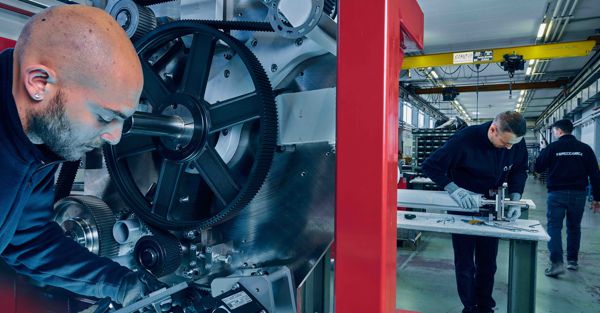
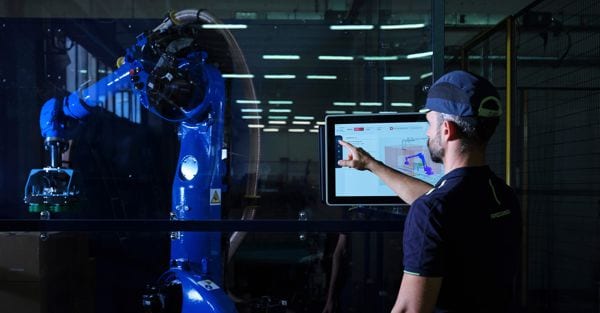
The two pillars on which we will build our future are pharmaceuticals and robotics and industrial technology. Added to these is wine, which, however, accounts for 1% of group revenues. In particular, we have major development projects to further improve our market share in the central nervous system, both in drugs for the treatment of epilepsy and depression, an area that grew in double figures post covid. In pharmaceuticals, we must continue to work on innovation, on molecules that are not yet on the market, to give patients more solutions to treat themselves: our approach always puts the patient at the centre. All this without neglecting traditional products. Then in robotics, operations are taking off: we are forecasting a significant increase in sales for Fameccanica, thanks to customers in the United States.

How are you doing?

In pharma we are planning an extraordinary operation to increase our scale: we are building the future with risky innovation, but there is an issue of scale. More scale allows you to do more innovation and to have partners. However, we are always interested in remaining in control because we have an industrial design and we must have partnerships, but the control must be in our hands because we have a long-term industrial philosophy. Industrial technology has a lot of potential that is being expressed in the US. Now is not the time to make acquisitions because we still have a lot of organic growth, we need time to get the organisation used to a bigger size. In both cases there is a lot of focus on the US and on improving operations in the country.

Are you not concerned about geopolitics?

There may be different schools of thought and approaches. However, one has to be patient and react coolly, beyond the big announcements that represent a long-standing trend that does not come with President Donald Trump. Certainly Trump is more vocal and outspoken, but the US has long tended to prefer to work on its domestic market. We must remain calm and understand what the end point of the announcements will be: history teaches us that you announce one thing, do another, and then at the moment of execution do yet another.

What does innovation mean for your group?

It has a strategic weight and this is told by the story of Angelini Ventures, which is giving us enormous satisfaction: it is the international venture capital company of Angelini Industries, founded in 2022 with planned investments of 300 million euros, of which about 100 million already planned in start-ups that develop innovative solutions and ideas in the fields of biotechnology and digital health. Angelini ventures can count on a team of people spread across several countries in the world, including Italy, the United Kingdom, Switzerland and the United States. It is a fund that has already positioned itself very well in a short time, because of its ability to attract talent in biotech venture capital: it is a way to bridge the search for innovation with bigger players than us. We have a very strong commitment to the fund. I mention only the investment operation in Nouscom, the Italian-Swiss start-up with headquarters in Basel and research laboratories in Castel Romano, in the province of Rome, which is developing, among other things, anti-cancer vaccines. It looks very promising, and it is an operation that we intercepted thanks to the fund's work in seeking out operations with extraordinary innovative capacity in the sectors that are most important to us.

Copyright reserved ©
Loading...

Brand connect

Loading...

Newsletter

Notizie e approfondimenti sugli avvenimenti politici, economici e finanziari.

Iscriviti