
Ansaldo gives the go-ahead for turbines powered by hydrogen and vegetable oil
Two independent assessments have confirmed the company’s progress in the use of low-carbon fuels

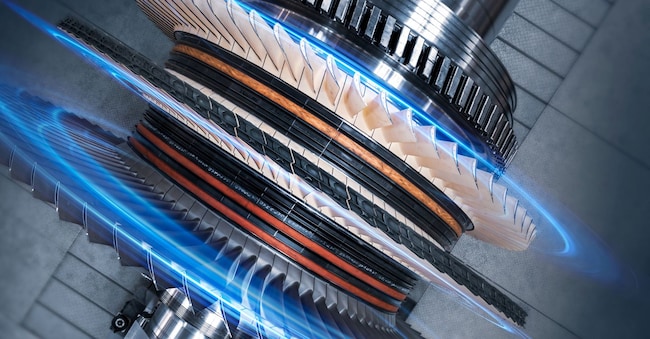
Two independent validations have confirmed Ansaldo Energia’s progress in the use of low-carbon fuels: TÜV SÜD has certified the GT36’s capability to run on hydrogen, whilst DNV has successfully validated the operation of the AE94.3A’s combustion system fuelled by hydrotreated vegetable oil (HVO), a liquid fuel produced from bio-based raw materials.
The ‘Hydrogen Readiness’ certification issued by TÜV Süd, explains a press release, ‘confirms the GT36 turbine’s progress towards operating with progressively higher concentrations of hydrogen, representing a significant step towards the ability to run on 100 per cent hydrogen. The GT36 is currently available with a hydrogen utilisation capacity of up to 70 per cent by volume.”
With regard to the Ae94.3A gas turbine, the statement continues, ‘during a test programme conducted under the independent supervision of DNV at the Sesta Lab in Radicondoli (Italia), Ansaldo Energia successfully demonstrated the operation of the HVO-fuelled hybrid combustion system for liquid fuels under conditions representative of the turbine’s actual operation. The test programme confirmed the stability of combustion across the entire operating range, with no instances of flashback or interruptions to the tests whilst running on pure HVO’.
Fuel flexibility, emphasises Federico Bonzani, chief technology officer at Ansaldo Energia, “is one of the key strengths of the company’s turbine portfolio. Hydrogen and low-carbon fuels offer concrete pathways to reducing CO₂ emissions, whilst maximising the value of existing plants and preserving the electricity stability services provided by rotating machinery. The expertise we have developed can be applied both to new installations and to the existing fleet, through retrofitting projects. In combination with our upgrade packages and digital services, fuel flexibility is a key element in the gradual decarbonisation of electricity generation assets.”


