
Antarctica, new Italian research mission kicks off
Expedition 41 - coordinated by CNR, ENEA and the National Institute of Oceanography - involved 200 technicians and researchers

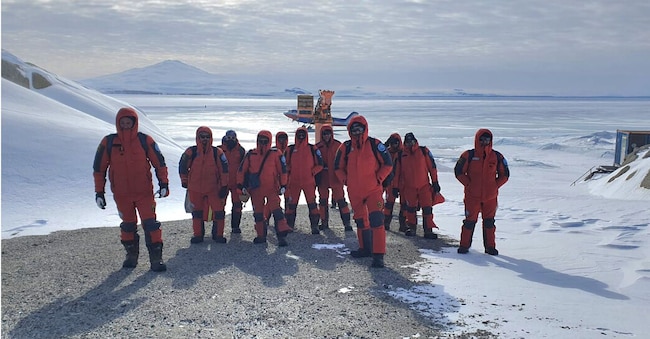
The forty-first Italian research expedition begins in Antarctica. This year it will involve around 200 technicians, researchers and scientists working on projects in various disciplines, including glaciology, geology, climatology, biodiversity and oceanography.
The Italian missions in Antarctica are conducted as part of the National Antarctic Research Programme (Pnra), financed by the Italian Ministry for Universities and Research and managed by the National Research Council (CNR) for scientific coordination, by ENEA for the planning and logistical organisation of activities at the Antarctic bases, and by the National Institute of Oceanography and Experimental Geophysics (OGS) for the technical and scientific management of the icebreaker ship Laura Bassi, which set sail from Trieste on 6 October for the South Pole.
The first technicians have arrived
The first group of technicians arrived by air in the Antarctic territory and has already restored the operation of the Mario Zucchelli coastal base, closed since last February, and is checking the conditions of the sea ice where the runway will be set up for the subsequent flights, operated with the C130J of the 46th Air Brigade of the Italian Air Force, to transport material and personnel involved in the mission.
The first research team will arrive around 6 November. The base will involve around 114 researchers, researchers and technicians in various scientific activities (14 projects and permanent observatories). These include the study of the interactions between the Earth, ice and climate, for the understanding of global environmental dynamics; the analysis of pollution and the anthropic impact on the ecosystem; the study of biodiversity and the adaptations of living organisms in extreme conditions; geophysical observations for the study of crustal movements and soil deformations. Research will also be carried out in astronomy, astrophysics and space meteorology.
The Concordia station
The summer campaign will start in early November at the French-Italian Antarctic station Concordia at an altitude of over 3,000 metres, where some 39 research projects will be carried out with the involvement of around 80 participants. Subsequently, an international team of five Italians, six Frenchmen and one Briton will ensure the operation of the base and the continuation of research activities during the nine months of the polar winter (from early February to early November), when the outside temperature reaches -80 C° and the base will remain in complete isolation. The research activities of the French Polar Institute Paul-Émile Victor and the European Space Agency will also be carried out at Concordia.

