

The anti-ISIS mission is drawing to a close; a crackdown on the ‘Iranians’ in Iraq is underway
The ‘Dawn Strike’ anti-corruption operation has landed MPs and a former deputy minister in hot water. The legal proceedings, backed by the US as part of its anti-Tehran strategy, mark a crucial moment for Baghdad. On 30 September, when the international coalition in which Italy participates is due to wind down, a highly delicate period for energy resources will begin. That is why all this is of interest to our country

Key points
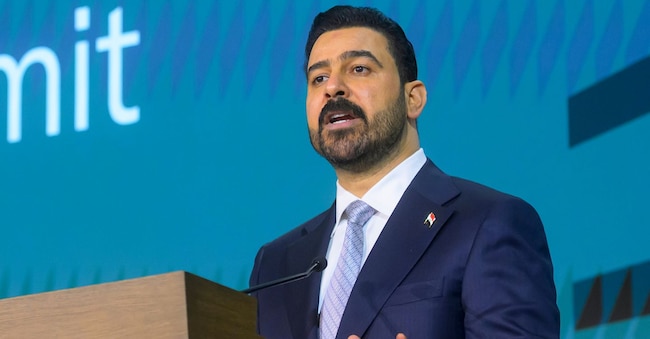
Forty-seven arrests in a single night. Over 370 kilos of gold seized in a single case. One hundred and thirty million dollars in cash found hidden in plastic bottles, inside walls and in a rainwater drainage well. The figures from the anti-corruption operation launched in Baghdad at the end of June tell a story specific to Iraq. One which, however, has an impact on the Mediterranean energy landscape. Shortly after midnight on 28 June, units of the Iraqi counter-terrorism forces surrounded Baghdad’s Green Zone, armed with court warrants. Over the following 72 hours, the number of those arrested rose from an initial group of seven to, according to some security sources, more than sixty, with over sixteen MPs implicated and their parliamentary immunity revoked via an emergency procedure during the parliamentary recess. Behind the operation, dubbed ‘Dawn Strike’, lies the confession of the former Deputy Minister of Oil, Adnan al-Jumaili, who was arrested in May: in his case file alone, investigators have traced over 127 billion dinars – almost 100 million dollars – as well as 24 million in cash, property, vehicles and gold jewellery. Prime Minister Ali al-Zaidi, a 41-year-old businessman with no party affiliation who came to power in May, has made the fight against corruption the cornerstone of his term in office — a term that began with Washington’s blessing. Numerous Iraqi analysts have spoken out in the local media, explaining that the operation could serve to mark a break with the past. And, above all, to freeze the covert activities of pro-Iranian factions. A country from which the majority of the ‘black gold’ energy flows originated.
Relationships
Even before receiving his formal appointment from Donald Trump on 31 May, US Special Envoy Tom Barrack had already focused Washington’s relations with Baghdad on one key institutional interlocutor: Judge Faiq Zaidan, president of the Iraqi Supreme Judicial Council, who has for years been regarded as the true ‘kingmaker’ of Baghdad’s political scene. The model — lists of names linked to suspicious financial networks, delivered via a single channel rather than scattered amongst multiple political interlocutors — is the same one that a thorough analysis of the region should recognise as typical of a phase in which the major powers prefer to rely on a single centre of power rather than on an entire system of alliances. The timetable is tight: by 30 September — the date coinciding with the end of the international anti-ISIS coalition’s mission in Iraq — all armed factions linked to Iran must hand over their weapons to the state. Some, such as Asaib Ahl al-Haq, have already announced that they will surrender their weapons. Others, such as Kataib Hezbollah, are making their disarmament conditional on the complete withdrawal of US troops. Should that deadline be missed, instability in Iraq would not remain confined to Mesopotamia.
Basra
Why should an Italian reader care about what is happening in a drainage well in Basra? The answer lies underground, not in the metaphor. Since 2009, the Italian company Eni has been developing the Zubair oilfield in southern Iraq, holding a 41.56 per cent stake alongside its Korean partners and the Iraqi state-owned company. Zubair now accounts for almost nine per cent of Iraq’s national oil production, and Eni has announced a further increase in production in 2026 compared with the previous two years. Italia has contributed greatly to the international coalition against IS. It has played an important and influential role. It will therefore be crucial for us too to monitor what may happen from October onwards. There are the underground resources. There are Iranian influences that we are trying to curb. There are Turkish influences which, at present, appear to be operating unhindered. Obviously, an unstable Iraq, fragmented by conflicts between armed factions and power networks linked to Tehran, poses a direct risk to Italian industrial interests in the Gulf as well. An Iraq that consolidates the rule of law — or at least attempts to do so, with all the ambiguities that entails — is news that concerns us all, in a positive sense.
The unknowns
Whether Operation ‘Dawn Strike’ will actually succeed in undermining the power networks that have been managing Iraq’s public funds for the past twenty years, or whether it will merely redistribute those funds amongst new players, is a question that no one in Baghdad can yet answer. Certainly, between now and the end of September, it is worth keeping a close eye on developments.

