
Competition law and Risiko: the limit to be observed is 35 per cent per province
The Italian competition authority had set a similar threshold for the previous (2021) Intesa Sanpaolo–Ubi merger

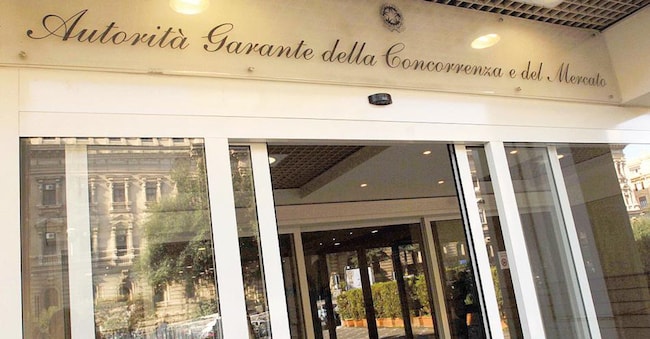
The threshold is set at 35 per cent per province. Once this market share is exceeded or matched, the Competition Authority will launch a more in-depth investigation, which will involve a series of measures to safeguard the interests of bank customers. Because, for those who may have forgotten, the high street bank is a service used primarily by a large elderly population – we are the oldest country in the world alongside Japan – who are not particularly accustomed to using digital technologies.
With these needs in mind, therefore, the competition authority, when assessing mergers between banks, applies a series of criteria which must then be adjusted on a case-by-case basis. For our analysis, we have used the Intesa Sanpaolo–UBI merger as a benchmark, as it involves the bank led by Carlo Messina, a key player in the latest round of the ‘banking game’ in which MPS and Mediobanca are the designated targets. It is in the Antitrust Authority’s document relating to IntesaSanpaolo-Ubi, dated 20 July 2020, that the 35 per cent threshold is specified; even in the case of the most recent merger between BPER and Popolare Sondrio, the authority notes that competition concerns arise when a market share of 35 per cent is exceeded.
The 30-minute drive
However, the threshold indicated is only the starting point. Out of respect for customers, who have the right to choose the credit institution best suited to their needs and easiest to reach, the Competition Authority is introducing a further criterion: in provinces at greater risk of market concentration, the principle of the catchment area (service area) is applied as a secondary criterion; this refers to the area centred on a bank branch, the extent of which is determined by a maximum travel time of 30 minutes by car. This parameter is established on the basis of the average mobility of bank customers, who usually choose branches that are easily accessible.
It is not, in fact, enough simply to set a target level for each province; we also need to be aware of how long it takes to reach the counter.
Banking desertification
At this point, we come to the long-standing problem of the decline in the number of bank branches across the country, caused precisely by the flurry of mergers between banks in recent years, as well as by competition from fintech banks vis-à-vis traditional branches.


