
Anti-personnel mines, an Italian law somewhat difficult to enforce
It is Law 220 of 2021 that has sent banks, insurance companies, foundations and SGRs into a tailspin. We will discuss it on 17 April at the Salone del Risparmio at 10.45 a.m.

2' min read
Key points
2' min read
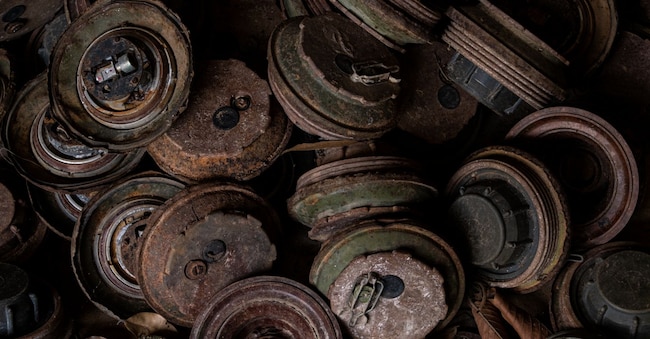
Prohibition of direct or indirect funding of companies that produce, sell or transport anti-personnel mines or cluster bombs. Law 220 of 2021 implemented in Italy two important international conventions, those of Ottawa and Oslo, which banned non-conventional weapons. Italy has in fact signed both treaties. The recent news, however, is not at all comforting since countries such as Finland, which had also signed these treaties, has decided to opt out of the Ottawa Mine Ban Treaty.
Law 220 of 2021
.We have dealt with the subject several times on Plus24. The measure affects all companies, listed and unlisted, and involves a crowd of financial intermediaries: banks, insurance companies, Sims, pension funds, banking foundations, management companies.
The main difficulty in applying the law that sent the Italian financial world into confusion concerned the difficulty of finding verified and up-to-date information on the companies to be banned. Initially, Law 220 provided for three supervisory authorities (Bankitalia, Covip and Ivass) and the Ministry of the Economy itself to draw up a black list of such companies. The measure was later amended and the legislation now provides for the obligation to 'consult publicly available lists'.
The Italian black list
.Until last December, public blacklists in Italy did not exist and in Europe those made available by some NGOs were out of date. Financial intermediaries have therefore done their best to enforce the regulations, thanks mainly to the help of deposit banks and infoproviders.
Then the Italian black list arrived. It was made available to everyone by the Trento-based consultancy firm, Nummus, which is owned by the Italian Bishops' Conference (Cei) and the dioceses of Milan and Trento. Initially there were 23 companies. Many Chinese and Korean. A couple of US ones including Lockheed Martin which is present in the S&P500 index, replicated by many ETFs.


