
Antonelli wins at Spa, but the real race was fought in watts: Leclerc second, with the virtual safety car proving decisive

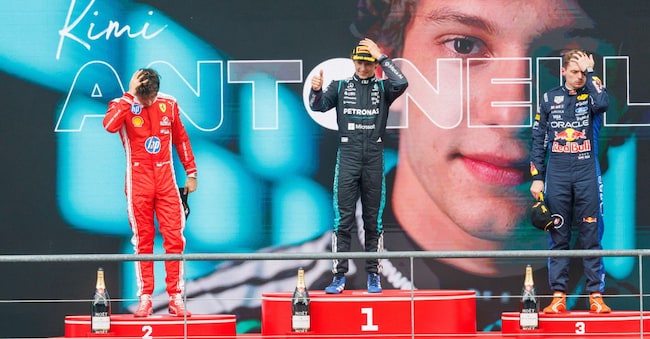
At Spa-Francorchamps, the Belgian Grand Prix in the Ardennes – the tenth round of the 2026 season – saw Andrea Kimi Antonelli take the chequered flag: it was the sixth victory of the year and of his career for the 19-year-old Mercedes driver, who has further extended his lead in the Drivers’ World Championship in commanding fashion.
Ferrari put in a near-perfect performance; although they were still on the back foot, they came off the back of a victory and are once again hot on the heels of the fastest car, finishing second – with Leclerc once again ahead of a resurgent Hamilton, who nevertheless suffered a fair bit of bad luck.
However, the outcome of the ‘mere’ 44 laps – which still amounted to 308.052 km on the longest circuit on the calendar – was decided more by the control units than by overtaking manoeuvres: a Virtual Safety Car midway through the race temporarily shook up the order at the front, and power management influenced every decision made by drivers and engineers, from the first to the last lap. The challenge remains, and few have truly ‘unravelled’ the potential and limitations of the new technologies.
The battle at the start and the crash that immediately ended Russell’s race. At the start, Max Verstappen took advantage of the slipstream to overtake Antonelli at Eau Rouge: sparking a huge reaction from ‘his’ home crowd (he has fans in both the Netherlands and Belgium thanks to his dual nationality), but the Italian responds immediately at the end of the Kemmel straight and regains the lead. Behind him, Lewis Hamilton overtook his former team-mate and direct rival in the overall standings, George Russell, by using the same slipstream, but at the Les Combes braking point the two made contact: Russell, on the outside, ended up in the gravel and had to retire immediately. The Safety Car was deployed and remained on the track for five laps whilst the marshals removed the crashed car. On the tenth lap, race control announced the penalty for the incident: a five-second penalty for Hamilton, who was deemed responsible for the contact.
The role of the Virtual Safety Car at the halfway point of the race. The first safety car period mainly clarified the order of the field at the start; the second – a Virtual Safety Car deployed on lap 20 due to debris at Turn 17 – effectively rewrote the outcome of the race. Under the VSC, the reduced speed limit across the entire circuit allows teams to make pit stops whilst losing significantly less time than during a stop under normal race conditions. Ferrari seized the opportunity by bringing in both Leclerc and Hamilton in quick succession, along with Oscar Piastri’s McLaren: Charles Leclerc, who had been lurking behind Antonelli and had already capitalised on Verstappen overtaking Norris – who had yet to pit – returned to the track ahead of the World Championship leader, leading the race for a significant portion of the middle stages.


