
Antonia's Dream Test
Giovanni Bracco’s book, *The Dream Interpreter*, is available in bookshops, published by Giovane Holden Edizioni

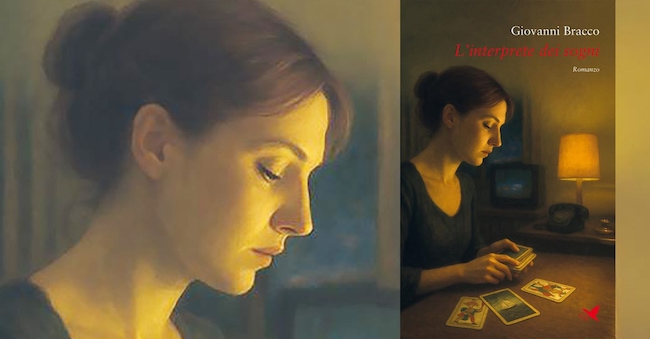
In a Rome that is run-down, disheartening and bleak in a way that only the capital can be—a reflection of an inner malaise that has been simmering for a long time—we find Antonia, a failed psychologist and fortune-teller on a TV programme: she is the protagonist of Giovanni Bracco’s book, L’interprete dei sogni (Giovane Holden Edizioni).
Trapped like a rag doll in a glass bell jar, Antonia leads a life she does not feel is her own and which certainly does not fulfil her, save for the easy financial return, whilst, like an automaton, she moves wearily amongst the most hackneyed clichés of cheap psychological drivel and the clumsy subterfuges of a Sunday-morning visionary. All this against a backdrop of relentless commodification, amidst young aspiring actresses in soft-porn films and erotic phone lines, with a side of crooked businessmen.
Now in her sixties, Antonia recounts her life story to a retired journalist, who – acting as a somewhat reluctant narrator – describes the ups and downs of her past thirty years. “Everything I see in others, I find in myself… ignorance, superficiality, living life a bit haphazardly, assuming I’m in control of situations.”
And again: “I don’t realise that things are happening around me independently, without any regard for me.”
The moped accident
Following a minor scooter accident, it is a chance encounter with Giulia, who is terminally ill with AIDS, that causes her to rethink her outlook on life and her plans, in the spirit of a deeply moving intimacy and affection. From this point on, the search for a lost sense of authenticity becomes essential for the protagonist. Her involvement in a money-making phone sex line will ultimately bring her face to face with the harsh reality of the exploitation of women’s bodies, whilst simply caring for her friend is a source of comfort for both of them, in a world of unspoken truths where redemption seems out of reach, at least for those who cannot ‘regain the desire to dream’.

