The character

Antonio Costa, a president who eats in the canteen and knows the art of compromise

The former Portuguese Prime Minister takes over from Charles Michel on 1 December at the helm of the European Council. With a completely different style

from our correspondent Beda Romano
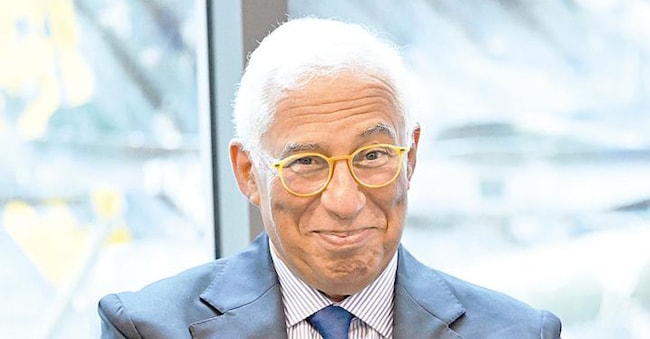
Antonio Costa

5' min read

5' min read

BRUSSELS - A few days ago a former prime minister was seated at a table in the canteen of the building housing the Council of the European Union. Discreet, almost indistinguishable, António Costa was accompanied by one of his advisers and sat next to dozens of other officials who eat daily in the large and noisy refectory of an anonymous building built in 1995. It is difficult to say how revealing this anecdote really is about the personality of the next president of the European Council, but after all, in this day and age, it might bode well.

Half Century European Council

The European Council came into being on 9 December 1974 at the behest of Valéry Giscard d'Estaing. The first meeting took place in the premises of the French Foreign Ministry in Paris. In his memoirs, former ambassador Claude Martin recalls that the organisers drew the curtains of the room where the heads of state and government met 'to muffle the noise coming from the street and to prevent the American services, who were in all likelihood stationed on the other side of the Place de la Concorde, from filming or remotely recording the discussions'.

Loading...

For decades, the presidency of the European Council was entrusted to the country that was president of the Union at the time. Then the Lisbon Treaty created a stable position, with a two-and-a-half-year term renewable once.

On 1 December António Costa will take over the reins of the institution from Charles Michel. The former Portuguese Prime Minister is the first Socialist to occupy the post, and these days also one of the few leading Socialists in Europe. Born on 17 July 1961 in Lisbon, António Luís Santos da Costa stands out physically, with his rounded build, olive skin and greying hair.

His father was a writer, born in Maputo, Mozambique, to a family originally from Margão, in the Indian state of Goa. A few years ago, speaking to the Hindustan Times, the then Portuguese Prime Minister said he was 'very proud' of his Indian origins. From Brussels, the politician intends to cultivate relations with the Global South.

Nine years at the helm of Portugal

.

The future President of the European Council was Prime Minister of Portugal from 2015 to 2024, holding very different political forces together. He succeeded in adopting social policies while reducing the public debt, which fell from 130 to 100 per cent of the gross domestic product during his tenure. Meanwhile, per capita GDP rose from USD 19,250 to USD 27,275, and the number of foreigners residing in the country increased from four hundred thousand to over a million. António Costa resigned after a series of scandals that also affected his chief of staff.

Says one of his political opponents, Miguel Maduro, who was Minister of Regional Policies in a conservative government between 2013 and 2015: 'Personally, I do not have a good relationship with António Costa. We were at the centre of a political diatribe on the use of European funds. He can be very aggressive, harsh, maybe even vindictive. But politically he is very shrewd. He is a skilful tactician. He has the right profile to be a good president of the European Council'.

On the Jornal de Negócios website, a clip from 2019 is still visible. During a rally in Lisbon, an already elderly man approaches António Costa and reproaches him for having stayed on holiday while the Pedrógão Grande region was hit by tragic fires - 66 people died, and 253 others were injured. The then premier reacts impulsively: 'It is a lie, a lie, a lie! In the film, the prime minister hints at leaving, but then aggressively returns to address the man. He is blocked by the escort. Even the most good-natured-looking people can lose their patience.

Yet, for ten years in Portugal, the politician managed to lead majorities that also included radical parties: 'António Costa does not adhere to any ideology rigidly. Able to combine different political sensitivities, he is very effective in reaching political agreements. He has very good social skills, except when he loses his cool,' notes Miguel Maduro. Will he be able to handle the prima donnas of the European Council and get the Draghi Report adopted, at least in part?

Convinced European

.

The task is not easy. On the political front, the politician appears to be a genuine pro-European, despite coming from a country at the western end of the Union that looks more to South America than to Central Europe.

As a member of the European Council, he personally contributed to the EU's response to the pandemic, with the birth of the NextGenerationEU. His government signed the March 2020 letter in which nine member states obtained joint debt to better tackle the crisis.

Recently, António Costa recalled the figure of Jacques Delors, outlining his vision of a Europe caught between economic crisis and American unilateralism: 'The social is an aim of my reflection and action,' he said, quoting the former Commission president. He called for the completion of the single market, economic and monetary union, and social Europe. "We must respect those countries willing to pursue different levels of integration (...). We must increase our common investment capacities (...). New financial resources are part of the solution'.

The hope in Brussels is that the European Council is finally in solid and above all mature hands. His predecessor, Charles Michel, leaves behind him a trail of mixed feelings. 'He came to the summit too young,' judges a former senior European official (he was 44 years old). 'The Sun King', another official calls him bluntly, denouncing his exaggerated egocentricity. One ambassador recalls that he once waited for several minutes in the European Council building for the lift: everyone was stuck waiting for the president to arrive. When the latter was appointed, in 2019, images of Charles Michel in the memorable moments of his career, even holding his newborn son, were shown on the television screens in the Council press room for several days.

The Michel-Von der Leyen dualism

To be fair, it must be admitted that running the European Council has not been a pleasure game. From pandemic to war, there was no shortage of crises. Moreover, he had to cope with a Commission President, Ursula von der Leyen, who was equally image-conscious. It is said that at their first meeting, in the Berlaymont Palace here in Brussels, Mrs von der Leyen asked President Michel to leave his mobile phone outside the room. Some say that the choice was in retaliation for a similar decision made earlier by the former Belgian premier. In 2021, the Sofagate scandal broke out. During a meeting in Turkey, the President of the European Council installed himself comfortably in an armchair next to Turkish President Recep Tayyip Erdoğan, confining the President of the Commission to a sofa.

According to information gathered between Lisbon and Brussels, the new President of the European Council knows how to wield power, he may centralise decisions, but he is effective in finding compromises - at least he was at home. It will be interesting to see how he will deal with the new US President Donald Trump. On the European front, the relationship with the Commission President will be crucial. Of course, if the relationship breaks down, responsibility will fall on Mrs von der Leyen, given her history with Charles Michel. Ultimately, the relationship between the two will be all the more effective the more the two personalities manage to share the credit for successes and the responsibility for difficulties.

Paradoxically, it might fall to António Costa to defend the Community method, in light of the intergovernmental way in which the President of the Commission has acted in recent years. The very presence of the former prime minister in the canteen makes one hopeful. It is rumoured in Berlin that as a minister, Mrs von der Leyen rarely bothered to have a beer with any government colleague.


Copyright reserved ©
Loading...

Brand connect

Loading...

Newsletter

Notizie e approfondimenti sugli avvenimenti politici, economici e finanziari.

Iscriviti