
AOL, end of an era: stop dial-up service after 30 years
To claim that this service has brought the Internet into the homes of all Americans is perhaps overstating the case, but we are not too far from reality.

4' min read
4' min read
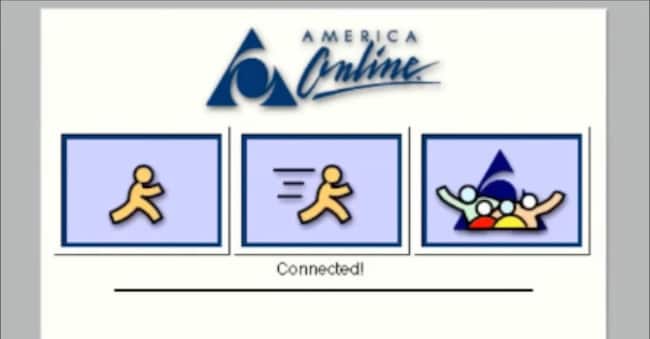
To say that this service brought the Internet into the homes of all Americans is perhaps overstating the case, but we are not too far off the mark. In fact, it was in the mid-1990s when AOL switched on that line that, with its familiar rustles, opened the door to the Web to millions and millions of people. Thirty years later, the former America Online, now owned (like Yahoo, another star of that firmament of companies that gave birth to the net economy) by the private equity fund Apollo Global, has sent a notice to its subscribers informing them of the imminent definitive closure of the dial-up connection in the United States and Canada: as of 30 September, the service will be withdrawn from the offer plans and the curtain will come down definitively on one of the most iconic symbols of the origins of the Net. Steve Case, co-founder and historical face of the company, greeted the news thus: "Thanks for the memories, RIP". A long-awaited epilogue, as pointed out by many observers of the tech world, but nonetheless steeped in nostalgia for those who lived through the times when 'going online' meant patiently waiting for the ritual of whistles and metallic tones emitted by the modem before the browser opened on a World Wide Web still poor in content but growing disruptively.
A piece of history
.In the 1990s, when the Netscape Navigator browser dominated the scene, contending for the sceptre to Microsoft's Internet Explorer and Altavista was the search engine par excellence to find your way through the jungle of sites, AOL was the gateway to the Net for most Americans. The business model for winning the Web bet was simple but extremely functional: millions of CDs with free trial connection software shipped to your doorstep with the aim of enabling anyone (even digital newcomers) to connect to the Internet with just a few clicks. That this strategy was a winning one was clear from the numbers, with AOL able to reach (at its peak) almost 40% of the total time US users spent online. These were the years of the net economy, when the Web was perceived as a new 'Eldorado' to be conquered and AOL's chatrooms were socialising places long before the advent of social networks as we know them today, when e-mail was beginning to change personal and business communications and the first e-commerce sites were laying the foundations for what is now the global online shopping market. America Online, at that time, was not just an access provider: it was a real ecosystem, with news portals, games, forums, messaging services and even its own search engine, AOL Search, until last year still among the most used by Americans, with a global market share of 0.1%.
The Rise and Falling Parabola
The success of America Online was disruptive, so much so that it became a tech phenomenon even on this side of the Atlantic Ocean: in 2000, the merger with Time Warner, valued at around 350 billion dollars, caused a sensation, in the media and elsewhere, the largest merger operation ever recorded at the time. However, what was supposed to be the alliance of the century turned out, as often happens, to be a failure, the classic turning point that marks the beginning of the end: the synergy between traditional media and the digital world did not take off and the rapid spread of broadband, fuelled by the increasingly competitive offers of competitors, did the rest, eroding AOL's customer base. In 2001, the company had more than 30 million subscribers, but already two years earlier, in 1999, it had lost its position as the leading Internet provider in the UK. In 2003, an article in the 'Wall Street Journal' sanctioned (prematurely and erroneously) the end of the dial-up Internet era with a lapidary headline: 'It's official. Dial-up is dying', while 2006 was the year America Online changed its name to AOL. Only three years later, in 2009, Time Warner spun off the company, while 2015 saw the penultimate act in the America Online saga: the company was bought by Verizon and later merged with Yahoo.
The Internet of yesterday and tomorrow
The last ten years have in fact reaffirmed how dial-up technology had become obsolete and anachronistic in a fully digital world interconnected to fixed and mobile ultra-broadband networks. According to government estimates from 2023, the ratio of American Internet users connected to the Net via dial-up to those connected via broadband was 300 thousand to 300 million. A disproportion that made the decision announced in recent days inevitable. With the definitive retirement of dial-up, an era in which the Internet was still synonymous with a voyage of discovery of the virtual world made up of websites with animated gifs, text chats, and rudimentary communities came to an end. Today, we fly the Net with fibre optics and 5G networks, hopping between apps, social platforms and cloud services. But those who experienced the dial-up Internet of the 1990s can only toast to what could be described as an unforgettable fragment of the first real digital revolution.

