
Court of Appeal rejects Trump's tariffs for abuse of presidential powers
The decision, by a vote of 7 to 4, largely confirms what the New York International Trade Court ruled last May, but leaves the tariffs in place until mid-October, giving the administration time to appeal to the Supreme Court

2' min read
2' min read
The Federal Court of Appeals has ruled that Donald Trump abused his powers under the International Emergency Economic Powers Act (IEEPA) of 1977 by imposing tariffs on almost all trading partners without congressional approval. The decision, taken by a vote of 7 to 4, largely confirms what was ruled last May by the International Trade Court in New York, but leaves the tariffs in place until mid-October, giving the administration time to appeal to the Supreme Court.
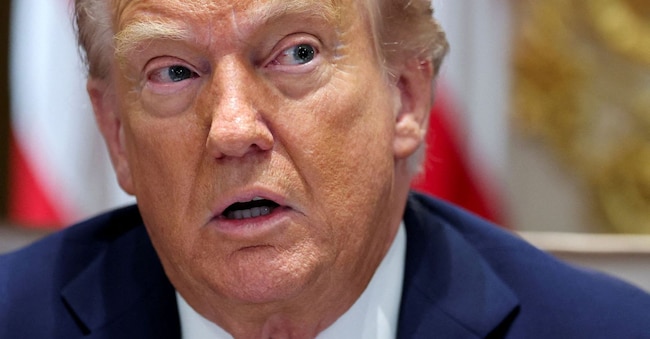
Trump, who has already announced the appeal, reacted in dramatic tones:"If this decision stands, it will literally destroy the United States", he wrote on his social network Truth. The White House, through its spokesman Kush Desai, insists on the legitimacy of the measures and trusts in a definitive victory. For its opponents, on the other hand, the verdict represents an important curb to the disproportionate use of presidential emergencies.
The dispute concerns two sets of tariffs. The first, introduced on 2 April 2025 and renamed by Trump'Liberation Day', involve tariffs of up to 50 per cent on countries with which the US runs trade deficits and a 10 per cent 'base' duty on almost all other imports. The second, known as"trafficking tariffs", hit Canada, Mexico and China with the motivation of countering illicit drug trafficking and immigration. Both were justified by the declaration of national emergency, a ground never before covered in tariff matters.
The central issue is legal and political at the same time. The Constitution gives Congress the power to impose tariffs, but over the years lawmakers have transferred powers to the president. Trump has exploited this grey area to build an aggressive trade policy capable of shaking markets, angering allies and generating over $159 billion in revenue. The Justice Department warns that cancelling the tariffs could force the state to make huge refunds, with devastating consequences for the Treasury.
At the same time, the verdict weakens Trump's strategy, which had used tariffs as a means of pressure to tear up favourable bilateral agreements and as a source of indirect funding for his tax cuts. Other legal bases remain in place, such as Section 122 and Section 301 of the Trade Act of 1974, which have been used in the past for targeted trade wars, but are much more limited in scope and duration.

