
Business appeal: 'For 8 out of 10 Italians, the former Ilva should not be closed'
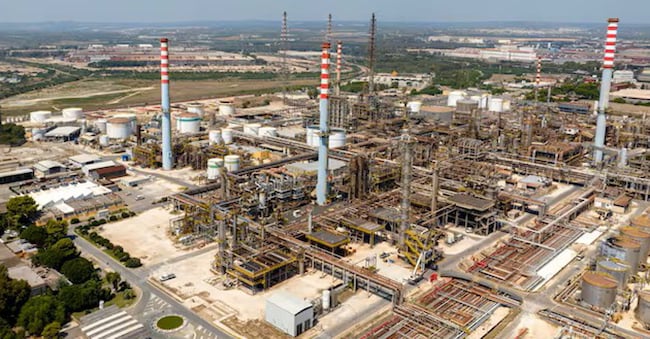
The former Ilva must be relaunched and ownership and control of the company must remain in Italia. Out of 1,200 people interviewed from 27 April to 4 May for a survey conducted by Federmeccanica and Confindustria Taranto and presented yesterday at the steel plant, 73.9 per cent of respondents, with 68.4 per cent Apulian, came out in favour. Only 9.8 per cent are in favour of a restart with foreign players (8.9 per cent from Puglia), while 11.8 per cent are in favour of closure but managed at national level and 4.5 per cent for closure and sale to foreign players. In essence, 8 out of 10 Italians and 8 out of 10 Apulians have no doubts: re-launch and restart for the steelworks by keeping the Italian asset.
The 'prevailing sentiment', comments Federmeccanica, 'is strong opposition to the divestment. Italians are aware of the likely serious consequences. 78.5% are aware that steel production is necessary for the survival of the national industry; 70.8% believe that production in third countries such as China and India would increase the industry's degree of dependence; 77.1% fear the direct and indirect employment impact of a possible closure and 61.8% are aware that, in the event of the closure of the Taranto plant, billions of public money would have to be spent on its reclamation'.
'We want to emphasise once again the industrial opportunity that this plant represents for our country,' says Federmeccanica president Simone Bettini, who was in Taranto yesterday with about a hundred entrepreneurs. 'It must be,' adds Bettini, 'an Italian property. And if we consider it a strategic asset for the country, I would hope that it remains state-owned. If the state has energy, gas, why should it not have steel?' However, it is necessary to reach a conclusion for the sale of the company to a new subject after two years of extraordinary administration and two tenders for the sale, the last of which is still open and with two groups in the field: the American Flacks and the Indian Jindal. 'We have already lost too much time,' commented Bettini. 'Then on what are Arvedi's interests and potential opportunities and so on, the important thing is that the company remains Italian. On the one hand that it remains Italian and on the other that it is administered and managed with industrial times and techniques, not with the dilatory times of politics. I am not interested in whether the manager, the owner, is located more or less in the North, the Centre or the South. What interests me is that the strategic nature of this plant remains firmly in Italian hands'.
Another datum that emerged from the survey (carried out by Community Research&Analysis and presented by the scientific director Daniele Marini of the University of Padua) is that '80.5% of those interviewed do not know that, according to Legambiente 2025 data, Taranto - with an annual average of 20 micrograms per cubic metre of fine dust - now boasts the second lowest value among all the Puglia regional capitals, all of which are well within the legal limits'.
'With the introduction of new regulations in the near future,' warns Bettini, 'there will be an explosion of steel costs in our country that puts companies at risk for exports. We will go out of business with respect to countries that do not have the same fiscal impositions and the refined level, environmentally speaking, of Taranto. This opens a window for what I call unfair competition. In the sense that while Ilva in Taranto, in order to be rightly in line with European environmental standards, is asked to invest 2 billion to put everything in place, a steel mill in the north of Europe is asked nothing'.

