Big tech

Now Apple attacks the EU and demands that DMA be eliminated

According to the Cupertino giant, the Regulation led to a degradation of the services provided to users and exposed them to risks from which they were previously protected

by Biagio Simonetta

Aggiungi Il Sole 24 Ore
ai preferiti su Google

3' min read

3' min read

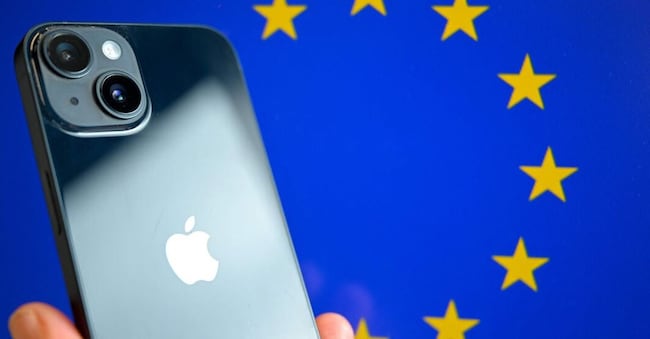
If until now, Apple's policy towards a European Union considered too regulatory had been one of prudence and cooperation, there is now a significant change of pace. An attitude that is perhaps also the result of the new international political context (Donald Trump's return to the White House has certainly changed the dynamics between the EU and the USA). With an official document, in fact, the Cupertino giant launches an unprecedented attack against Brussels, calling for the repeal of the Digital Markets Act (or DMA).

This is the law that came into force last year and aims to put an end to abuses of dominant position by technology giants. A regulatory plan that has put Apple under a big magnifying glass from the outset. And which in some ways has unpacked the system and the ideas of the iPhone manufacturer, forced to open up its armoured software (a feature that consumers really like).

Loading...

The American group has clearly objected to the regulation from the outset. But today, it breaks ranks and abandons caution, arguing that the DMA has led to a degradation of the services provided to European users and exposed them to risks from which they were previously protected. "The DMA should be repealed and at the same time a more appropriate legislative instrument will be adopted for the purpose."

According to the Cupertino company, several new features have been delayed or cannot be released in Europe. Among these are the real-time translation presented at the release of the new AirPods 3. A feature that, precisely because of the stringent EU rules, will not be available to European users.

And then again: iPhone Mirroring on the Mac and certain Apple Maps options such as 'Visited Places' or 'Favourite Routes'. The reason, Apple claims, is that the European Commission requires certain innovations to be made available on non-Apple platforms before it can offer them to its customers. In the absence of a technical solution that does not jeopardise data privacy, the result is an indefinite postponement.

Tim Cook's company also argues that the DMA forces the ecosystem to open up to non-controlled ways of distributing apps, such as alternative marketplaces, third-party payment systems and so-called sideloading. These are all situations that - according to Apple - risk exposing users to scams, malware, counterfeit apps and content hitherto excluded from the App Store, such as pornography and gambling, even in countries where these categories are banned by law.

Another critical point concerns data management. The regulation, Apple explains, obliges the company to grant other operators access to extremely sensitive information, such as the complete list of notifications received or the history of Wi-Fi networks used. Data to which not even Apple has access, and which with the EU changes - according to the company - could reveal personal details about places visited and daily habits, increasing the risks of surveillance and tracking.

In short, the DMA - according to Apple - is not a law that protects the consumer, but rather exposes him to cyber risks that have always been rather far from Cupertino's products, given the caution with which software is ignited. Nor does it work in terms of competition, because - again according to the Californian company - the announced benefits are not visible. On the contrary, the DMA would limit the possibility of product differentiation, making iPhone and iOS more similar to Android and reducing the choices available to consumers. Moreover, Cupertino disputes that the DMA primarily affects its own ecosystem, while other smartphone manufacturers would not be subject to the same constraints.

It seems quite clear, then, that there has been a change of policy at Apple. Also by virtue of the fact that, apparently, collaboration with the EU has not brought great results. Hence the request to repeal the DMA and reconsider its effects on users, since European citizens risk having products that are less safe, less innovative and with a more fragmented experience than the rest of the world.

It cannot be ruled out that Apple's attack strategy is somehow the result of the increased protection that American technology bigwigs now feel with Donald Trump in the White House. After all, the US president is not sparing with criticism and attacks on the EU itself. And Apple is certainly among the American companies that the White House wants to protect.

Copyright reserved ©

Brand connect

Loading...

Newsletter

Notizie e approfondimenti sugli avvenimenti politici, economici e finanziari.

Iscriviti