
Iran, Trump: ‘More oil is passing through the Strait of Hormuz than before the conflict’. Italian activists detained in the West Bank
In a post on Truth, the US President described the regime in Tehran as ‘evil’ and renewed his criticism of Iran’s nuclear programme

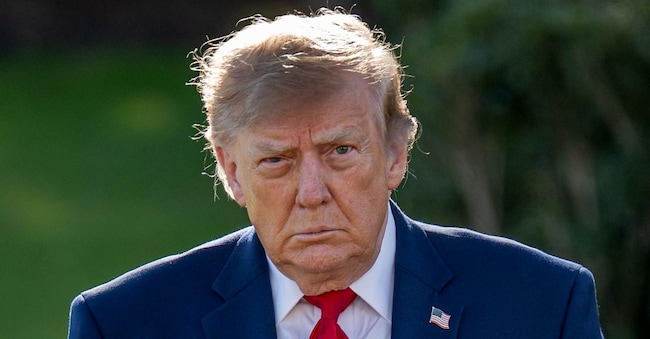
‘Iran is doing everything it can to drive up the price of oil in the run-up to the US mid-term elections. They are even going so far as to fabricate false attacks, mines and so on, given that more oil is now passing through the Strait of Hormuz than did even before the conflict began.’ These were the words of US President Donald Trump in a post on his social media platform Truth, in which he went on to describe the regime in Tehran as ‘truly evil’ and expressed his hope that ‘the American public and the whole world will understand just how evil it is’. Trump then highlighted the human cost of the Iranian crackdown and renewed his criticism of Tehran’s nuclear programme. ‘In less than seven months, 75,000 protesters have been killed. It is shocking to see how the world, as well as the Democratic Party, seem not to care at all. Iran will never be allowed to possess a nuclear weapon, and it will never have one.’
Shortly before, the US President had stated that no negotiations were taking place with Iran and that ‘something’ would happen very soon. “We are not negotiating with Iran,” Trump told a NewsNation reporter at Andrews Air Force Base, where he had landed on Air Force One after returning from an election rally in South Carolina. “One way or another, something will happen, quite soon,” Trump continued. “Most people seem to think it will happen after the election,” added the US President, who, when pressed on the fact that the US might not strike Iran before the vote, remained vague and added: “We’ll see what happens.” These statements come following reports in the New York Times suggesting that the United States and Israel have drawn up plans for new military strikes against Iran, to be carried out after the mid-term elections scheduled for 3 November.
UN withdraws from Rafah crossing following arrests of Palestinians
Meanwhile, the United Nations has informed Palestinian officials that, from mid-November, it will cease to receive Palestinians returning from Egypt and to coordinate their entry into the Gaza Strip, given the dangers faced by those returning and the repeated arrests carried out by Israel. This was reported to Drop Site by a Palestinian source involved in the negotiations.
A woman suffering from cancer and her daughter were arrested by Israeli forces on 20 October, the day on which the Rafah crossing was reopened following a closure of around 10 days, caused in turn by the arrest of another person who was returning to the Palestinian enclave from Egypt. “The United Nations will ask the parties involved to identify another body to take on this responsibility; however, the UN’s withdrawal will go ahead regardless of whether an alternative is found”, said the source, who added that finding a replacement would be complex, as the transfer of returnees requires coordination with Israel and transit through dangerous areas.
The Red Cross might be the only alternative, but its office in Gaza has already declined the request, arguing that such a task falls outside its remit.

