
Aragon, Popular Party wins but falls. And Vox doubles
Twenty-six seats to the Pp, 14 to Santiago Abascal's party. Since 1977, whoever has won in the region has also won the national elections
by Giulia Riva
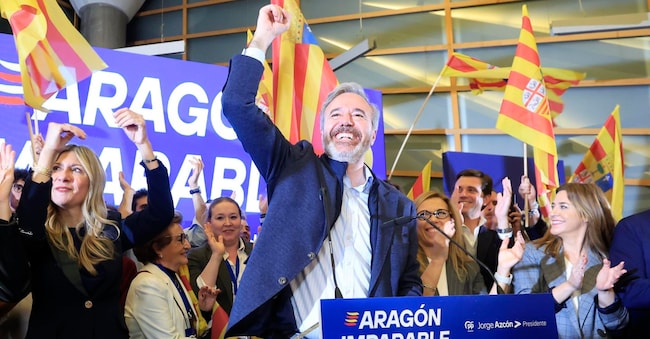
Election weekend in Aragon, in north-eastern Spain. Won by the right, with the Popular Party (Pp) confirming its leadership of the region but registering a drop in support, losing around 1.5% of the vote and two of the 28 seats it occupied so far in the local parliament, which has 67 in total. The ultra-conservatives of Vox, on the other hand, are jubilant, doubling the spoils obtained in the previous round (2023), rising from a little over 11 per cent to almost 18 per cent of the vote: whereas they used to have seven regional deputies, they now have 14. The Populars remain far from the absolute majority threshold - 34 seats - so, as in the previous legislature, they will need the support of Vox to govern, with Santiago Abascal's party coming out of the electoral contest in a strengthened position. This is shown by the official polling data carried out on the evening of Sunday 8 February, reported by the Iberian media, after the polls closed at 8pm.
The count confirms what had already emerged from the exit polls published immediately after the polls closed, which already anticipated another aspect of political relevance: the defeat of the Socialist Party (Psoe) of national leader Pedro Sanchez, which recorded a drop from 29.5% to 24.5%, as well as the loss of 5 of the 23 seats held in the previous legislature. As El País points out, this is an all-time low haul for the Socialists in the region.
The results of the vote photograph the retreat of the traditional progressive area already predicted by the eve polls. To which is added the negative performance of Podemos, which remains outside the Parliament losing its only deputy from the last legislature. It is the regionalist party Chunta Aragonesista that benefits: the consensus for this formation has practically doubled (from 5 per cent to almost 10 and from 3 to 6 seats). Aragon's local elections are the second stage of a long electoral cycle in Spain, following the elections last 21 December in Extremadura, and which will continue with Castile and Leon on 15 March and Andalusia in June.
These are regional elections that weigh heavily on the Iberian national scene. From 1977 to the present, whoever won in Aragon also won the national general elections.
Social back-and-forth (in which Elon Musk also intervenes)
"Congratulations to Jorge Azcon for his result in the elections in Aragon. My congratulations also to Pilar Alegria and the Psoe of Aragon for their great work and commitment to the Aragonese and Aragonese people" is the message on X from the Spanish premier, Pedro Sanchez, after the early elections yesterday in the region. "Our party will continue to be the only progressive alternative," Sanchez adds in the post.

