

2' min read
2' min read
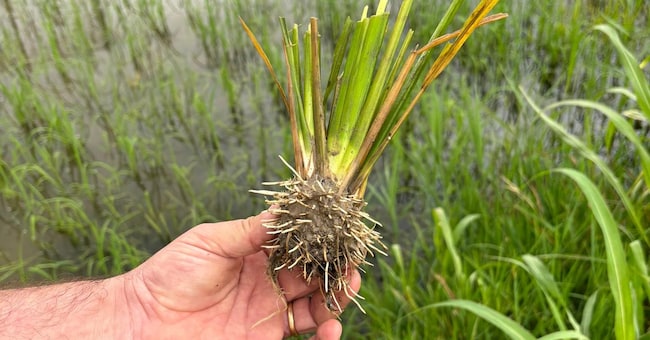
Teverything destroyed: fences, underground cages, but above all the seedlings. They were the first ever sown in Italy of arborio rice treated with Tea, the techniques for genetic improvement with which the genome of a plant can be modified but without inserting pieces of external DNA, as was the case with the 'old' GMOs (see Sole 24 Ore Lombardia of 7 June). The experimental field at Mezzana Bigli, in Lomellina, was destroyed by an act of vandalism a fortnight ago. Anti-GMO leaflets were found on the ground next to the uprooted seedlings.
The State University of Milan and the Lombardy Region, which is the university's partner in this project, have filed a complaint. The world of science has come together in condemning this obscurantist and medieval act. "We are witnessing a regurgitation of anti-scientific violence, which as a university we have no intention of tolerating," said Maria Pia Abbracchio, deputy vice-chancellor of the Milan State University with responsibility for coordinating and promoting research. "This episode causes incalculable damage not only to the researcher involved and her project, but to the entire scientific community and to all citizens. Elena Cattaneo, senator for life and scientist, also described the vandalism in Mezzana Bigli as 'a cowardly act against scientific progress, a sabotage of research that confirms that in our country there are groups that are prepared to use violent methods to prevent researchers from increasing everyone's knowledge in areas that affect our lives, our food, our future'.
But it is researcher Vittoria Brambilla, lecturer in General Botany at the Department of Agricultural and Environmental Sciences at Milan's Statale University, who heads the RIS8imo project and had personally supervised the planting of the seedlings in Mezzana Bigli, who is personally affected. While the European Union has not yet managed to update the legislation equating Tea to GMOs, in our country an amendment to the Drought Decree of May 2023 has made open-field experimentation possible. Vittoria Brambilla had been studying for years in the laboratory how to obtain a variety of rice resistant to the brusone fungus by inactivating three genes in the plant itself. When Italian law gave her the chance, she was the first to apply to the Ministry of the Environment to transfer her experimental rice seedlings from the university's phytotrons to rice fields. "The field had been developed with the aim of helping to reduce the use of fungicides, with a view to more sustainable agriculture. As a public scientist, I want to express my dismay and sadness at having been subjected to unjustified violence, the result of obscurantism and anti-scientific impulses'.


