Architecture and artificial intelligence: a new tech start-up is launched in Turin
A regeneration project for a former military barracks, aimed at creating a home-like working environment that fosters creativity and the sharing of knowledge.

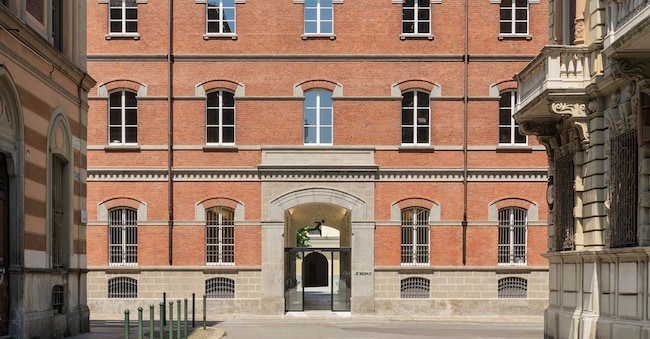
When a high-tech company meets architecture and design, a fusion of expertise is created that can transform even the most traditional of spaces – such as an old barracks – into a project that is original both as a whole and in its details.
We are in Turin at the new Reply House, which opened on 9 July, within the former De Sonnaz Barracks – a 19th-century military complex covering 20,500 square metres in the heart of the Cittadella, which had fallen into disuse and was acquired by the group in 2018, and has now been returned to the city following a major urban regeneration project designed by Acpv Architects Antonio Citterio Patricia Viel. “The tech company was founded 30 years ago on Corso Francia, just a few kilometres from here,” says founder Mario Rizzante. “There were 10 of us, and we were using the internet to transform processes, not just to communicate as so many others were doing.” Today, it operates worldwide with around 18,000 employees organised into a network of over 200 specialist companies, developing consultancy services and digital solutions based on Artificial Intelligence, cloud computing and new technologies.
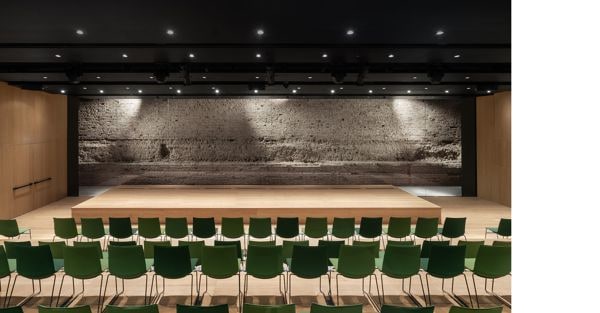
At the new Reply House, the aim was to create spaces – both open and private, yet always bathed in natural light – capable of fostering the development of shared knowledge. “No anonymous, blank spaces that stifle creativity. We needed something that felt more like a home than an office, where people could make the spaces their own: kitchens, meditation areas, open-plan spaces and cosy rooms,” said Tatiana Rizzante, the company’s managing director. The building’s military heritage is evident in the façades, the building’s form and the auditorium; a section of the wall of the Renaissance Citadel, linked to the memory of Pietro Micca, has been unearthed and restored in collaboration with the Superintendency. Citterio explained that he had worked with great care, but without being obsessed with history. He added a comment that says a great deal about this project: “The best projects come about when the client is a family that invests in people and quality, not just in financial returns.”
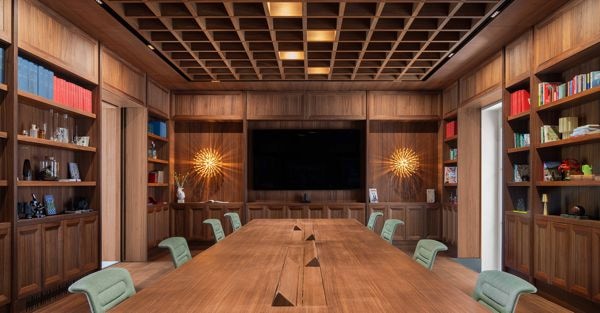
As for the interior design, Unifor was not merely a supplier of furniture, but an active participant in the project. The offices feature pieces from the Spring System collection designed by Acpv here and there, as well as all the finishes, the panelling (micro-perforated to ensure acoustic comfort), the kitchens, the phone booths and the meeting rooms – all largely bespoke – have been custom-made by the Molteni Group company.
The choice of materials is deliberate and sustainable. No paint finishes: the wood is oiled and waxed, intended to age and show the passage of time. The raised floor is magnetic, sourced from Germany and designed to last: it can be washed, but not sanded.
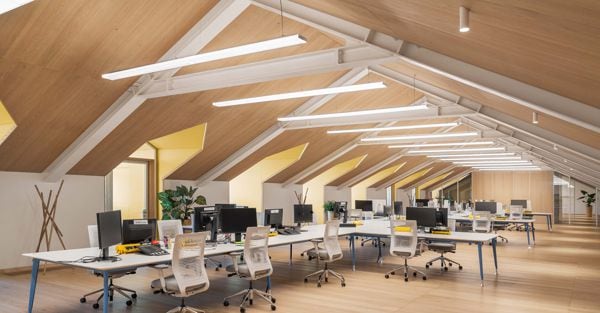
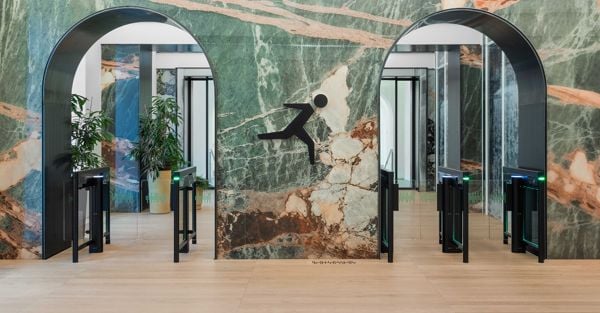
The ventilation grilles, also by Unifor and made of oak, are designed as a sequence of cuts that spell out a phrase, We reply to the Earth, the company’s statement. And this is where a unique feature of this refurbishment comes into play: at Reply House, artificial intelligence has been integrated into the design process, in a deliberate fusion of disciplines. ‘AI has allowed us to explore new formal possibilities in storytelling, yes, but also specifically in the design of furniture and accessories. The carpet designs are generated using algorithms and codes, as in what we’ve called “Gio Ponti reloaded”. The graphics on the glass panels are derived from photographs of Turin reworked using AI, building on contributions from local artists, and retain within them the prompt that generated them,” explains Paolo Mazza, a partner at Acpv. But the most interesting example is that of the AI-Generated Marbles developed with Marazzi: porcelain stoneware surfaces that reinterpret the aesthetics of marble through realistic yet original patterns, generated by algorithms and printed on slabs that, in one of the entrances, cover twenty-two metres by three. The artworks are generative experiments, and some feature a portrait of Rose, a digital human and brand ambassador who acts as a concierge and sales assistant, guiding visitors through the rooms and providing information about the company. In Area 73 of the Reply House, the focus is on generative models, holographic environments, configurators and multisensory systems that make digital interaction as realistic as possible.