
Armani beyond fashion: theatre designed by Tadao Ando and a passion for architecture

3' min read
3' min read
The decision to set up the funeral chamber for Giorgio Armani in Via Bergognone, far from the luxury district, where he lived and where the company's historic headquarters are located, is anything but random. But in Via Bergognone there are other offices, spaces, showrooms and, above all, in that area of the city, which over the years has become a fashion and design hub alternative to the historic centre, there are the Armani/Silos and the Armani/Teatro. The former, with about 4,500 square metres of floor space, was inaugurated in 2015, the year of the Expo, to celebrate the company's 40th anniversary, and hosts fashion shows and, above all, exhibitions: the entrepreneurial designer explained the choice of the name "because in the silos, grains, the material for living, were stored. And so, like food, clothing is also needed to live". Until 28 December, the space at Via Bergognone 40 will host the exhibition inaugurated at the end of May and dedicated to another anniversary, the twenty years of Armani Privé, the most exclusive women's collections (often true one-offs) that the designer introduced in 2005, showing them - except for exceptional events - during the weeks that Paris, in January and June-July, dedicates to haute couture (high fashion).
The creative link with Tadao Ando
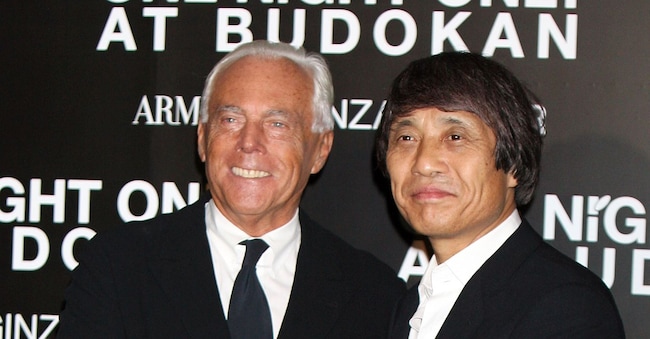
The Armani/Teatro, where the funeral chamber is being set up, is right opposite the Armani/Silos at 59 Via Bergognone and is the result of the collaboration - and creative affinities - between Giorgio Armani and the Japanese architect Tadao Ando, born in Osaka in 1941. It was inaugurated in 2001, and as evidence of how strong the bond between the two was, in 2019 the Armani/Silos hosted the exhibition The Challenge-Tadao Ando, which echoed the retrospective at the Centre Pompidou in Paris, retracing Tadao Ando's career through his most significant achievements, which for Armani represented well certain aspects of the Japanese culture he loved and respected.The Armani/Theatre will convey to those who will bid farewell to the fashion designer today or tomorrow a little of the passion that Giorgio Armani had for architecture (as also demonstrated by the careful real estate choices he made over the years, purchasing properties in various regions of Italy and abroad) and for furniture. He used to say that he found similarities between a person's clothing choices and his furniture choices and from this conviction came the Armani/Casa line, born 25 years ago (another anniversary!).
He recently told AD magazine: 'My home in Milan is the centre of my universe. The one on the island of Pantelleria is a stable and lasting love to which I return every summer. My villa in Antigua is a tropical dream, a refuge during the winter. My new flat in New York is a cinematic fantasy'. But by Armani/Casa we do not only mean furniture and furnishings for private residences, but also interior design services and, of course, furnishings for the hotels, restaurants and luxury residences that Giorgio Armani has opened over the years, in Milan but especially abroad.
Sustainability Projects in Beauty
A diversification in which - unsurprisingly - he was a pioneer. Tadao Ando's culture and vision of architecture is also linked to Armani's relationship with nature and thus environmental sustainability, and over the years he has tried to pursue projects that do not appear to be merely marketing operations. Of the Japanese, Armani also admired respect for nature and over time he declined it in many ways. One of the longest-lasting initiatives that achieved the most ambitious goals was Acqua for Life. Launched in 2010 and linked to the sale of the best-selling fragrances Acqua di Giò (for men) and Acqua di Gioia (for women), Armani's initiative has helped more than 590,000 people in 23 countries to have access to clean water and the goal is to reach one million by 2030. "Water is perhaps the element I feel closest to," Armani said, "For me it represents life and regeneration, but also calm and serenity, and access to clean water is undoubtedly one of the biggest challenges of this century. Another challenge, another legacy that we hope will be taken up.


