Armenia, the home of 'slow' tourism among canyons, monasteries and ancient wines
In the age of overtourism, it is an uncrowded destination with a high density of monuments and natural masterpieces

Key points
No queues and human pace. In the age of overtourism, Armenia is an ideal destination for those who like to travel without the anxiety of having to book their next visit online. Slow, sustainable tourism and not at all stressful.
Armenia is a landlocked patch of land with only two open borders, to the north with Georgia and to the south with Iran. Its not easy accessibility is its strong point: there is plenty of time to enjoy the riches of this ancient and solid community despite the deep wounds it has had to endure over the centuries of its troubled history.
Yerevan: Soviet footprint and cool coffee
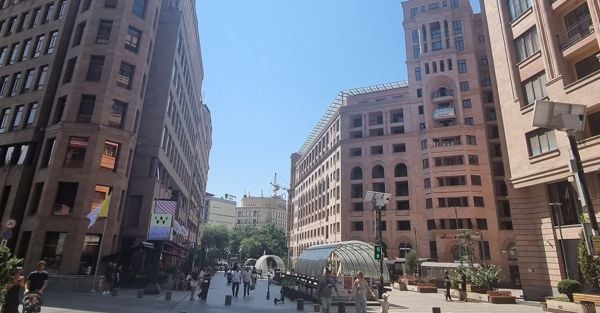
The journey begins in Yerevan, the bustling capital where one in three Armenians live. Virtually nothing remains of its ancient history, yet the city fascinates with its great vitality, its 'cool' cafés, the contrasts between the still omnipresent Soviet social housing and the new, modern, luxurious buildings. Rusty Ladas are flanked at traffic lights by gleaming Chinese electric cars, five-star hotels loom over old neighbourhoods like Kond, where people live in precarious tin and brick shacks but generously offer bunches of grapes to the few tourists who venture into its narrow streets.
The first pogrom of the 20th century
Before leaving Yerevan, a visit to the Armenian Genocide Museum is a must. It bears witness to the first massacre of a people in the 20th century: at least one million victims between 1915 and 1916 slaughtered on the orders of the Young Turk nationalist government and forced to starve by the death marches to Syria. A painful but necessary review of a tragic event that is all too often forgotten, as Hitler himself would scornfully point out in 1939 on the eve of the Shoah: "Who remembers the massacre of the Armenians anymore?".
The Symphony of Stones
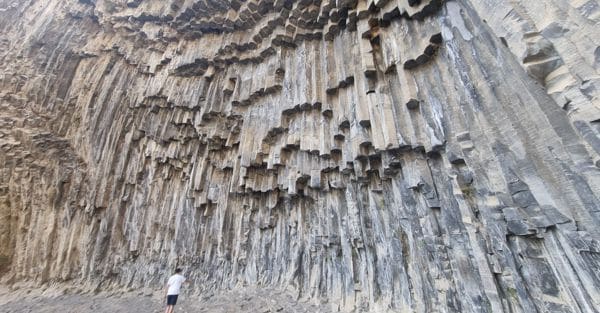
As soon as we leave Yerevan, the curtain rises on another country, low in population density and high in scenic spectacle. Having left the torrid Ararat plain - the mountain revered by the Armenians but under Turkish sovereignty and destined to disappear even from Armenian passport stamps - the roads become more winding, between boundless semi-arid plains and rocky peaks. Concrete gives way to masterpieces of nature such as the Symphony of Stones, an incredible composition of hexagonal basalt columns up to 50 metres high resembling an enormous organ resting on a deep gorge.